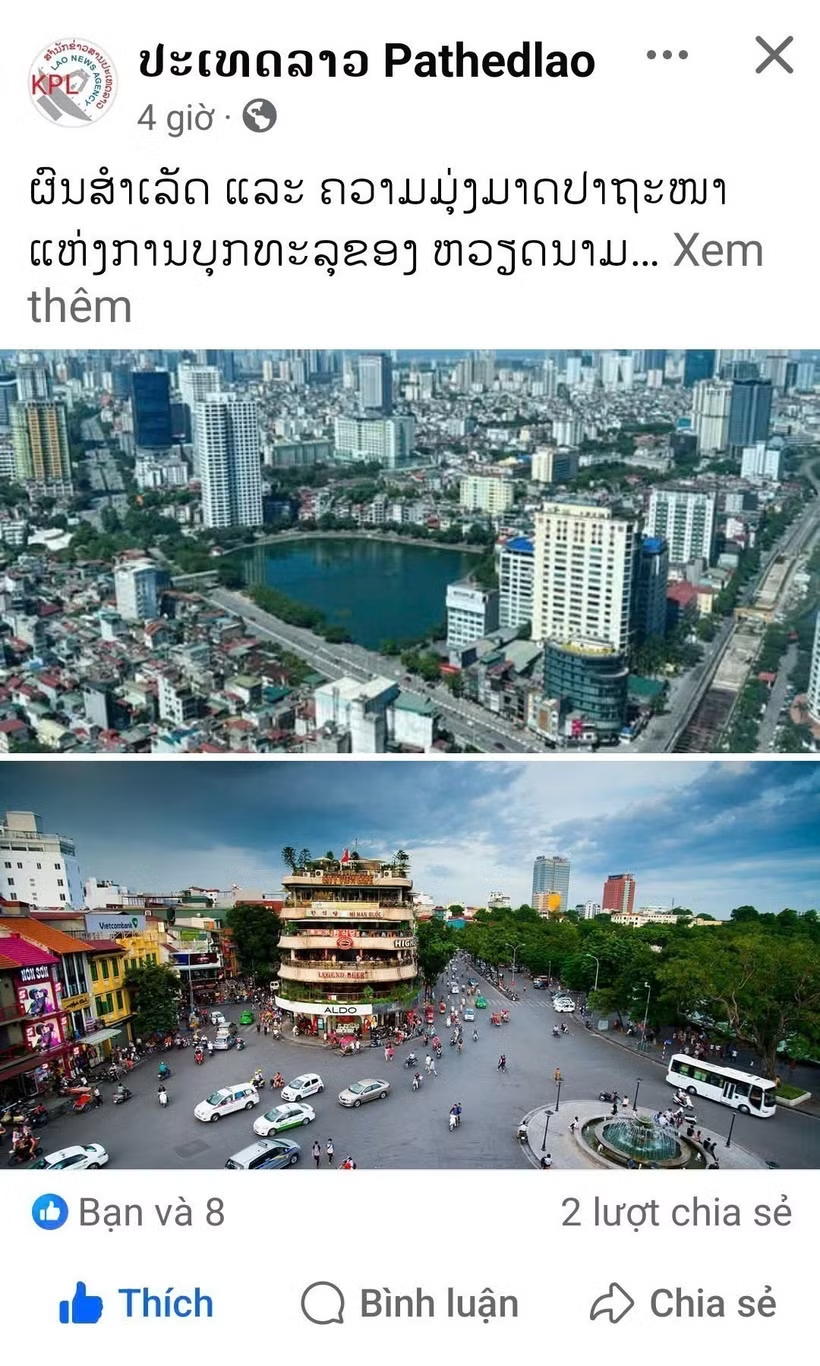
Vientiane (VNA) – The Pathet Lao newspaper of the Lao News Agency (KPL) has published an editorial affirming that September 2, 1945 became an unforgettable and glorious milestone in Vietnam’s history, opening a new era of national independence, freedom and people’s mastery of their own destiny.
The editorial, published on the occasion of the 81st anniversary of Vietnam’s National Day (September 2, 1945–2026), noted that on September 2, 1945, President Ho Chi Minh read the Declaration of Independence, establishing the Democratic Republic of Vietnam, now the Socialist Republic of Vietnam.
It described the past 81 years as a journey marked by hardships and challenges, but also immense pride. From the prolonged struggle for national independence and reunification to national construction and development in peacetime, Vietnam has steadily strengthened its potential, capacity, position, and prestige in the international arena.
These achievements stem from the country’s determination to safeguard its independence and self-reliance, the strength of the great national solidarity, the clear-sighted leadership of the Communist Party of Vietnam, together with the Vietnamese people’s unceasing efforts and creativity. Vietnam has also benefited from the valuable support of international friends, particularly the sincere solidarity and assistance of the Lao Party, State and people, according to the article.
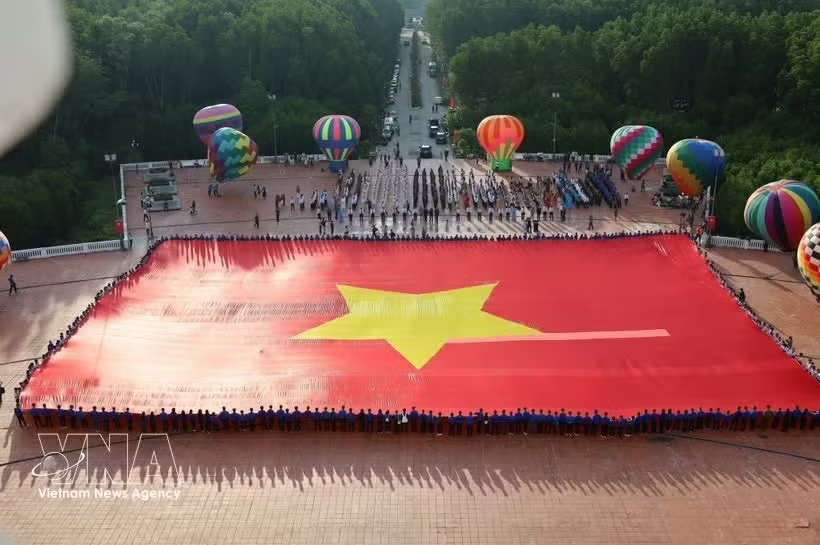
The writing highlighted the 40-year Doi moi (Renewal) process as a highly profound transformation for Vietnam. After achieving national liberation and reunification in 1975, the country embarked on national reconstruction amid numerous challenges. The sixth National Party Congress in 1986 launched the Doi Moi process, marking a historic turning point in both theoretical mindset and practical development.
Four decades of Doi moi have demonstrated the vitality of Vietnam’s development path, which has been continuously supplemented and refined through practice. The country has successfully built a socialist-oriented market economy, pursued comprehensive integration into the world, and maximise internal strength in combination with external resources for development. These achievements are clearly reflected in the remarkable transformation of the economy in both scale and quality.
In 1986, when Doi moi began, Vietnam’s per capita income was below 100 USD. By 2025, its economy had surpassed 500 billion USD, ranking 32nd globally, while GDP per capita exceeded 5,000 USD. Macroeconomic stability has been maintained, with inflation kept at around 3%. Total import-export turnover reached a record high of more than 930 billion USD, placing Vietnam among the world’s 20 largest trading economies and resulting in a trade surplus of over 20 billion USD. Registered foreign direct investment approximated 39 billion USD, while the poverty rate fell to just 1.3%.
The editorial stressed that the significance of Doi moi goes beyond economic figures. From a largely agrarian country once severely affected by food shortages, Vietnam has emerged as one of the world’s leading agricultural exporters. Its processing and manufacturing industries have expanded strongly, with many “Made in Vietnam” products becoming deeply integrated into global production and supply chains.
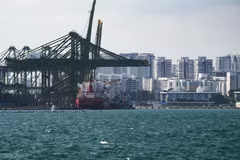
Infrastructure has also undergone breakthrough development, with transport networks, seaports, airports, power grids, telecommunications and urban infrastructure increasingly connected and modernised. By the end of 2025, more than 3,000 km of expressways had been completed and put into use, forming a strategic North–South transport corridor linking key economic regions, international border gates and major seaports, the article said.
It noted that alongside physical infrastructure, Vietnam is accelerating the development of digital and data infrastructure, science –technology, innovation, artificial intelligence, semiconductors and new energy, identifying these areas as key drivers of a new growth model. At the same time, national defence and security safeguarding capacity has continued to be enhanced.
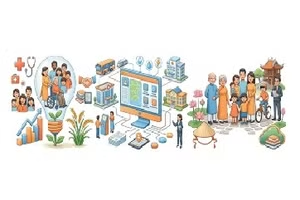
Notably, development achievements have directly improved people’s quality of life, while poverty reduction, social welfare, education, health care and culture have received due attention. This, the article said, is a valuable hallmark of Doi moi as economic development goes hand in hand with social progress and equality, with people placed at the centre of development.
Vietnam’s international position and prestige have also continuously grown through its active and proactive international integration. The country has made effective contributions to ASEAN, the United Nations, APEC and other regional and international mechanisms. It has successfully served two terms as a non-permanent member of the UN Security Council, held the ASEAN Chairmanship on several occasions, and hosted many high-level international conferences.
Today, Vietnam is an active and responsible member of the international community, contributing to UN peacekeeping operations and joint efforts for peace, cooperation, sustainable development and responses to global challenges. It has so far established diplomatic relations with 194 countries, and built strategic partnerships and comprehensive partnerships with many countries, including major powers and all five permanent members of the UN Security Council.
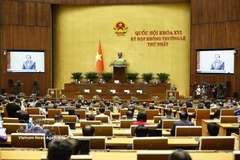
The editorial also highlighted big political milestones in early 2026, including the successful 14th National Party Congress and the election of deputies to the 16th National Assembly. The 14th National Party Congress set out strategic orientations and policies for a new era of development, with the goals of turning Vietnam into a developing country with modern industry and upper-middle income by 2030, and a developed, high-income socialist-oriented country by 2045.
These goals, Pathet Lao said, reflect Vietnam’s strong aspiration to advance, building on the potential, strength and experience accumulated over decades./.