Hanoi (VNA) - The Peace Boat cruisingtraining programme funded by the Lancang-Mekong Cooperation (LMC) has concludedin Cambodia.
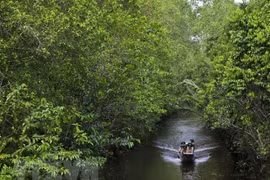
According to a news release from the programme organiserAsian Vision Institute (AVI) on June 12, the programme, from June 3 to 9,featured a cruise ship travelling across the Cambodian capital city of PhnomPenh and the provinces of Kampong Cham and Kratie.
Dozens of participants were drawn to build networksand immerse themselves in Cambodian communities and culture, the news releasesaid.
The programme covered various activities includingtrainings, culture sharing, site visits, team-building activities andnetworking, it said, adding that the training sessions focused on peacebuilding, sustainable development, a community of shared future, watergovernance, and water-energy-food security.
Moreover, the participants were able to venture intoCambodian culture through visiting many tourist destinations and twouniversities, interacting and sharing experience with local students.
The cruising programme formed part of theLancang-Mekong Peace Boat project, which is implemented by AVI under the LMCSpecial Fund 2022 with an aim of enhancing policy dialogue, capacity buildingand cooperation among youth in the Mekong sub-region.
China initiated the LMC Special Fund in 2016 aiming tosupport small and medium-sized cooperation projects put forward by the sixLancang-Mekong countries, namely China, Cambodia, Laos, Myanmar, Vietnam andThailand./.
According to a news release from the programme organiserAsian Vision Institute (AVI) on June 12, the programme, from June 3 to 9,featured a cruise ship travelling across the Cambodian capital city of PhnomPenh and the provinces of Kampong Cham and Kratie.
Dozens of participants were drawn to build networksand immerse themselves in Cambodian communities and culture, the news releasesaid.
The programme covered various activities includingtrainings, culture sharing, site visits, team-building activities andnetworking, it said, adding that the training sessions focused on peacebuilding, sustainable development, a community of shared future, watergovernance, and water-energy-food security.
Moreover, the participants were able to venture intoCambodian culture through visiting many tourist destinations and twouniversities, interacting and sharing experience with local students.
The cruising programme formed part of theLancang-Mekong Peace Boat project, which is implemented by AVI under the LMCSpecial Fund 2022 with an aim of enhancing policy dialogue, capacity buildingand cooperation among youth in the Mekong sub-region.
China initiated the LMC Special Fund in 2016 aiming tosupport small and medium-sized cooperation projects put forward by the sixLancang-Mekong countries, namely China, Cambodia, Laos, Myanmar, Vietnam andThailand./.
VNA