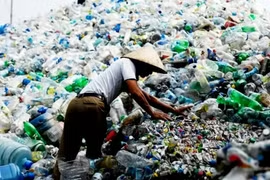
Kuala Lumpur (VNA) – Experts have warned that Malaysia is facing a growing microplastic crisis, largely driven by weak waste management and insufficient recycling practices among the public.
Professor Aileen Tan, a marine scientist at Universiti Sains Malaysia (USM), said the issue is no longer a distant risk but an ongoing environmental crisis that directly affects marine ecosystems and human diets.
Microplastics originating from domestic waste and wastewater are increasingly entering the food chain, posing serious threats to seafood safety and the livelihoods of coastal communities.
According to data from Malaysia’s Department of Fisheries, Malaysians may ingest up to 2,016 microplastic particles each year through fish consumption. Research has found that 93.3% of fish samples examined nationwide contained microplastics in their digestive systems, while nearly 29% showed the presence of microplastics in muscle tissues.
More concerning is that most of the detected plastic particles measure less than 0.2 mm in size, a level researchers believe may allow them to penetrate the human bloodstream.
With an average seafood consumption of 48.3 kg per person per year, Malaysia ranks among the world’s highest seafood consumers, making potential health risks from microplastic exposure increasingly alarming.
To tackle the issue, experts have called for a comprehensive strategy involving the whole of society rather than isolated reactive measures.
Dr. Zaki Ahmad, a maritime affairs specialist at Universiti Utara Malaysia, said the country must move beyond short-term responses and address the root causes of marine plastic pollution through a coordinated and sustainable whole-of-society approach.
The Malaysian government has already introduced several initiatives, including the Roadmap Towards Zero Single-Use Plastics 2018–2030 and the National Marine Litter Action Plan 2021–2030. However, Zaki stressed that long-term mitigation will require stronger waste management systems, environmental education starting at the school level, and more proactive participation from both industry and communities./.