NA debates amendments to Social Insurance Law, focusing on fund safety, risk control

Several deputies supported expanding compulsory social insurance coverage to include digital platform workers and those without formal employment contracts, particularly informal workers, delivery workers and technology-based drivers. However, they stressed the need for an appropriate roadmap and clear regulations on contribution obligations, calculation methods and the responsibilities of digital platforms.

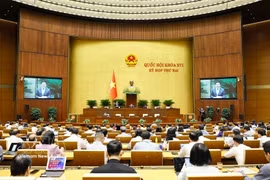
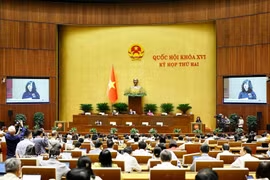
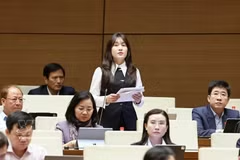
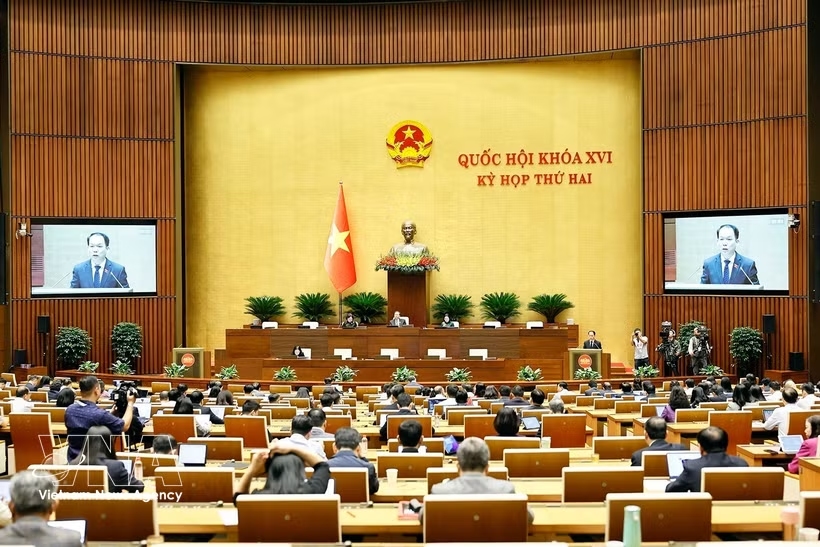
The plenary sitting during the 16th National Assembly's second session. (Photo: VNA)

Hanoi (VNA) - Social insurance is not only a pillar of social welfare but also directly affects the income, employment and present and future livelihoods of tens of millions of workers. Expanding coverage must therefore go hand in hand with ensuring feasibility, while the social insurance fund must be managed safely, transparently and effectively, with workers’ legitimate rights and interests at the centre.

These issues were highlighted by National Assembly deputies during a discussion on November 9 on the draft Law amending and supplementing several articles of the Law on Social Insurance, as part of the second session of the 16th legislature.

Several deputies supported expanding compulsory social insurance coverage to include digital platform workers and those without formal employment contracts, particularly informal workers, delivery workers and technology-based drivers. However, they stressed the need for an appropriate roadmap and clear regulations on contribution obligations, calculation methods and the responsibilities of digital platforms.

Deputy Le Huu Tri of Khanh Hoa province warned that overly broad regulations without clear implementation mechanisms could lead to disputes and impose additional financial burdens on low-income workers with unstable earnings. For workers receiving payment by trip or order, or working across multiple platforms, determining contributory income and allocating responsibilities among parties would be particularly complicated.

He proposed assessing the impact on each worker group and considering implementation from 2028 for digital platform workers if conditions are not yet in place. This will allow time to refine the legal framework, connect databases among social insurance and tax agencies and digital platforms, and build public consensus.

Deputy Pham Van Hoa of Dong Thap province also called for careful consideration of the timing of expanding compulsory coverage. He suggested prioritising compliance among groups already covered, particularly in the private business sector, before reviewing the results of five years of implementing the Law on Social Insurance and considering the inclusion of the two proposed groups of digital platform workers and those without formal employment contracts.

Meanwhile, deputy Nguyen Van Huy of Hung Yen province called for stronger protection of workers whose employers delay or evade social insurance contributions. He noted that workers may have their contributions deducted from their wages but still face interrupted contribution records and delays in receiving sickness, maternity or pension benefits because employers fail to transfer the money.

He urged the draft law to establish mechanisms to protect workers’ entitlements and clearly define employers’ responsibilities for paying outstanding contributions and compensating for losses, without making workers wait for employers to fulfil their obligations.

Regarding risk control in the social insurance fund’s investment, deputy Duong Khac Mai of Lam Dong province welcomed the proposed principles of safety, capital preservation, sustainability, efficiency and transparency in investing the social insurance fund. He said stronger risk controls are essential, given that the fund’s investment balance has reached 1.5 quadrillion VND (58.8 billion USD), while its average investment return in 2025 was 3.72%, compared with consumer price growth of 3.31%.

He cautioned against excessive concentration of capital in a single investment channel, which could expose the fund to risks or low returns. He proposed annual assessments of the effectiveness of each investment channel, public disclosure of results and stronger accountability for the fund’s management council.

Tri also stressed that investment performance must be commensurate with the fund’s scale and its long-term social welfare mission. Any expansion of investment channels should be based on a clear legal framework, sound risk management and independent supervision. Key indicators, including investment structure, returns, management costs and risk levels, should be disclosed regularly to enable workers to monitor the use of their contributions.

In response, Minister of Home Affairs Nguyen Tien Hai said the drafting agency will report to the Government on retaining the current provision authorising the Government to propose additional groups for compulsory social insurance participation to the NA Standing Committee. This could include people without formal employment relationships and digital platform workers when they meet the relevant conditions.

The agency will also continue studying the issue as part of preparations for broader social insurance policy reform and a comprehensive revision of the law in 2027–2028.

Regarding the fund’s investment portfolio, the drafting agency plans to propose adding principles of safety, capital preservation, sustainability, efficiency and transparency to the draft law. The Government will be tasked with specifying criteria and mechanisms for investment assessment, selection, supervision and risk control, as well as a roadmap for diversifying the fund’s investment portfolio and methods.

The agency will coordinate with the Ministry of Finance to submit detailed regulations to the Government following the law’s adoption./.

VNA
See more

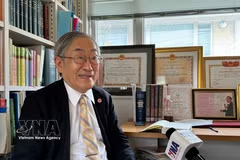
Prof. Furuta Motoo, former Rector of the Vietnam–Japan University (Photo: VNA)

President Ho Chi Minh’s 1946 diplomacy combines steadfastness, flexibility: Japanese expert

In 1946, as President of the Democratic Republic of Vietnam, Ho Chi Minh pursued efforts to ease tensions through both official and informal channels. In addition to official diplomatic negotiations with French government leaders, he met leaders of political parties and forces across the political spectrum, held press conferences, gave interviews, and engaged with the French public.

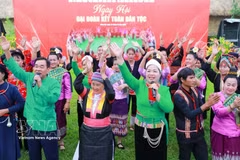
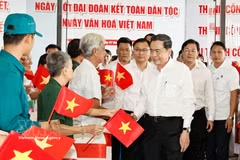
Representatives of ethnic minority groups join in a musical performance at a celebration of the Great National Unity Festival. (Photo: VNA)

📝OP-ED: Optimising cultural strength, reinforcing great national unity from grassroots

Harnessing cultural strength and reinforcing the great national unity bloc begin with concrete action at the grassroots level. In this process, Party committees provide leadership, local authorities create favourable conditions, the Vietnam Fatherland Front (VFF) and its member organisations play a central role in mobilising and bringing people together, while citizens are the creators, practitioners and beneficiaries of cultural values.

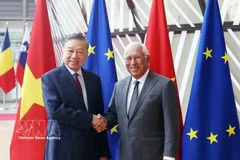
President of the European Council Antonio Costa (R) welcomes General Secretary of the Communist Party of Vietnam Central Committee and President To Lam in Brussels, Belgium, on October 22, 2026. (Photo: VNA)

Proactive diplomacy turns commitments into tangible benefits

Beyond safeguarding independence and self-reliance, diplomacy must proactively anticipate developments, prevent conflicts, expand cooperation and mobilise external resources to create a peaceful environment for sustainable development and enhance Vietnam’s international standing.

☀️ Morning digest on November 9

☀️ Morning digest on November 9

Activities of Party General Secretary and President To Lam's official visit to Japan, the 10th National Buddhist Congress, and the sixth political consultation at the deputy foreign minister level between Vietnam and Spain are among news highlights over last weekend.

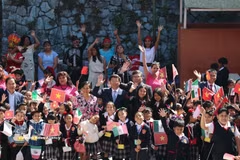
The Vietnamese delegation takes photo with students at the primary school named after the Socialist Republic of Vietnam (Photo: VNA)

CPV values traditional friendship with Mexican Labour Party

Deputy head of the CPV Central Committee’s Commission for Publicity Tran Thanh Lam proposed deeper theoretical exchanges and sharing of experience in Party building and national development; stronger cooperation in education, science, culture, external information, press, publishing and traditional medicine.

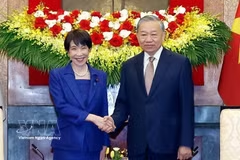
General Secretary of the Communist Party of Vietnam (CPV) Central Committee and President To Lam and Japanese Prime Minister Sanae Takaichi during her official visit to Vietnam in May, 2026. (Photo: VNA)

Top Vietnamese leader’s Japan visit to open up new space for bilateral cooperation

The visit is expected to further deepen ties through Party, State, parliamentary and people-to-people channels, while creating breakthroughs in economic, financial, scientific and technological cooperation, innovation, education and training, digital and green transformation, and supply chain diversification, thereby contributing to a peaceful and stable environment for development in both countries.

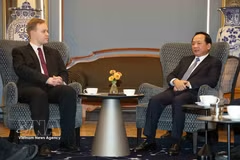
Politburo Member and Head of the Party Central Committee’s Commission for Publicity Trinh Van Quyet (R) meets with Jiri Mäntysalo, Vice Chairman of the Communist Party of Finland. (Photo: VNA)

Vietnam, Finland move to strengthen political trust, expand cooperation

Politburo Member and Head of the Party Central Committee’s Commission for Publicity Trinh Van suggested that Finland further promote its role as a bridge between Vietnam and the European Union (EU), while Vietnam could serve as a bridge between Finland and the Association of Southeast Asian Nations (ASEAN). He called for effective utilisation of the EU-Vietnam Free Trade Agreement (EVFTA) and urged Finland to encourage the remaining EU member states to ratify the EU-Vietnam Investment Protection Agreement (EVIPA) at an early date.

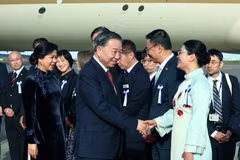
Representatives of the Japanese State and the Embassy of Vietnam in Japan welcome General Secretary of the Communist Party of Vietnam Central Committee and President To Lam and his spouse at Haneda International Airport in Tokyo. (Photo: VNA)

Top Vietnamese leader begins official visit to Japan

The visit is expected to further translate the potential and achievements of bilateral cooperation into concrete outcomes, strengthen the longstanding bonds between the two countries and ensure that the friendship nurtured across generations continues to deliver lasting benefits to both peoples.

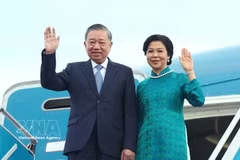
General Secretary of the Communist Party of Vietnam Central Committee and President To Lam, his spouse Ngo Phuong Ly and a high-ranking Vietnamese delegation leave Hanoi on November 8 for a four-day official visit to Japan at the invitation of the Japanese State. (Photo: VNA)

Top leader and spouse depart for official visit to Japan

General Secretary of the Communist Party of Vietnam Central Committee and President To Lam, his spouse Ngo Phuong Ly and a high-ranking Vietnamese delegation left Hanoi on November 8 for a four-day official visit to Japan at the invitation of the Japanese State.

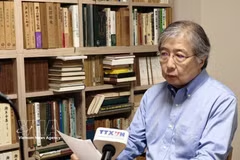
Toshiro Nishizawa, a Senior Fellow at Graduate School of Public Policy under the University of Tokyo in an interview with the Vietnam News Agency (VNA)'s correspondent in Japan (Photo: VNA)

Top leader’s visit to deepen Vietnam-Japan strategic cooperation: expert

The upcoming visit to Japan by General Secretary of the Communist Party of Vietnam Central Committee and President To Lam is expected to give fresh impetus to the Vietnam-Japan Comprehensive Strategic Partnership, reflecting the strategic priorities of both countries, according to a Japanese expert.

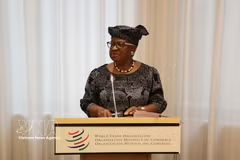
WTO Director-General Ngozi Okonjo-Iweala speaks at the event (Photo: VNA)

WTO hails Vietnam’s 20-year journey since accession

Joining the WTO was a strategic choice for Vietnam, closely associated with its Doi Moi (Renewal) process, opening-up policy and international economic integration. Over the past two decades, international economic integration has become a driving force for institutional reforms, trade expansion, foreign investment attraction and enhancement of the country's international standing.

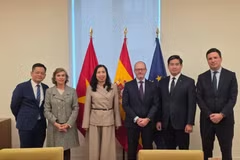
Vietnamese Deputy Minister of Foreign Affairs Le Thi Thu Hang (third, left) and other delegates at the political consultation (Photo: The Ministry of Foreign Affairs)

Vietnam, Spain seek to deepen Strategic Partnership

Vietnam asked Spain to continue voicing its support for and urging the European Commission (EC) to swiftly lift the IUU “yellow card” imposed on Vietnamese seafood, while actively encouraging EU member states to ratify the EU-Vietnam Investment Protection Agreement (EVIPA) at an early date.