Hanoi (VNA) – Amid efforts to streamline the organisational apparatus and renew the operating methods of the political system, promoting cultural values alongside more effective campaigns and patriotic emulation movements is a practical requirement, helping strengthen bonds among all segments of society and build united communities for sustainable development.
Creating environment for culture to be preserved, developed
Harnessing cultural strength and reinforcing the great national unity bloc begin with concrete action at the grassroots level. In this process, Party committees provide leadership, local authorities create favourable conditions, the Vietnam Fatherland Front (VFF) and its member organisations play a central role in mobilising and bringing people together, while citizens are the creators, practitioners and beneficiaries of cultural values. This provides an important foundation for strengthening social consensus, mobilising community resources and promoting sustainable development.
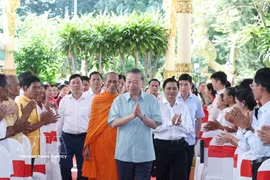
Among Catholic communities, efforts to build cultural life and strengthen community solidarity are reflected in the guiding principles of “Loving God and the Fatherland”, “Living the Gospel in the heart of the nation to serve the happiness of fellow citizens”, and living a life that is both socially responsible and faithful to religious values.
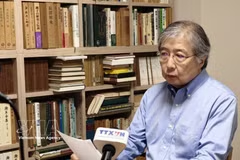
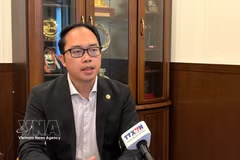
According to Nguyen Van Toan, Vice President of the Vietnam Catholic Solidarity Committee, Catholics, numbering more than 7 million and living across all 34 provinces and cities, are an inseparable part of the Vietnamese nation. In recent years, Catholic communities have actively participated in movements to build cultured families and residential areas, develop new-style rural areas and civilised urban areas, and protect the environment.
Charitable activities, disaster relief and support for disadvantaged people have also helped spread the spirit of mutual assistance and strengthen bonds between religious and non-religious communities.
Experience in Dong Thap shows that promoting community culture in tandem with building new-style rural areas helps foster self-governance, cooperation and mutual support among residents. The province currently has 24,892 self-managed people's groups and 153 community clubs, with more than 7,800 members. These provide spaces for people to exchange production experience, build economic partnerships and work together to address local issues.
Dong Thap residents have voluntarily donated more than 867,700 sq.m of land, contributed over 5.267 trillion VND and provided millions of working days to build rural infrastructure.
The effectiveness of campaigns and patriotic emulation movements launched by the VFF is reflected not only in the mobilisation of resources or the completion of projects and initiatives, but also in the cultivation of patriotism, a sense of responsibility, compassion, self-governance and stronger community bonds.
Every practical activity helps nurture shared values and strengthen trust and social consensus. Building cultural life means fostering people with good ethics, character and lifestyles; building harmonious, progressive and happy families; and developing communities founded on solidarity, compassion, respect and mutual support. It also means creating a safe and healthy living environment, promoting civilised lifestyles, preserving and promoting cultural identity, and enabling people to access, practise, create and enjoy culture. Cultural life is reflected in work, production, business, community activities and behaviour in cyberspace.
People as creators, beneficiaries of cultural values
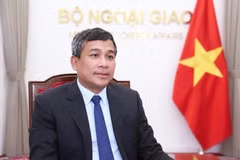
Nguyen Minh Chung, member of the Standing Board of the Party Committee of Mass Monilisation, the Fatherland Front and central mass organisations, stressed that culture and great national unity are closely intertwined and mutually reinforcing. Culture provides the value foundation and means of connecting people within the great national unity bloc, while unity creates an environment and mobilises resources for culture to be preserved, created and developed.
")
Resolution No. 43-NQ/TW dated November 24, 2023, of the 13th Party Central Committee on continuing to promote the tradition and strength of great national unity and building an increasingly prosperous and happy country, and Resolution No. 80-NQ/TW dated January 7, 2026, of the Politburo on the development of Vietnamese culture, provide important grounds for integrating these two tasks into development leadership.
The Party leads by setting common goals, building personnel capacity, organising coordination, overseeing accountability for implementation and promoting democracy. The State ensures the necessary institutional framework, resources and conditions within its authority. The Fatherland Front and its member organisations connect and mobilise people, conduct supervision and provide social feedback, while citizens directly create, practise, protect and enjoy cultural values.
Through campaigns and patriotic emulation movements, VFF committees at all levels have proactively and creatively diversified their approaches to mobilising people of different religions to participate in national construction and defence.
The Fatherland Front regularly listens to the thoughts and aspirations of religious communities and works to facilitate their religious and belief-related activities in accordance with the law.
Through diverse channels of engagement, the Fatherland Front can promptly gather the public's concerns and aspirations, compile and convey their proposals to Party committees, local authorities and relevant agencies, and coordinate follow-up on the handling of and responses to these recommendations. This helps strengthen understanding, trust and bonds between residents, religious communities, Party committees, local authorities and the Fatherland Front.
Data from the Department of Social Affairs under the VFF Central Committee show that Vietnam currently has 637,534 self-managed people's models involving more than 23.4 million participants.
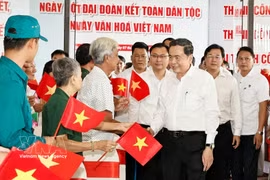
The Great National Unity Day has increasingly become a meaningful community activity. On average, more than 92.5% of residential areas organise the event, while over 72% hold a “Great Unity Meal”.
Efforts to care for poor people and those facing difficult circumstances have also been stepped up. In 2024 alone, VFF committees at all levels raised more than 7.3 trillion VND (285.45 million USD) and coordinated the construction or repair of over 53,600 Great Unity houses. They also supported medical examinations and treatment for more than 1.86 million people and helped over 313,000 students gain access to education.
During the two Lunar New Year holidays of the Year of the Snake (2025) and the Year of the Horse (2026), around 1.4 million gifts worth nearly 1 trillion VND in total were delivered to disadvantaged families.
According to Chung, new requirements for integrating cultural promotion with the strengthening of great national unity include aligning organisational consolidation with the development of a culture of coordination and making use of the distinctive strengths of each group; ensuring that new administrative spaces preserve local identities while fostering broader community ties; linking cultural rights with fairness in resource allocation and the resolution of competing interests; matching expanded service capacity with the ability to listen to and address grassroots concerns; and linking wider digital connectivity with responsible information-sharing and cooperation in real life.
In response to these requirements, stronger Party leadership should focus on three areas, namely correctly identifying tasks that integrate culture with national unity; organising participating forces in accordance with their respective functions and authority; and assessing results through changes in relations with the people and in community life./.