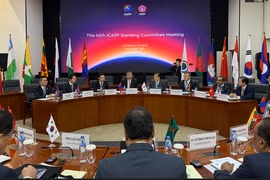
Seoul (VNA) – A delegation of the Communist Party of Vietnam (CPV) led by Ngo Le Van, member of the Standing Board of the Party Committee of the Ministry of Foreign Affairs and Deputy Minister, attended the 13th General Assembly of the International Conference of Asian Political Parties (ICAPP) in Seoul on November 4-7.
The event, co-hosted by the Republic of Korea (RoK)’s Democratic Party (DP) and People Power Party (PPP) under the theme “Rebuilding Trust in a Transforming World,” brought together representatives from 83 political party delegations from 36 countries.
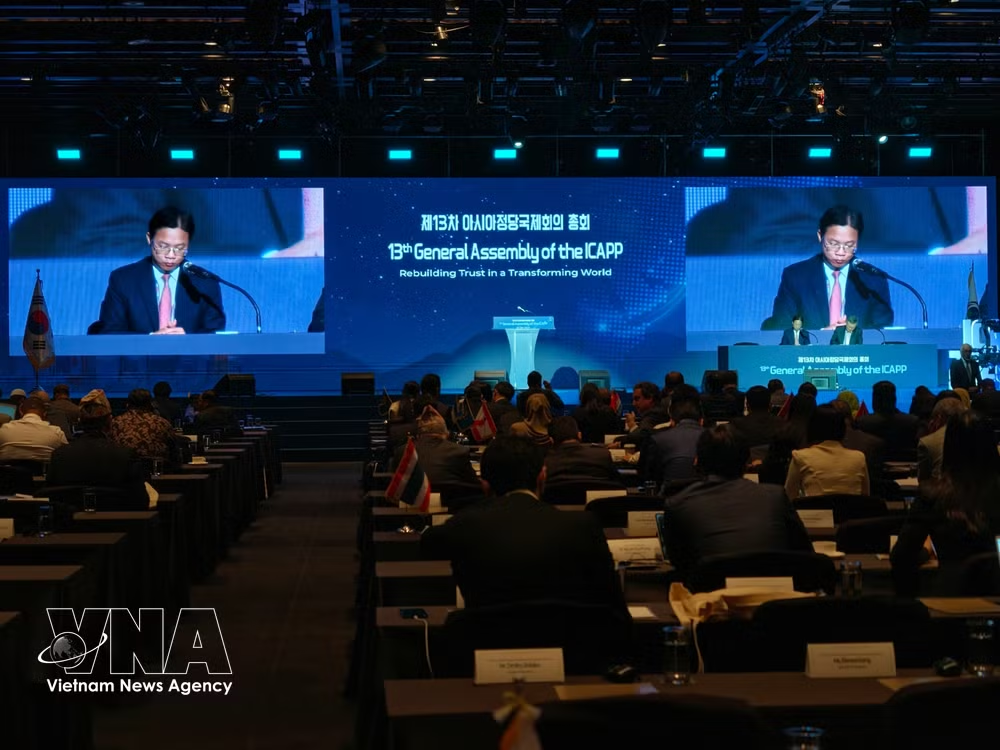
Addressing the plenary session, Van observed that the world is entering a period of profound transformation, with countries becoming increasingly interdependent but also facing the risk of deeper divisions and polarisation. This has made it more urgent to rebuild trust and strengthen international cooperation, he said.
He emphasised that rebuilding trust does not mean eliminating differences, but rather establishing a foundation for dialogue, identifying common grounds and pursuing cooperation on the basis of mutual respect.
On this basis, the head of the Vietnamese delegation proposed four major orientations for ICAPP member parties, including strengthening strategic trust and laying a solid political foundation for peace and stability; reinforcing social trust by giving due regard to people's legitimate interests and aspirations; guiding new drivers of development, particularly science and technology and AI, towards responsible, people-centred progress; and enhancing ICAPP’s role in connecting political parties, building consensus and promoting substantive cooperation.
Sharing Vietnam’s practical experience, Van noted that once subjected to encirclement and embargoes, the country has gradually overcome differences and expanded its relations and deepened its global integration, demonstrating the value of dialogue, cooperation and trust, he said.
He affirmed that as Vietnam enters a new era of development, the CPV will remain steadfast in its foreign policy of independence, self-reliance, resilience, peace, friendship, cooperation and development.
"Vietnam will continue to enhance its strategic autonomy, use science and technology, innovation and digital transformation as key drivers, and place people at the centre of development, with the goal of becoming a developed, high-income country by 2045," he noted.
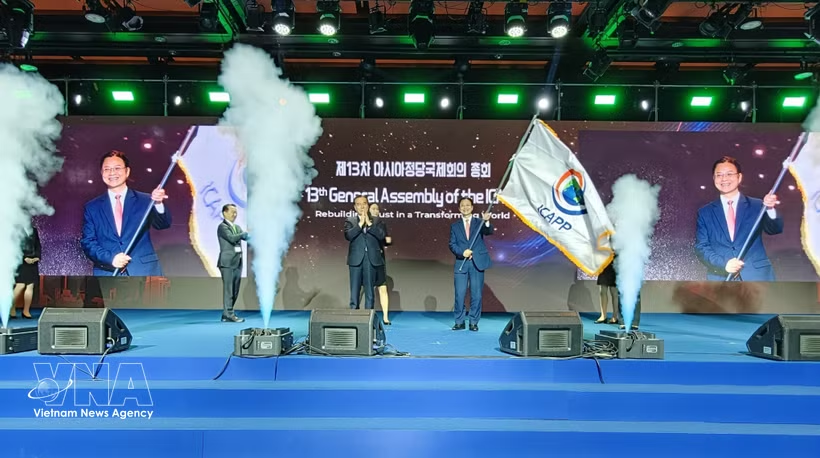
At the conference, the CPV officially assumed the role of host of the 14th ICAPP General Assembly in 2028, with strong support and confidence from member parties.
Speaking at the handover ceremony, Van described the role as both an honour and a responsibility to contribute to ICAPP’s overall development, continuing the Communist Party of Vietnam’s more than 25-year engagement with the organisation.
He highlighted the importance of equal dialogue, respect for differences, and greater understanding and cooperation among political parties.
The Vietnamese delegation pledges to work closely with ICAPP’s leadership, Secretariat and members to ensure the successful organisation of the 2028 General Assembly, foster new initiatives and translate consensus into practical cooperation for a peaceful, stable and prosperous Asia, he said.
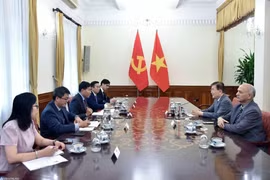
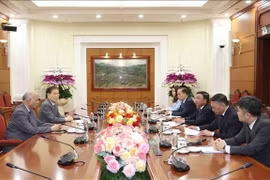
The selection of the CPV to host the 14th ICAPP General Assembly in 2028 marks an important milestone in Party diplomacy. It reflects recognition by political parties of its role, standing and proactive, positive and responsible contributions to multilateral cooperation mechanisms among political parties. It also offers an opportunity for the CPV to further serve as a bridge, strengthen ties with political parties across the region, consolidate political trust and promote cooperation for regional peace, stability and development. On the occasion, Van met with Lee Kai Ho, Chairman of the ICAPP Parliamentary Union and a lawmaker from the DP, and Shin Sung Bum, Vice Chairman of the union and a lawmaker from the People Power Party.
At the meeting, Van spoke highly of the positive development of the Vietnam-RoK Comprehensive Strategic Partnership.
He highlighted the special bonds between the two countries, built on decades of cooperation and extensive people-to-people exchanges. The growing Vietnamese community in the RoK and Korean community in Vietnam have become important bridges, fostering mutual understanding, trust and closer ties between the two peoples.
Against this backdrop, the official called on the political parties and parliamentarians of both countries to further promote bilateral relations and strengthen exchanges and cooperation through Party, State, parliamentary and people-to-people channels. He also urged both sides to create more favourable conditions for citizens and businesses of the two countries to live, study, work, invest and conduct business in each other's markets, bringing tangible benefits to their people.
The ICAPP Parliamentary Union leaders affirmed their support for Vietnam's hosting of the 14th ICAPP General Assembly in 2028 and expressed their wish to further strengthen cooperation with Vietnam and advance bilateral relations.
The two sides also discussed orientations and measures to enhance bilateral cooperation, particularly in the fields of economy, trade, investment, tourism, science and technology, and innovation. They agreed on the importance of leveraging their respective strengths, complementarities and cooperation potential, while encouraging businesses to expand investment, connect with partners and participate more deeply in regional and global supply and value chains. These efforts are expected to make the Vietnam-RoK Comprehensive Strategic Partnership increasingly substantive and effective.
On the sidelines of the conference, the Vietnamese Party delegation head also held meetings and exchanges with ICAPP leaders and representatives of member political parties to promote the organisation's role and bilateral cooperation, while helping prepare favourable conditions for the successful organisation of the 14th ICAPP General Assembly in Vietnam.
Founded in Manila, the Philippines, in September 2000, ICAPP is one of Asia's largest multilateral forums for political parties. It aims to promote dialogue, cooperation and mutual understanding among political parties, contributing to regional peace, stability and shared prosperity.
The General Assembly is ICAPP's most important activity and is held every two years. It brings together broad participation and support from member parties to exchange views on regional and international issues of common concern, set cooperation priorities and adopt key decisions of the organisation. /.