Proactive diplomacy turns commitments into tangible benefits

Beyond safeguarding independence and self-reliance, diplomacy must proactively anticipate developments, prevent conflicts, expand cooperation and mobilise external resources to create a peaceful environment for sustainable development and enhance Vietnam’s international standing.

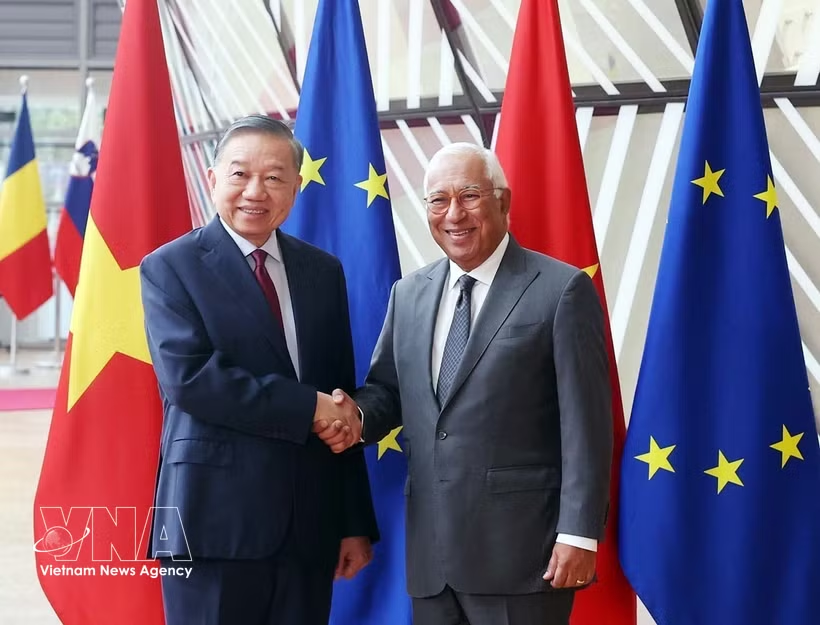
President of the European Council Antonio Costa (R) welcomes General Secretary of the Communist Party of Vietnam Central Committee and President To Lam in Brussels, Belgium, on October 22, 2026. (Photo: VNA)

Hanoi (VNA) – Defining external relations as a “key and regular task” alongside national defence and security reflects the Party’s strategic vision in the new era.

Beyond safeguarding independence and self-reliance, diplomacy must proactively anticipate developments, prevent conflicts, expand cooperation and mobilise external resources to create a peaceful environment for sustainable development and enhance Vietnam’s international standing.

Recent achievements have demonstrated the effectiveness of this approach. Vietnam has strengthened ties with traditional partners while establishing and upgrading cooperation frameworks with major countries and economic centres.

The elevation of Vietnam-EU relations to a Comprehensive Strategic Partnership and the official visit to the EU by General Secretary of the Communist Party of Vietnam Central Committee and President To Lam last month marked important milestones. Cooperation with Japan, France and India has also advanced in strategic areas, while Vietnam-Laos relations have been further strengthened through practical cooperation programmes.

External relations are increasingly being implemented comprehensively through Party diplomacy, State diplomacy and people-to-people exchanges, closely coordinated with defence, security and economic diplomacy.

Notably, external affairs are increasingly being implemented in a coordinated manner across the three pillars of Party diplomacy, State diplomacy and people-to-people diplomacy, closely integrated with defence, security and economic diplomacy. A key measure of diplomatic success is the ability to translate political commitments into tangible benefits for the country and its people. High-level agreements must lead to concrete projects, while partnership frameworks should unlock investment, technology, jobs and added value for the economy.

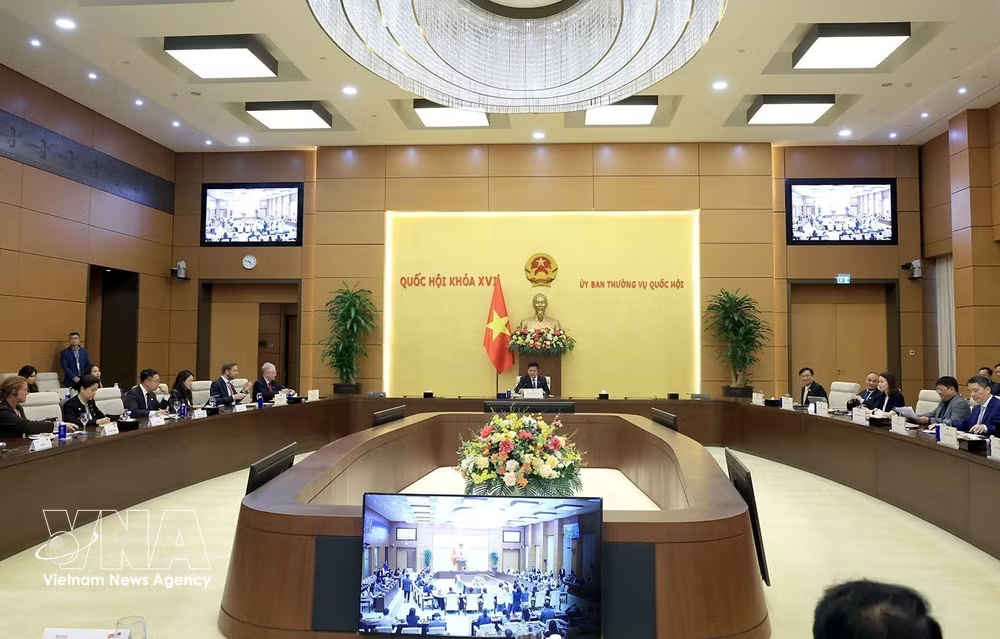
The November 5 meeting between Vice President of the National Assembly Nguyen Hong Dien and a high-level European business delegation illustrated this direction. Following the upgrade of Vietnam-EU relations, the two sides discussed institutional and legal reforms, investment, healthcare, science and technology, and sustainable development.

European businesses pledged long-term investment and cooperation with Vietnam in healthcare, pharmaceuticals, intellectual property, technology transfer, aerospace, the circular economy and human resources development.
vnanet-eu.jpg
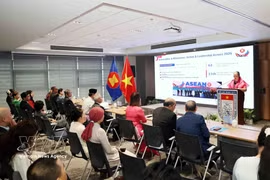
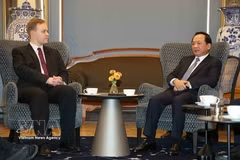
Vice President of the National Assembly Nguyen Hong Dien chairs a working session with a high-level European business delegation in Hanoi on November 5, 2026. (Photo: VNA)

Meanwhile, Vietnam called on European partners to accelerate ratification of the EU-Vietnam Investment Protection Agreement (EVIPA), urged the European Commission to lift its “yellow card” warning on Vietnamese seafood over illegal, unreported and unregulated (IUU) fishing, and proposed stronger cooperation under the Just Energy Transition Partnership (JETP).

With Japan, General Secretary and President To Lam’s official visit from November 8-11 is expected to generate fresh momentum in strategic cooperation.

Japanese Ambassador to Vietnam Ito Naoki said bilateral trade reached 43.7 billion USD in the first nine months of 2026, up 15% year-on-year, and is projected to reach around 58 billion USD for the full year. The two countries aim to raise the figure to 75 billion USD by 2030.

Japan also plans to train 250 Vietnamese semiconductor specialists through doctoral programmes. Meanwhile, cooperation between five pairs of universities is underway, with six new joint research projects expected to be announced during the visit.

These initiatives reflect a growing focus on high-tech industries, including semiconductors, artificial intelligence, digital transformation and green transition - areas crucial to Vietnam’s future competitiveness.

Cooperation with France in digital twins and artificial intelligence offers another example. Dassault Systèmes, in coordination with the Ministry of Finance and the National Innovation Centre, has established a Centre of Excellence (CoE) for digital twins and AI in Hanoi. Deputy Prime Minister Ho Quoc Dung stressed that cooperation should address practical needs in smart manufacturing, transport and urban development, and strengthen data security and domestic technological capacity.

At the local level, cooperation between Can Tho city and Swiss partners demonstrates how diplomatic ties can generate direct benefits for communities. A 10-million-USD non-refundable grant from the Swiss Government has helped improve urban infrastructure and flood resilience, benefiting approximately 442,600 residents across 2,675 hectares. In 2026, the city also approved three grants from Swiss organisations worth more than 448,000 USD for climate adaptation and digital skills development.

Meanwhile, stronger forecasting capacity is essential for responding to geopolitical uncertainties, supply chain disruptions and energy security challenges.

Recent discussions between Minister of Foreign Affairs Le Hoai Trung and National Security Advisor of India Ajit Doval covered not only trade, investment and technology but also energy security, maritime safety and supply chain resilience. With Oman, Vietnam also discussed opening diplomatic representative offices, mediation efforts in the Middle East and the security of maritime transport routes.

These activities underscore Vietnam’s consistent policy of cooperation based on respect for independence, sovereignty, equality and mutual benefit, and resolving differences peacefully in accordance with international law and the United Nations Charter. This approach enables the country to mobilise external resources without compromising its strategic autonomy or national interests.

At a meeting with President of the Lao National Assembly Sonexay Siphandone, General Secretary and President Lam stressed the need to translate high-level agreements into concrete programmes and projects based on the strengths and needs of both countries.

This message also captures the broader requirement for Vietnam’s diplomacy today: turning commitments into practical outcomes and making national interests and the well-being of the people the ultimate measures of success./.
VNA

See more

☀️ Morning digest on November 9

☀️ Morning digest on November 9

Activities of Party General Secretary and President To Lam's official visit to Japan, the 10th National Buddhist Congress, and the sixth political consultation at the deputy foreign minister level between Vietnam and Spain are among news highlights over last weekend.

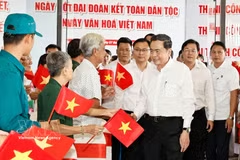
The Vietnamese delegation takes photo with students at the primary school named after the Socialist Republic of Vietnam (Photo: VNA)

CPV values traditional friendship with Mexican Labour Party

Deputy head of the CPV Central Committee’s Commission for Publicity Tran Thanh Lam proposed deeper theoretical exchanges and sharing of experience in Party building and national development; stronger cooperation in education, science, culture, external information, press, publishing and traditional medicine.

General Secretary of the Communist Party of Vietnam (CPV) Central Committee and President To Lam and Japanese Prime Minister Sanae Takaichi during her official visit to Vietnam in May, 2026. (Photo: VNA)

Top Vietnamese leader’s Japan visit to open up new space for bilateral cooperation

The visit is expected to further deepen ties through Party, State, parliamentary and people-to-people channels, while creating breakthroughs in economic, financial, scientific and technological cooperation, innovation, education and training, digital and green transformation, and supply chain diversification, thereby contributing to a peaceful and stable environment for development in both countries.

Politburo Member and Head of the Party Central Committee’s Commission for Publicity Trinh Van Quyet (R) meets with Jiri Mäntysalo, Vice Chairman of the Communist Party of Finland. (Photo: VNA)

Vietnam, Finland move to strengthen political trust, expand cooperation

Politburo Member and Head of the Party Central Committee’s Commission for Publicity Trinh Van suggested that Finland further promote its role as a bridge between Vietnam and the European Union (EU), while Vietnam could serve as a bridge between Finland and the Association of Southeast Asian Nations (ASEAN). He called for effective utilisation of the EU-Vietnam Free Trade Agreement (EVFTA) and urged Finland to encourage the remaining EU member states to ratify the EU-Vietnam Investment Protection Agreement (EVIPA) at an early date.

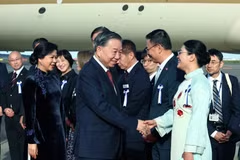
Representatives of the Japanese State and the Embassy of Vietnam in Japan welcome General Secretary of the Communist Party of Vietnam Central Committee and President To Lam and his spouse at Haneda International Airport in Tokyo. (Photo: VNA)

Top Vietnamese leader begins official visit to Japan

The visit is expected to further translate the potential and achievements of bilateral cooperation into concrete outcomes, strengthen the longstanding bonds between the two countries and ensure that the friendship nurtured across generations continues to deliver lasting benefits to both peoples.

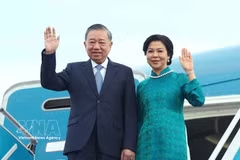
General Secretary of the Communist Party of Vietnam Central Committee and President To Lam, his spouse Ngo Phuong Ly and a high-ranking Vietnamese delegation leave Hanoi on November 8 for a four-day official visit to Japan at the invitation of the Japanese State. (Photo: VNA)

Top leader and spouse depart for official visit to Japan

General Secretary of the Communist Party of Vietnam Central Committee and President To Lam, his spouse Ngo Phuong Ly and a high-ranking Vietnamese delegation left Hanoi on November 8 for a four-day official visit to Japan at the invitation of the Japanese State.

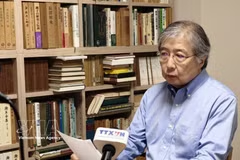
Toshiro Nishizawa, a Senior Fellow at Graduate School of Public Policy under the University of Tokyo in an interview with the Vietnam News Agency (VNA)'s correspondent in Japan (Photo: VNA)

Top leader’s visit to deepen Vietnam-Japan strategic cooperation: expert

The upcoming visit to Japan by General Secretary of the Communist Party of Vietnam Central Committee and President To Lam is expected to give fresh impetus to the Vietnam-Japan Comprehensive Strategic Partnership, reflecting the strategic priorities of both countries, according to a Japanese expert.

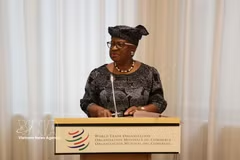
WTO Director-General Ngozi Okonjo-Iweala speaks at the event (Photo: VNA)

WTO hails Vietnam’s 20-year journey since accession

Joining the WTO was a strategic choice for Vietnam, closely associated with its Doi Moi (Renewal) process, opening-up policy and international economic integration. Over the past two decades, international economic integration has become a driving force for institutional reforms, trade expansion, foreign investment attraction and enhancement of the country's international standing.

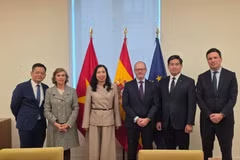
Vietnamese Deputy Minister of Foreign Affairs Le Thi Thu Hang (third, left) and other delegates at the political consultation (Photo: The Ministry of Foreign Affairs)

Vietnam, Spain seek to deepen Strategic Partnership

Vietnam asked Spain to continue voicing its support for and urging the European Commission (EC) to swiftly lift the IUU “yellow card” imposed on Vietnamese seafood, while actively encouraging EU member states to ratify the EU-Vietnam Investment Protection Agreement (EVIPA) at an early date.

Standing Deputy Minister of Foreign Affairs Nguyen Minh Vu (Photo: Ministry of Foreign Affairs)

Top leader's official visit to Japan carries three major strategic implications: Deputy FM

The visit, the first to Japan by the leader in his new capacity and the first visit to Japan by a General Secretary of the Communist Party of Vietnam in 11 years, will first set the overall strategic direction for bilateral relations in the new period, enabling leaders of the two countries to identify long-term cooperation orientations and priority areas that meet the development needs of both sides.