President Ho Chi Minh’s 1946 diplomacy combines steadfastness, flexibility: Japanese expert

In 1946, as President of the Democratic Republic of Vietnam, Ho Chi Minh pursued efforts to ease tensions through both official and informal channels. In addition to official diplomatic negotiations with French government leaders, he met leaders of political parties and forces across the political spectrum, held press conferences, gave interviews, and engaged with the French public.

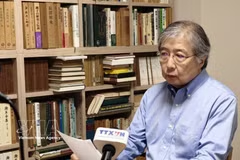
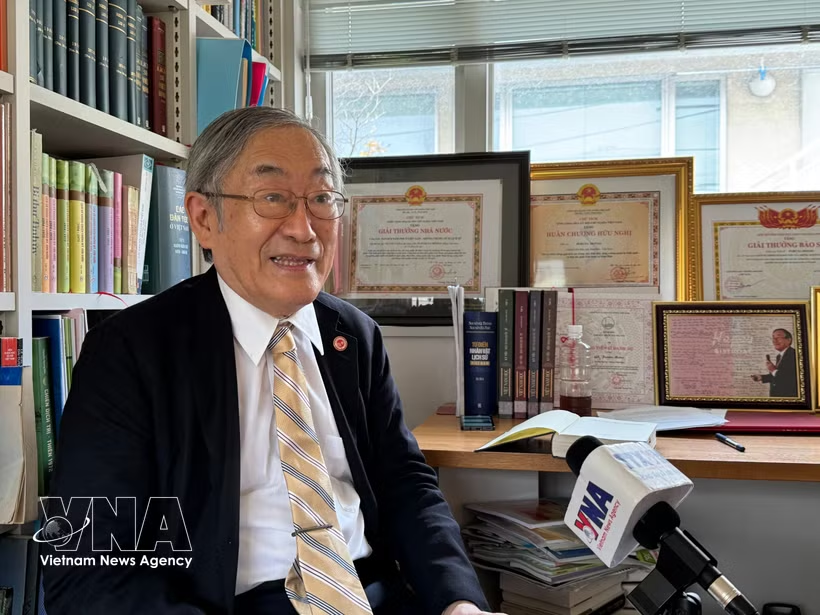
Prof. Furuta Motoo, former Rector of the Vietnam–Japan University (Photo: VNA)

Tokyo (VNA) – President Ho Chi Minh’s diplomatic approach in 1946 combined steadfastness in defending national independence with flexibility in pursuing peace, giving Vietnam valuable time to consolidate its forces and prepare for the resistance war against French colonialism, said Prof. Furuta Motoo, former Rector of the Vietnam–Japan University and an expert on Vietnamese history.

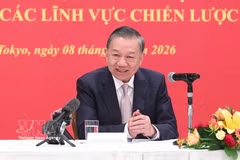
In an interview with Vietnam News Agency correspondents in Japan, Furuta said this approach was evident during the leader’s visit to France in 1946.

As President of the Democratic Republic of Vietnam (now the Socialist Republic of Vietnam), Ho Chi Minh pursued efforts to ease tensions through both official and informal channels. In addition to official diplomatic negotiations with French government leaders, he met leaders of political parties and forces across the political spectrum, held press conferences, gave interviews, and engaged with the French public.

These activities helped French people better understand the Vietnamese people's aspirations for national independence and reunification, as well as the potential for cooperation between the two countries. Ho Chi Minh sought every possible avenue for peace while ensuring that no concessions undermined the core interest of national independence, Furuta noted.

Assessing the President's decision to continue negotiations and sign the September 14, 1946 modus vivendi after the Fontainebleau Conference failed to reach the expected outcome, Furuta said the move demonstrated his continued efforts to seek an agreement amid escalating provocations and acts of aggression by reactionary French colonial forces in Indochina against the Government of the Democratic Republic of Vietnam.

According to the professor, the signing of the modus vivendi was a flexible political solution that helped prolong the valuable period of peace, allowing Vietnam to continue building and consolidating its forces ahead of the nationwide resistance war. Although it failed to restrain hawkish colonial forces, the agreement helped deepen divisions within France over the Vietnam issue, thereby serving the policy of making more friends and fewer enemies.

He noted that President Ho Chi Minh’s continued pursuit of peace until December 19, 1946 helped convince the Vietnamese people that every opportunity for a peaceful settlement had been exhausted. As a result, the decision to resist was not only driven by patriotism but also by the understanding that the country had no choice but to fight to defend its right to exist.

The spirit of “Quyet tu cho To quoc quyet sinh” (Determined to brave death for the survival of the Fatherland) was a continuation of those efforts to seek peace. When the possibility of a peaceful settlement was exhausted, the determination to defend independence became the driving force behind the people's decision to embark on the resistance war.

Looking back on the 1946–1954 resistance war, Furuta said President Ho Chi Minh’s diplomatic efforts, especially his visit to France, helped divide opposing forces, buy Vietnam time to prepare for resistance and demonstrate its commitment to peace at home and abroad, despite failing to avert war.

These contributions formed part of the broader process leading to the Dien Bien Phu Victory and the 1954 Geneva Accords. The significance of the 1946 diplomacy therefore extended beyond the immediate negotiating results to the political and social foundations it helped build for the prolonged resistance war, he said.

According to Furuta, the consistent principle guiding the Vietnamese leader’s diplomacy was an unwavering commitment to national independence and reunification. Diplomacy was used to create favourable conditions for national defence and, when necessary, combined with military strength and the collective strength of the people.

This combination of steadfast principles and flexible tactics contributed to Vietnam’s victory in the resistance war against French colonialism, he opined./.
VNA

See more

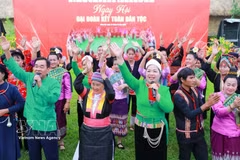
Representatives of ethnic minority groups join in a musical performance at a celebration of the Great National Unity Festival. (Photo: VNA)

📝OP-ED: Optimising cultural strength, reinforcing great national unity from grassroots

Harnessing cultural strength and reinforcing the great national unity bloc begin with concrete action at the grassroots level. In this process, Party committees provide leadership, local authorities create favourable conditions, the Vietnam Fatherland Front (VFF) and its member organisations play a central role in mobilising and bringing people together, while citizens are the creators, practitioners and beneficiaries of cultural values.

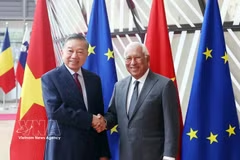
President of the European Council Antonio Costa (R) welcomes General Secretary of the Communist Party of Vietnam Central Committee and President To Lam in Brussels, Belgium, on October 22, 2026. (Photo: VNA)

Proactive diplomacy turns commitments into tangible benefits

Beyond safeguarding independence and self-reliance, diplomacy must proactively anticipate developments, prevent conflicts, expand cooperation and mobilise external resources to create a peaceful environment for sustainable development and enhance Vietnam’s international standing.

☀️ Morning digest on November 9

☀️ Morning digest on November 9

Activities of Party General Secretary and President To Lam's official visit to Japan, the 10th National Buddhist Congress, and the sixth political consultation at the deputy foreign minister level between Vietnam and Spain are among news highlights over last weekend.

The Vietnamese delegation takes photo with students at the primary school named after the Socialist Republic of Vietnam (Photo: VNA)

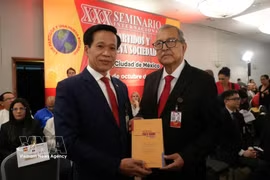
CPV values traditional friendship with Mexican Labour Party

Deputy head of the CPV Central Committee’s Commission for Publicity Tran Thanh Lam proposed deeper theoretical exchanges and sharing of experience in Party building and national development; stronger cooperation in education, science, culture, external information, press, publishing and traditional medicine.

General Secretary of the Communist Party of Vietnam (CPV) Central Committee and President To Lam and Japanese Prime Minister Sanae Takaichi during her official visit to Vietnam in May, 2026. (Photo: VNA)

Top Vietnamese leader’s Japan visit to open up new space for bilateral cooperation

The visit is expected to further deepen ties through Party, State, parliamentary and people-to-people channels, while creating breakthroughs in economic, financial, scientific and technological cooperation, innovation, education and training, digital and green transformation, and supply chain diversification, thereby contributing to a peaceful and stable environment for development in both countries.

Politburo Member and Head of the Party Central Committee’s Commission for Publicity Trinh Van Quyet (R) meets with Jiri Mäntysalo, Vice Chairman of the Communist Party of Finland. (Photo: VNA)

Vietnam, Finland move to strengthen political trust, expand cooperation

Politburo Member and Head of the Party Central Committee’s Commission for Publicity Trinh Van suggested that Finland further promote its role as a bridge between Vietnam and the European Union (EU), while Vietnam could serve as a bridge between Finland and the Association of Southeast Asian Nations (ASEAN). He called for effective utilisation of the EU-Vietnam Free Trade Agreement (EVFTA) and urged Finland to encourage the remaining EU member states to ratify the EU-Vietnam Investment Protection Agreement (EVIPA) at an early date.

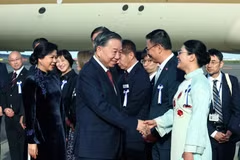
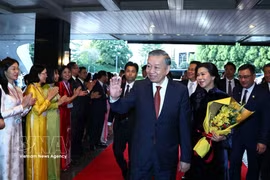
Representatives of the Japanese State and the Embassy of Vietnam in Japan welcome General Secretary of the Communist Party of Vietnam Central Committee and President To Lam and his spouse at Haneda International Airport in Tokyo. (Photo: VNA)

Top Vietnamese leader begins official visit to Japan

The visit is expected to further translate the potential and achievements of bilateral cooperation into concrete outcomes, strengthen the longstanding bonds between the two countries and ensure that the friendship nurtured across generations continues to deliver lasting benefits to both peoples.

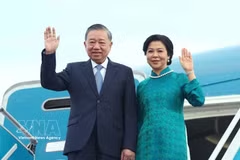
General Secretary of the Communist Party of Vietnam Central Committee and President To Lam, his spouse Ngo Phuong Ly and a high-ranking Vietnamese delegation leave Hanoi on November 8 for a four-day official visit to Japan at the invitation of the Japanese State. (Photo: VNA)

Top leader and spouse depart for official visit to Japan

General Secretary of the Communist Party of Vietnam Central Committee and President To Lam, his spouse Ngo Phuong Ly and a high-ranking Vietnamese delegation left Hanoi on November 8 for a four-day official visit to Japan at the invitation of the Japanese State.

Toshiro Nishizawa, a Senior Fellow at Graduate School of Public Policy under the University of Tokyo in an interview with the Vietnam News Agency (VNA)'s correspondent in Japan (Photo: VNA)

Top leader’s visit to deepen Vietnam-Japan strategic cooperation: expert

The upcoming visit to Japan by General Secretary of the Communist Party of Vietnam Central Committee and President To Lam is expected to give fresh impetus to the Vietnam-Japan Comprehensive Strategic Partnership, reflecting the strategic priorities of both countries, according to a Japanese expert.

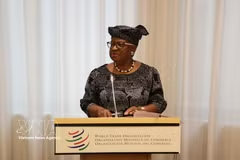
WTO Director-General Ngozi Okonjo-Iweala speaks at the event (Photo: VNA)

WTO hails Vietnam’s 20-year journey since accession

Joining the WTO was a strategic choice for Vietnam, closely associated with its Doi Moi (Renewal) process, opening-up policy and international economic integration. Over the past two decades, international economic integration has become a driving force for institutional reforms, trade expansion, foreign investment attraction and enhancement of the country's international standing.

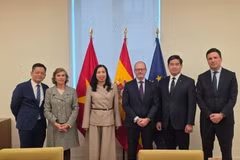
Vietnamese Deputy Minister of Foreign Affairs Le Thi Thu Hang (third, left) and other delegates at the political consultation (Photo: The Ministry of Foreign Affairs)

Vietnam, Spain seek to deepen Strategic Partnership

Vietnam asked Spain to continue voicing its support for and urging the European Commission (EC) to swiftly lift the IUU “yellow card” imposed on Vietnamese seafood, while actively encouraging EU member states to ratify the EU-Vietnam Investment Protection Agreement (EVIPA) at an early date.