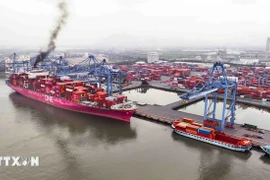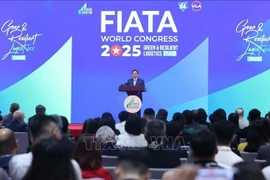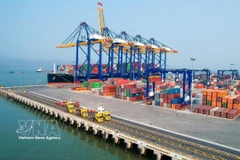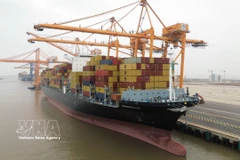
Hanoi (VNA) – As cross-border e-commerce emerges as a key driver of global trade, Vietnam is placing logistics at the heart of its long-term growth agenda, viewing it as a high value-added service sector and an essential engine for economic and social development.
On October 9, Prime Minister Pham Minh Chinh signed Decision No. 2229/QĐ-TTg approving the National Strategy for the Development of Vietnam’s Logistics Services for 2025-2035, with a vision to 2050. This marks the first time Vietnam has adopted a comprehensive and long-term strategy to build a competitive logistics sector capable of meeting the demands of international economic integration.
Driving force for cross-border e-commerce
The global cross-border e-commerce market reached 791.5 billion USD by the end of 2024 and is projected to maintain growth above 30% annually in the coming years. For Vietnamese producers, especially small and medium-sized enterprises, this presents a golden opportunity to expand globally.
However, experts warn that logistics remains the decisive factor for competitiveness. Only when logistics systems are modern, transparent, and cost-efficient can Vietnamese goods reach consumers around the world swiftly and effectively.
Nguyen Thi Hoai An, Vice President of the Global Alliance for Cross-Border E-Commerce (ACBC Global) and President of ACBC Vietnam, said cross-border e-commerce represents not only a new trading infrastructure but also an extended arm of globalisation, enabling products and value chains to move freely across borders.
Vietnam is at a golden moment for breakthrough growth, she said, citing the country’s strategic advantages such as a favourable geographic location, abundant raw materials, a young workforce, and rapid digital transformation.
From a business perspective, Xiao Qiuli, General Director of Guangdong Global Shopping E-commerce Co., Ltd (GGBingo), noted that Vietnamese enterprises can strengthen their global presence by effectively using digital marketplaces such as Amazon, TikTok Shop, Lazada, Shopee, and JD.com to expand market coverage and boost revenue.
On Amazon alone, some 17 million Vietnamese products have been sold over the past two years, with revenue increasing by more than 50%. The figures demonstrate both rising international demand and the growing competitiveness of Vietnamese goods. Yet, to transform this potential into sustained growth, Vietnam’s logistics services must become faster, smarter, and more transparent to keep pace with the global trading environment.
A strategic turning point
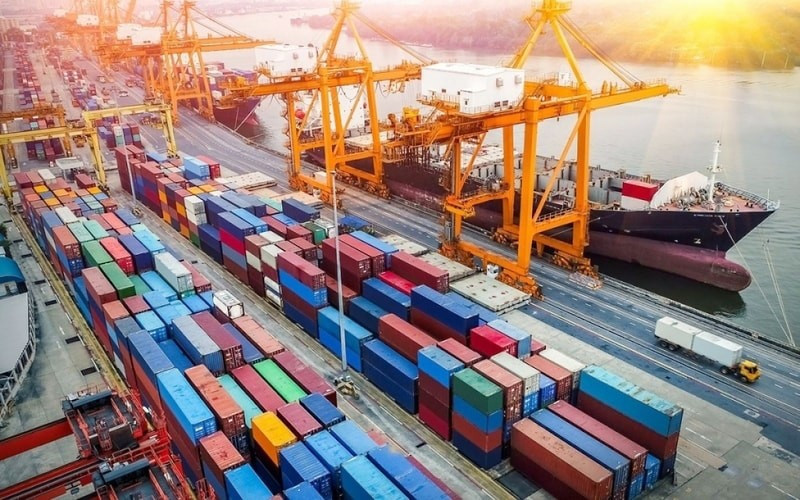
Under the new national strategy, logistics is recognised as a key economic sector with high added value and a critical service driving economic growth. The strategy leverages Vietnam’s geographic advantages, maritime potential, and trends in digital and green transformation to build a modern, connected logistics ecosystem.
It outlines nine key solution groups, including improving legal frameworks and state management; developing modern logistics infrastructure; enhancing regional connectivity; building supply sources and expanding logistics markets; strengthening enterprise competitiveness and service quality; promoting research, innovation, and digital and green transformation; developing high-quality human resources; and empowering associations and pioneering enterprises.
According to economist Dinh Trong Thinh, one strategic objective is to reduce logistics costs to boost the competitiveness of enterprises and help raise exports beyond 1 trillion USD in the near future. Efficient logistics, he said, accelerates the flow of goods, cuts transport costs, and enhances productivity and export performance.
The new strategy is not only a roadmap for the logistics industry but also a catalyst for the entire economy. A modern logistics system will spur investment, create jobs, promote digital transformation across production and distribution, and help Vietnam better adapt to global market fluctuations.
Experts agree that successful implementation will depend on close coordination between the State, businesses, localities, and investors. If carried out effectively, the strategy will not only elevate Vietnam’s logistics sector but also fuel economic growth, strengthen export performance, and advance the country toward its vision of becoming a modern, competitive, and sustainable supply chain hub in the region and the world./.