Strategy sets to develop sustainable, efficient, high value-added logistics industry

The logistics sector will pursue low-emission growth and green energy transition. By 2035, 70% of its workforce will be professionally trained, including 30% with university degrees. At least five modern and world-class logistics centres will be established as key hubs linking regional and global supply chains.

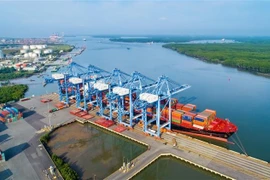
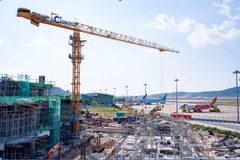
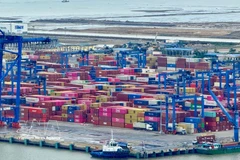
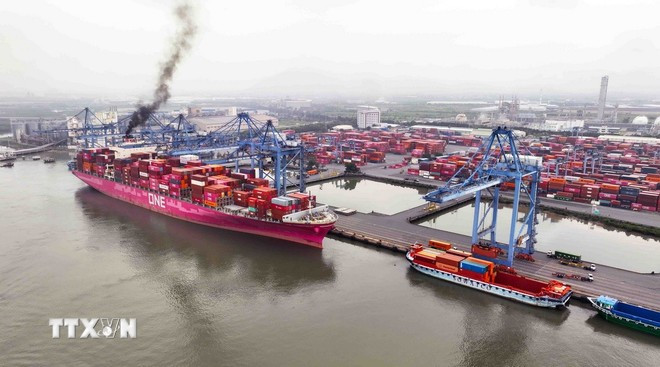
A view of Cai Mep -Thi Vai International Port (Photo: VNA)

Hanoi (VNA) - Deputy Prime Minister Bui Thanh Son has signed a decision approving the Vietnam Logistics Services Development Strategy for 2025–2035 period, with a vision to 2050, which aims to build a sustainable, efficient, and high value-added logistics sector with strong competitiveness, leveraging Vietnam’s advantages in global supply and value chains.

In the period, the added value of logistics services is set to account for 5 – 7% of the country’s GDP, with an average annual growth rate of 12–15%. The strategy seeks to raise the outsourcing rate of logistics services to 70 – 80% and reduce logistics costs to around 12 – 15% of GDP. Vietnam aims to rank among the world’s top 40 countries and territories in the World Bank’s Logistics Performance Index (LPI). Meanwhile, 80% of logistics enterprises are expected to adopt digital transformation solutions.

The logistics sector will pursue low-emission growth and green energy transition. By 2035, 70% of its workforce will be professionally trained, including 30% with university degrees. At least five modern and world-class logistics centres will be established as key hubs linking regional and global supply chains.

By 2050, logistics services will make up 7 – 9% of GDP and grow 10–12% annually, while the outsourcing rate of logistics services is targeted increasing to 80–90%, and logistics costs will drop to 10 – 12% of GDP. Additionally, Vietnam aims to rank among the world’s top 30 in the World Bank’s LPI. All Vietnamese logistics enterprises are expected to apply digital transformation solutions.

The industry is expected to develop efficiently toward low emissions, contributing to the national net-zero goal. The strategy also sets to develop at least 10 modern logistics service centres of international standard, which will act as a hub for connection with regional and global supply chains.

The strategy sketches out orientations to create breakthroughs in finalising the legal and institutional framework to improve the business environment, encourage all economic sectors to join logistics development, promote international integration, and strengthen state management and law enforcement in the logistics sector in line with market mechanisms and international law and practices

Other goals include promoting investment in modern and synchronised logistics infrastructure, especially transport, trade, and digital infrastructure, while ensuring environmental protection, disaster prevention, and climate resilience. The strategy also seeks to strengthen linkages across sectors, regions, and international partners; develop logistics markets and supply sources for sustainable growth; improve business competitiveness; and promote green and high-quality logistics services based on digital platforms. It further emphasises the need to promote research, innovation, and the application of advanced technologies to boost logistics efficiency in production, trade, and domestic and international distribution.

Attention will be paid to developing high-quality logistics human resources; enhancing the role of industry associations and pinoner enterprises; forming modern supply chains; and expanding value-added logistics services to meet domestic and international demand, towards positioning Vietnam as a global transshipment and distribution hub.

The strategy also aims to develop free trade zones linked to seaports, airports, border gates, and key production areas; modern hubs for sorting and processing e-commerce goods to handle large volumes efficiently and safely using advanced technology; logistics parks, distribution centres, smart warehouses, and specialised storage facilities for agricultural products, chemicals, industrial goods, and processed products.

Urban logistics models will be developed in major cities to ensure efficient, cost-effective, and environmentally friendly goods circulation./.

VNA
See more

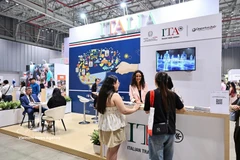
A dancing performance at the opening ceremony of the 2025 K–Vietnam Pop-up Festa in Dalat on November 8 (Photo: VNA)

K-Market Vietnam 2025 held in Lam Dong

The event features a series of cultural and trade exchange activities between Vietnam and the Republic of Korea (RoK), with more than 100 Lam Dong and Korean enterprises showcasing typical products from both sides.

Workers handle the preliminary processing of sea grapes before production. (Photo: VNA)

Company brings Vietnamese sea grapes to the world

The Tri Tin Seaweed Company, founded by Le Ben, has pioneered a new path for the province’s aquaculture sector by establishing a fully integrated production chain, applying high-tech processes, and adhering strictly to international standards.

Prime Minister Pham Minh Chinh addresses the 21st meeting of the State steering committee for national key projects in the transport sector. (Photo: VNA)

Entire Cao Bang - Ca Mau expressway must be inaugurated on December 19: PM

PM Chinh, who is head of the steering committee, asked all parties involved to strive hard to achieve the goal of putting 3,000 kilometres of expressways and approximately 1,700 kilometres of coastal roads into operation in 2025, thus creating momentum to welcome the 14th National Party Congress and meeting the travel needs of the people during New Year 2026 and the Lunar New Year Festival.

Prime Minister Pham Minh Chinh (C) presides over the 21st meeting of the State steering committee for national key projects in the transport sector. (Photo: VNA)

Government leader presides over meeting on national key transport projects

Noting that there are less than two months left until December 19 - the date set for the simultaneous ground-breaking and inauguration ceremonies of major projects, the PM emphasised that this is a crucial period to accelerate progress and make breakthroughs in the implementation of key projects and works.

Harvesting cage-farmed tilapia (Photo: VNA)

Vietnam exports first shipment of tilapia to Brazil

This shipment is one of 32 containers, totalling 700 tonnes of tilapia, ordered and imported by JBS Group from Vietnam. The products will first be distributed through HORECA supermarket and distribution network, and showcased in JBS's product display centre in Brazil.

Road leading to VSIP Can Tho at the intersection with National Highway 80 (Photo: VNA)

Green industry lures more FDI to Mekong Delta

The Mekong Delta region, having earned the monikers of the rice bowl, fruit and seafood basket of the country, and following the restructuring of administrative units, is now standing at the threshold of becoming a modern, sustainable industrial centre.

The codification of Resolution 42 into the law, effective from mid this month, is an important step, marking a key milestone in completing Vietnam’s NPL resolution process. (Photo: thoibaonganhang.vn)

Bad debt settlement fully benefits from new policy from H2 2026

Resolution 42, enacted in 2017 to pilot bad debt settlement for credit institutions, was introduced in response to a sharp rise in non-performing loans (NPLs). It empowered credit institutions to seize and liquidate collateral assets, expediting debt recovery. After more than six years of implementation, the resolution delivered certain results but expired last year.

The total retail sales of goods and consumer service revenue were estimated at 5.7 quadrillion VND for the first 10 months of the year. (Photo: VNA)

Retail sales growth remains stable over 10 months

With the current recovery momentum, the trade and services sector is expected to continue being a bright spot in Q4, driving GDP growth and ensuring a balance between domestic consumption and exports amid ongoing global economic fluctuations.

Delegates at the event (Photo: Ministry of Finance)

ASEAN meeting to drive regional cooperation, growth by removing barriers

Running from November 5–11, CCS 111 focuses on advancing service liberalisation and facilitation in ASEAN by removing barriers, enhancing transparency, reducing policy risks, and simplifying administrative procedures to enable businesses and service providers to operate more efficiently.

Goods at Hai Phong Port in northern port city of Hai Phong. (Photo: VNA)

Vietnam determined to build transparent global trade system

The Government of Vietnam on November 6 updated the World Trade Organisation (WTO)’s Committee on Rules of Origin (CRO) on adjustments to the agencies and organisations authorised to issue certificates of origin (C/O), as well as on the application of QR codes in the C/O issuance process.

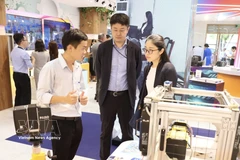
SemiExpo Vietnam 2025, themed “Powering Vietnam’s Semiconductor Ambition,” brings together around 5,000 delegates and feature 200 booths from major global technology corporations (Photo: VNA)

Vietnam opens largest int’l semiconductor exhibition

SemiExpo Vietnam 2025, themed “Powering Vietnam’s Semiconductor Ambition,” brings together around 5,000 delegates and feature 200 booths from major global technology corporations such as Lam Research, Coherent, Qorvo, Amkor, GlobalFoundries, Micron, Tokyo Electron, KLA, STMicroelectronics, Soitec, and Siemens.