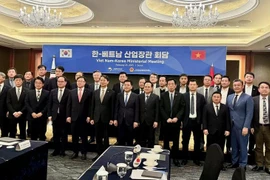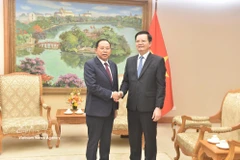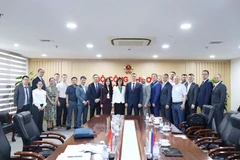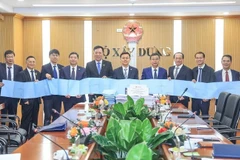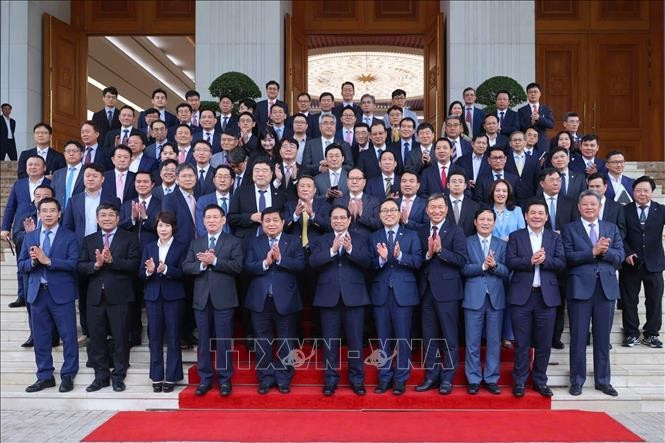
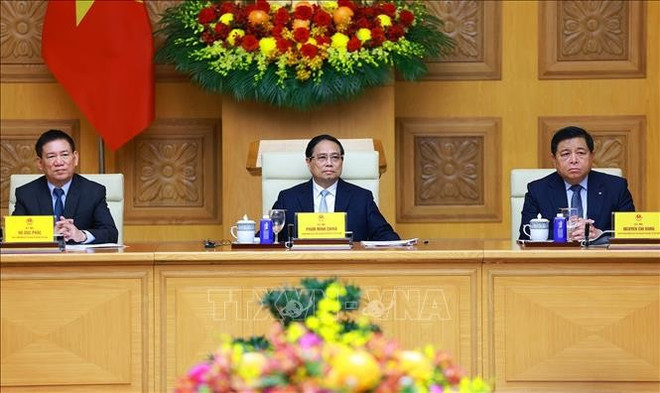
Hanoi (VNA) - No obstacles can hinder collaboration between Vietnam and the Republic of Korea (RoK), Prime Minister Pham Minh Chinh affirmed at a meeting on March 4 with leaders of 35 Korean enterprises that are doing business and invest in the Southeast Asian country.
PM Chinh stated that the bilateral relationship, through its ups and downs and breakthroughs, has developed increasingly better, more comprehensively, and positively.
Currently, there are over 200,000 Vietnamese people in the RoK, and about 200,000 Koreans in Vietnam. The number of Korean businesses operating in Vietnam is growing, with their scales and fields of operations expanding. In the context of a global decline in total investment, the East Asian nation’s investment in Vietnam has continued to rise.
Sharing the positive results of Vietnam's socio-economic development in 2024, he mentioned that its investment and business environment has continued to improve, receiving positive assessments from the international community and investors. The country's economy is currently ranked 33rd or 34th in the world, and many major international organisations have upgraded its competitiveness rankings and rated its creditworthiness as "stable."
Additionally, Vietnam is stepping up the development of strategic infrastructure, including transport, logistics, energy, and electricity, to meet the requirements of economic growth. It is also focusing on digital infrastructure, as well as social, cultural, healthcare, and education infrastructure, with an emphasis on sustainability and climate change adaptation, while developing key industries such as basic industries, cultural industries, and the entertainment industry.
Efforts are also made to step up administrative reform, smart governance, and organisational restructuring. This includes reducing intermediaries, eliminating the "asking-giving" mechanism, and promoting decentralisation and delegation of authority in a streamlined, efficient, and effective manner. These efforts aim to reduce red tape and harassment, and cut down costs and time for both citizens and businesses, PM Chinh said.
For rapid and sustainable development, the Government leader emphasised that Vietnam is continuing to build and implement policies to promote the digital economy, green economy, circular economy, sharing economy, and creative economy. The country is also developing tax policies that conform with current conditions and harmonise the interests of all parties, along with policies on localisation, reducing trade defence measures, and encouraging and providing investment incentives.
The ultimate goal is to uphold the nation's independence and sovereignty, ensure that the people become increasingly prosperous and happy, and create the best environment for foreign investors, including those from the RoK, to operate effectively and sustainably, he added.
PM Chinh suggested Korean businesses continue providing advice to help Vietnam achieve rapid and sustainable development, and create a more open and favourable institutional framework to benefit citizens and businesses. He urged them to expand investment and business operations in Vietnam, and recognise it as a development hub and a key link in their production and business processes, and supply chains.
The PM also encouraged the promotion of the transfer of advanced technology and scientific advances from the RoK to Vietnam, which will help increase the rate of localisation. Additionally, he emphasised the need to strengthen cooperation in human resources training, considering sending Korean experts and highly skilled workers to Vietnam, and actively welcoming skilled Vietnamese workers to the East Asian nation.
Vietnam is committed to always accompanying enterprises to ensure that they operate in accordance with the law, in a healthy and effective manner; and at the same time, is ready to listen to suggestions, enhance mutual understanding, and improve cooperation effectiveness.
The country hopes that Korean businesses investing in Vietnam will continue to develop, based on the foundation of the Comprehensive Strategic Partnership between the two countries, in the spirit of "working together, winning together, and developing together," he affirmed.
PM Chinh appreciated the RoK and its enterprises for accompanying Vietnam in its development and international integration process, contributing to the country’s achievement of its goals.
Regarding businesses’ concerns over Vietnam – US economic ties, PM Chinh laid stress on their Comprehensive Strategic Partnership as well as the complementary nature of the two economies without fierce competition.
The Vietnamese side has also proactively engaged with the US’s sectors and businesses to strengthen bilateral cooperation and promote mutual understanding so as to make the economic collaboration on par with the partnership. Simultaneously, Vietnam has resolved issues faced by US partners in a fair and reasonable manner and in accordance with the regulations and laws of both sides, including reviewing tax policies to ensure they are reasonable, harmonious, and beneficial for both sides, and promoting more balanced trade.
He noted that the world is witnessing rapid and unpredictable changes, opening up many opportunities but also posing challenges to the development of each country and region, especially developing and underdeveloped countries. This requires a comprehensive, people-centered, and global approach, strengthened international solidarity, as well as formulation of rational responses, ensuring harmonised benefits and shared risks among entities to coexist and develop together in an environment of peace, stability, cooperation, and development.
Over the recent past, the Vietnam – RoK Comprehensive Strategic Partnership has unceasingly developed, with cooperation across economy, trade and investment being an important pillar. The East Asian country has maintained its position as the biggest foreign investor and the largest tourism source market of Vietnam. Currently, the RoK has registered more than 92 billion USD in over 10,000 projects in Vietnam.
Last year, two-way trade reached 81.5 billion USD, with Vietnam’s imports from the RoK amounting to 55.9 billion USD.
At the forum, Korean Ambassador to Vietnam Choi Young-sam, Chairman of the Korean Business Association in Vietnam Ko Tae-yeon and leaders of Korean businesses lauded Vietnam’s investment and business climate, noting the country’s significant efforts to complete its legal framework, revise and supplement multiple laws to facilitate investment and business activities.
They particularly appreciated the PM's frequent meetings with businesses to listen to and address their difficulties and obstacles, helping consolidate investors' confidence.
The RoK side said they stand ready to accompany Vietnam during its economic development process, particularly investing in major projects such as the North-South high-speed railway and nuclear power plants as well as those in the domains of high technology, electronics, green energy, new materials, logistics, finance, and pharmaceuticals, among others.
Expressing their concerns about the impact of policy changes in some countries, they suggested the Vietnamese Government, ministries, sectors, and localities work out effective response plans. They recommended Vietnam to continue improving and stabilising legal policies, especially the legal framework for high-tech industries such as AI and semiconductors, and effectively implementing VAT and domestic import-export tax policies.
Additionally, it is necessary to facilitate enterprises’ access to the Investment Support Fund, simplify administrative procedures and implementation processes, shorten decision-making and investment licensing time, improve logistics services, and stabilise electricity supply, they stressed./.