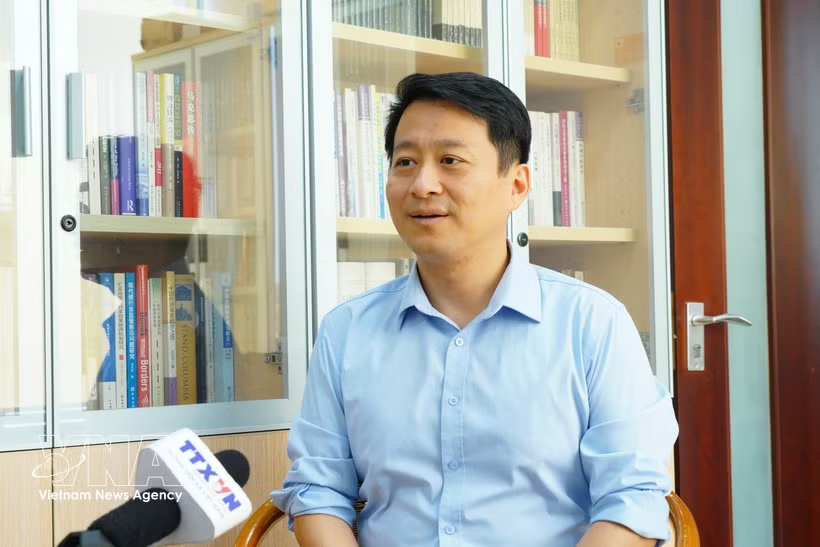
Beijing (VNA) – Politburo Resolution No. 23-NQ/TW on overseas Vietnamese (OV) affairs is an important step in mobilising the resources of Vietnamese people living abroad, creating additional momentum for the country’s economic development, scientific and technological advancement, and international integration, according to Professor Qu Qiang of Minzu University of China, a commentator for the China Global Television Network (CGTN).
Professor Qu said the approximately 6 million Vietnamese living overseas constitute a large and dynamic community, with many talented individuals and increasingly close ties with the domestic economy.
He noted that Vietnam’s policies in the past primarily viewed the OV community as a cultural community, while its economic, intellectual, scientific and technological potential had not been fully tapped. Vietnam’s economy has become increasingly integrated into the global economy; however, ties between OVs and the domestic economy have grown stronger.
According to the expert, the overseas Vietnamese network can help Vietnam access foreign markets, better understand local business environments, establish international partnerships and attract talent to return and contribute to national development.
Citing the experiences of countries such as the Republic of Korea, India, and China, he said successful Vietnamese entrepreneurs, scientists, professors and experts abroad could serve as important bridges for economic cooperation, human resource training, science and technology, and innovation, and also help promote Vietnamese culture.
He highlighted the potential role of the OV community in emerging fields such as artificial intelligence (AI). For example, Vietnamese experts working in the US, France and other countries could help connect Vietnam with international scientific and technological networks, thereby expanding cooperation opportunities, including in AI collaboration between Vietnam and China.
Qu said Resolution No. 23 reflects a shift in Vietnam’s approach to overseas Vietnamese, increasingly recognising them as an important resource for national development. It also demonstrates Vietnam’s continued commitment to openness and deeper international engagement.
Regarding Vietnam’s economic outlook, he said maintaining an open and stable policy environment while promoting technological upgrading and scientific and technical development could lay the foundation for a new period of growth. Over the next two to three years, major infrastructure, transport and energy projects are expected to provide additional growth momentum.
Vietnam could achieve or even exceed its 10% growth target in 2026 if economic development plans are implemented effectively, while the completion of major infrastructure projects from 2027 could boost growth, he stated.
The professor described the next two to three years as a potential “new period of rapid growth” for Vietnam, with opportunities arising from continued openness, technological advancement and the effective mobilisation of domestic and overseas resources./.

Harnessing overseas Vietnamese resources in new era
After more than two decades of implementing Politburo Resolution No. 36-NQ/TW, dated March 26, 2004, on overseas Vietnamese affairs, the Politburo adopted Resolution No. 23-NQ/TW on the same matter on August 2, 2026. The resolution ushers in a new phase with a more comprehensive approach, focusing on creating mechanisms to unlock and make effective use of the vast potential of the Vietnamese community abroad.