Tokyo (VNA) – Some photographs do more than record history. They convey the truth, awaken consciences and build bridges of solidarity among peoples. Photographs supplied by the Vietnam News Agency (VNA) to the Japan-Vietnam Friendship Association (VJFA) have fulfilled that mission since the 1950s.
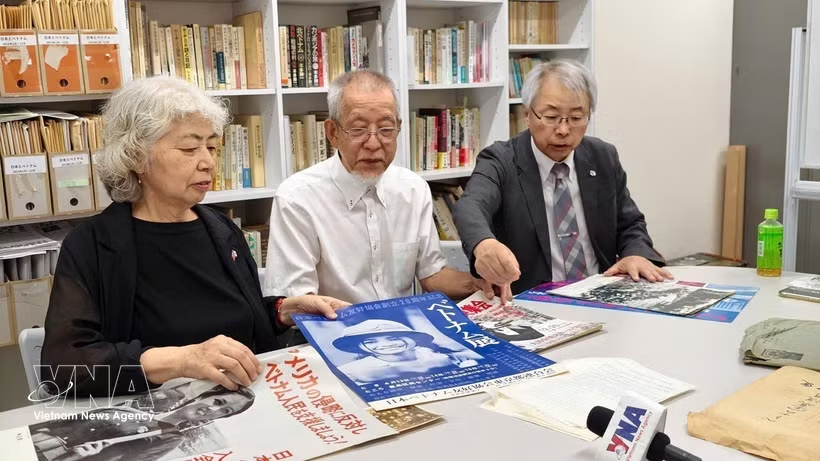
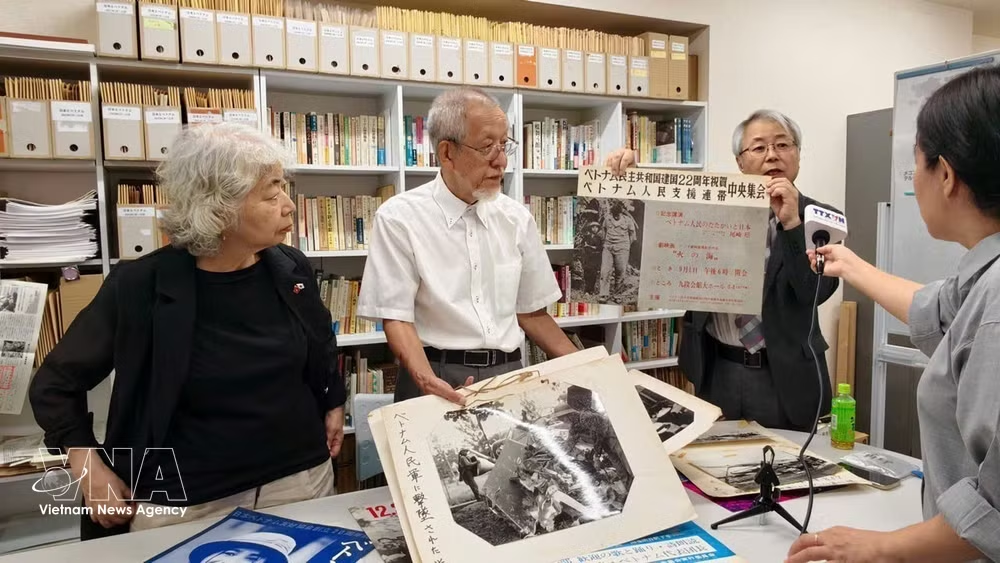
At the association’s office in Tokyo’s Toshima district, faded posters and archived photographs brought back memories of a meaningful youth for members looking back on the past.
People-to-people diplomacy
Journalist Kitagawa Toshifumi, Vice President of the Tokyo chapter of the Japan-Vietnam Friendship Association, said that after the 1954 Geneva Accords, Japanese soldiers who had joined the Viet Minh (the short name for Vietnam Doc Lap Dong Minh Hoi or the League for Independence of Vietnam) during the resistance war against French colonialism returned home. Some wished to maintain their ties with Vietnam and became central figures in movements supporting its independence and reunification, laying the foundation for the association’s establishment in 1955.
Prof. Furuta Motoo, Secretary General of the association, said it had cooperated with the Vietnam Peace Committee since its establishment. By 1965, it had developed systematic ties with numerous Vietnamese agencies and organisations, including the VNA.
The VJFA was established in Vietnam in 1965. In June that year, a delegation from the Democratic Republic of Vietnam, led by journalist Luu Quy Ky, visited Japan for the association’s 10th founding anniversary. The exchanges marked the beginning of the association’s receipt of VNA materials.
Kitagawa said Japanese women’s, youth, trade union and student organisations joined campaigns supporting Vietnam, sending goods and relief supplies and raising funds.
Komatsu Miyuki, a member of the association, recalled that many Japanese students, workers and others wanted to support Vietnam, with workers donating a day’s wages. Kitagawa, then a student, said he and his friends donated leftover money from their outings to the Vietnam support fund.
Furuta said the close ties between Japanese and Vietnamese organisations had two major historical meanings. They helped strengthen Japan’s movement against the US war in Vietnam and support for the Vietnamese people, while fostering people-to-people diplomacy before official diplomatic ties were established. This, he said, laid the groundwork for the Japanese government to establish diplomatic relations with the Democratic Republic of Vietnam in September 1973.
Photographs with a historic mission
During the war, when communications between Vietnam and the outside world were extremely difficult, VNA photographs reached Japan and became an important force behind the solidarity movement.
Kitagawa said the association cooperated with Japan Press Service. The VNA transmitted photographs electronically to the agency, which printed and distributed them to various organisations. Other photographs were brought to Japan by Japanese visitors to Vietnam.
The association used the photographs to produce large posters and organise exhibitions informing the Japanese public about the situation in Vietnam and mobilising solidarity and financial support. Kitagawa said VNA photographs played an important role in these activities.
Looking at the faded photographs and posters, Kitagawa, Yanagi Yozi, head of the association’s office, and Komatsu recalled emotionally: “They are part of our lives.”
Furuta affirmed that VNA photographs had fulfilled their “mission” in Japan and expressed sincere thanks to the agency and Vietnamese people for providing the valuable materials.
He voiced his hope that this precious history would be passed on to younger generations, contributing to Vietnam-Japan friendship in the new era./.