National programme aims to strengthen child protection, reduce illegal child labour

The programme aims to ensure all children live in safe and healthy environments, minimise child abuse nationwide, and create opportunities for children suffering violence, sexual abuse or illegal child labour, those at risk of violence, exploitation or neglect, as well as the ones with other special circumstances, to integrate into society and develop comprehensively.

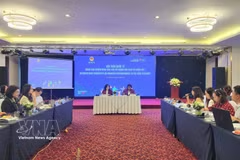
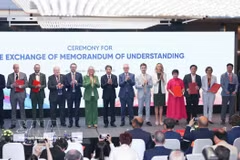
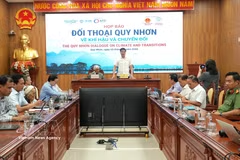
The September 11 launch of the national programme for 2026–2030 on strengthening child protection and preventing and minimising illegal child labour (Photo: VNA)

Hanoi (VNA) – The Ministry of Health on September 11 launched a national programme for 2026–2030 on strengthening child protection and preventing and minimising illegal child labour, aiming to ensure safe and healthy environments for children and opportunities for their comprehensive development.

The launch ceremony was held in Hanoi and connected online with health departments in all 34 provinces and cities nationwide.

Addressing the event, Deputy Minister of Health Le Duc Luan said the Party and the State have consistently identified children as the future masters of the country, with child protection regarded as a strategic task and a responsibility shared by the entire political system, families and society.

Vietnam has made notable progress in child protection over the recent past, with its legal and policy system increasingly perfected. More than 80% of children in special circumstances have received assistance suited to their needs and local socio-economic conditions, while the rate of children engaged in labour in violation of the law has fallen significantly from 5.4% to 1.31%.

According to Luan, all children suffering abuse have received appropriate support and intervention. Child protection services have been developed at three levels: prevention, support and intervention. The national child protection hotline 111 has continued to receive reports and coordinated with relevant sides to ensure timely responses to violations of children’s rights.

These achievements demonstrate Vietnam’s strong commitment to implementing the UN Convention on the Rights of the Child, the official said.

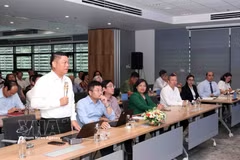
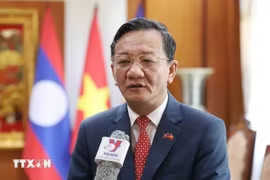
Deputy Minister of Health Le Duc Luan speaks at the event. (Photo: VNA)

Deputy Minister of Health Le Duc Luan speaks at the event. (Photo: VNA)

However, he noted, child protection still faces numerous challenges. Child violence is showing an upward trend globally amid economic downturns and inflation. Meanwhile, vulnerable children face higher risks of dropping out of school, entering the workforce early, or experiencing abuse and violence.

Child labour remains prevalent in agriculture, forestry and fisheries, as well as in households and small-scale production and business establishments. In some localities, child protection service networks remain limited, while coordination, referral mechanisms, information technology application and child data management at the grassroots level vary among regions.

To institutionalise the Party’s and State’s policies and international commitments on children's rights, the Prime Minister issued Decision No. 1415/QD-TTg approving the national programme for 2026–2030 on July 28, 2026.

The programme aims to ensure all children live in safe and healthy environments, minimise child abuse nationwide, and create opportunities for children suffering violence, sexual abuse or illegal child labour, those at risk of violence, exploitation or neglect, as well as the ones with other special circumstances, to integrate into society and develop comprehensively.

It sets out seven groups of key targets and six groups of tasks and solutions, with clear responsibilities, authority, timelines and expected results.

Addressing the event, a UNICEF representative commended Vietnam’s efforts, saying child protection should be regarded as an important foundation for human resources development, social stability and long-term prosperity.

UNICEF recommended continued investment in professional social workers, particularly at the commune level; stronger prevention through parent-support programmes; safer schools; greater community engagement; and enhanced online child protection. It stressed the need for child-centred measures that enhance family resilience and ensure children, parents and communities can promptly access support services when needed./.

VNA

See more

The international workshop on empowering women in the care economy on October 8, 2026 (Photo: VNA)

Int’l workshop focuses on women’s empowerment in the care economy

Vietnam has built a relatively comprehensive legal and policy framework to underpin the sector, including the Labour Code, the Law on Gender Equality, the Law on Social Insurance, the Law on Population and the National Strategy on Gender Equality for 2021-2030. Together, they set goals and measures to narrow gender gaps and give women and men equal opportunities to benefit across a range of areas.

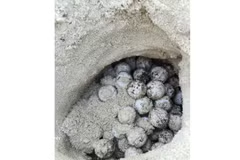
A sea turtle nest found at Mui Tau Beach on Hon Cau Island after a night of rain. (Photo: VNA)

Sea turtle nests on Lam Dong's Hon Cau island for sixth time this year

Since the beginning of 2026, sea turtles have nested six times at three beaches on Hon Cau island, namely Nhat, Mui Tau and Ba Hon. Three nests were left undisturbed at safe locations, while another three were relocated to the incubation area for protection, involving a total of 246 eggs.

The “Colours of the Five Continents” street festival tales place at the Hoan Kiem Lake pedestrian zone, attracting large crowds of locals and international visitors (Photo: VNA)

Vietnam tourism gains appeal from safety, diverse experiences

According to international reports referenced by the WEF, Vietnam has a high level of safety awareness, a low crime rate and a terrorism impact score of zero. These factors helped place the country’s Safety and Security indicator among the world’s highest in the TTDI 2026 rankings.

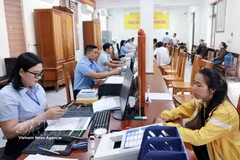
At Phong Nha communal Public Administration Service Centre in Quang Tri province (Photo: VNA)

Administrative reform shifts focus to practical results

Agencies largely kept the receipt, processing and return of administrative results running continuously, openly and transparently, with citizens and firms at the centre of public service delivery. They also kept upgrading, linking and using the databases serving administrative processing, carried out tasks under the 100-day Action Plan for the Politburo's Resolution 57-NQ/TW, and rolled out new initiatives and models to lift service quality.

Rendering of the APEC Phu Quoc Convention and Exhibition Centre and multipurpose performance venue (Photo: Sun Group)

Inside Phu Quoc’s APEC landmarks: Features ‘never seen before’

Nicolas Medrano, Design Principle and SOM’s Asia-Pacific Practice Leader, said from the outset, the project was designed to fit Phu Quoc's terrain, coastline, elevation and geography. It includes extensive outdoor public spaces that connect people directly with nature, providing a foundation built to adapt, withstand challenges and develop sustainably over the next century.

An architectural rendering of the VIP terminal at Phu Quoc International Airport

Phu Quoc int’l airport planning adjusted to serve APEC 2027

Under the adjusted plan, several sections of internal service roads will be added or revised to meet security, safety and operational requirements for the event. A parking area for ground service vehicles and equipment will also be added east of the VIP/general aviation terminal.

Participants in the conference on people-to-people diplomacy in Ho Chi Minh City on October 6, 2026 (Photo: VNA)

People-to-people diplomacy contributes to Ho Chi Minh City’s development

Ho Chi Minh City currently has 117 licensed foreign NGOs operating in areas including healthcare, education, social protection and community development. As of September 2026, the municipal People’s Committee had approved 30 applications to receive and implement project and non-project aid packages, with total committed funding of about 302 billion VND (11.6 million USD).