Clear, stable mechanisms needed to tap OV resources: Vietnamese-Canadian entrepreneur

OVs offer more than capital; they also bring knowledge, technology, management experience, and international market access. Vietnam needs to advance high technology, digital transformation, artificial intelligence, green economy, environmental protection, education and training.

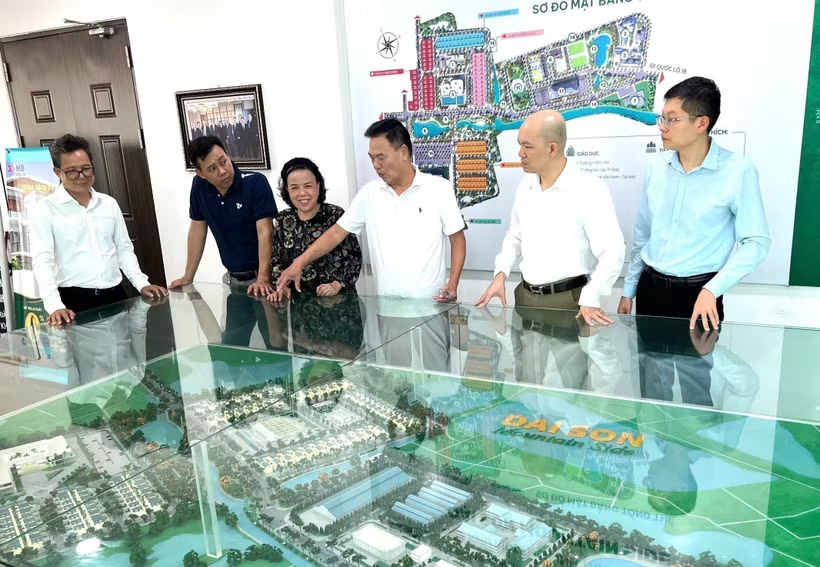
Businessman Nguyen Hoai Bac (third from right) introduces visitors to the model of Dai Son urban area, of which he is the investor. (Photo published by VNA)

Ottawa (VNA) – The Politburo’s Resolution 23-NQ/TW should soon be translated into clear, stable, and more favourable mechanisms to bolster overseas Vietnamese (OV) confidence in investing at home, said Vietnamese-Canadian entrepreneur Nguyen Hoai Bac.

Bac, who is Vice President of the Vietnam-Canada Business Association and chairman of Dai Son Group, said after 40 years in Canada and 25 years investing directly in Vietnam, he sees enormous untapped potential for the OV community to contribute to the homeland.

He noted that OVs offer more than capital; they also bring knowledge, technology, management experience, and international market access. Vietnam needs to advance high technology, digital transformation, artificial intelligence, green economy, environmental protection, education and training.

Many Vietnamese work in developed economies with access to advanced technologies, management models and business practices. That expertise remains underused partly because policy and investment bottlenecks prevent entrepreneurs from committing to long-term projects, Bac said.

Against that backdrop, Resolution 23-NQ/TW reaffirms that the OV community is an integral part of the great national unity bloc, while providing a basis for greater contributions to national development.

According to him, the approach is shifting from mobilising OV to treating them as development partners who directly contribute resources, experience and initiatives.

Bac said a major obstacle is inconsistent policy enforcement, with overlapping regulations and unstable tax, fee and charge policies that can disrupt medium- and long-term investment plans.

A gap between central policy and local enforcement is particularly concerning. Favourable rules mean little if procedures remain slow. For investors, time is a resource, and delays raise costs, hurt project efficiency and can push capital to more favourable markets.

The resolution therefore needs clear, consistent guidance from central to local levels, with defined procedures, responsibilities and processing deadlines so entrepreneurs can plan proactively.

He suggested going beyond investment procedures by fine-tuning rules for legitimate capital flows between Vietnam and countries with large Vietnamese communities, like Canada. While sending money from Canada to Vietnam for investments is fairly straightforward, some transactions in the opposite direction still involve several steps. He also noted that immigration policies for overseas Vietnamese entrepreneurs should be updated to support long-term projects, as a stable visa system would ease administrative burdens for investors managing ventures in Vietnam.

On importing new technology and hi-tech equipment, he said procedures for import, inspection and commissioning should be clearer, more transparent and faster, as prolonged warehousing and port storage raise costs and delay projects.

Clearing these barriers will unlock resources from more than 6.5 million Vietnamese in 130 countries and territories, with entrepreneurs, experts and intellectuals serving as bridges that bring capital, knowledge and technology, connecting domestic firms to global partners, markets and management models.

For Vietnam-Canada ties, that role is especially meaningful, given remaining room for cooperation in trade, investment, technology and innovation. A transparent, stable and favourable investment environment would turn OV resources into concrete projects that contribute to national development, he added./.
​

VNA

See more

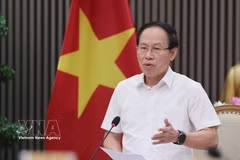
Deputy Prime Minister Le Tien Chau addresses the meeting (Photo: VNA)

Deputy PM asks for highest education quality, safety for students

Regarding the construction of inter-level boarding schools in border communes, all 108 schools under Phase 1 opened for the 2026-2027 academic year, with 40 having completed all construction items. Procedures for groundbreaking at 121 schools under Phase 2 across 17 provinces and cities have been completed, with all projects targeted for completion before August 30, 2027.

Hanoi leaders attend the inauguration and groundbreaking ceremonies for projects. (Photo: VNA)

Hanoi launches 18 key projects worth nearly 4.94 billion USD

The city announced 292 projects with a combined investment of 384.886 trillion VND (14.92 billion USD), including 18 key projects worth 127.46 trillion VND, focusing on transport, infrastructure, environmental protection and public services.

With just a smartphone, a wealth of knowledge spanning tens of thousands of books can now be accessed in an instant. (Photo: Thanh Nien Newspaper)

Vietnam’s first shared digital library platform launched

Vietnam Digital Library Joint Stock Company (ViLiB) launched its “Digital Knowledge Space – Shared Digital Library” platform in Ho Chi Minh City on October 8, enabling libraries, schools and organisations to connect and share digital resources, thereby broadening access to books and knowledge.

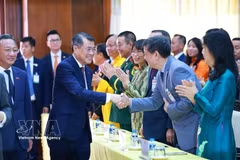
Prime Minister Le Minh Hung are welcomed by staff of the Vietnamese Embassy, representatives of Vietnamese agencies and associations, and members of the Vietnamese community in Laos on October 9, 2026. (Photo: VNA)

Vietnam–Laos special ties nurtured by the people: PM Le Minh Hung

Prime Minister Le Minh Hung urged Vietnamese people in Laos to maintain solidarity, integrate proactively, respect Lao laws and educate younger generations about their national roots and the special Vietnam–Laos relationship. Calling Laos a country undergoing dynamic transformation with emerging opportunities

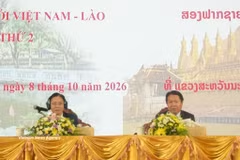
Vietnamese Deputy Minister of Foreign Affairs Ngo Le Van and his Lao counterpart Anouparb Vongnorke co-chair the conference. (Photo: VNA)

Vietnam, Laos enhance legal awareness among border village leaders

The conference aimed to help officials, specialised forces and village leaders gain a better understanding of border-related policies and laws, thereby enhancing their sense of responsibility for managing and protecting the border line and markers, maintaining public order and promoting economic development in border areas.

The international workshop on empowering women in the care economy on October 8, 2026 (Photo: VNA)

Int’l workshop focuses on women’s empowerment in the care economy

Vietnam has built a relatively comprehensive legal and policy framework to underpin the sector, including the Labour Code, the Law on Gender Equality, the Law on Social Insurance, the Law on Population and the National Strategy on Gender Equality for 2021-2030. Together, they set goals and measures to narrow gender gaps and give women and men equal opportunities to benefit across a range of areas.