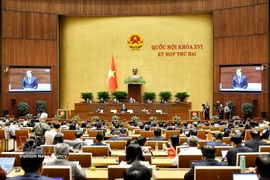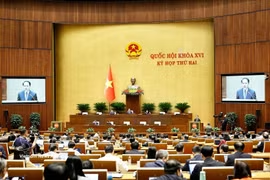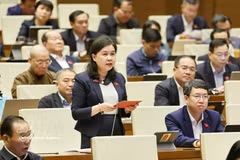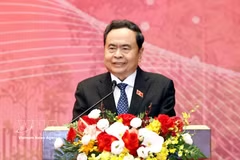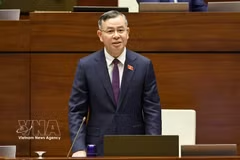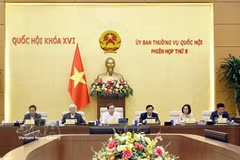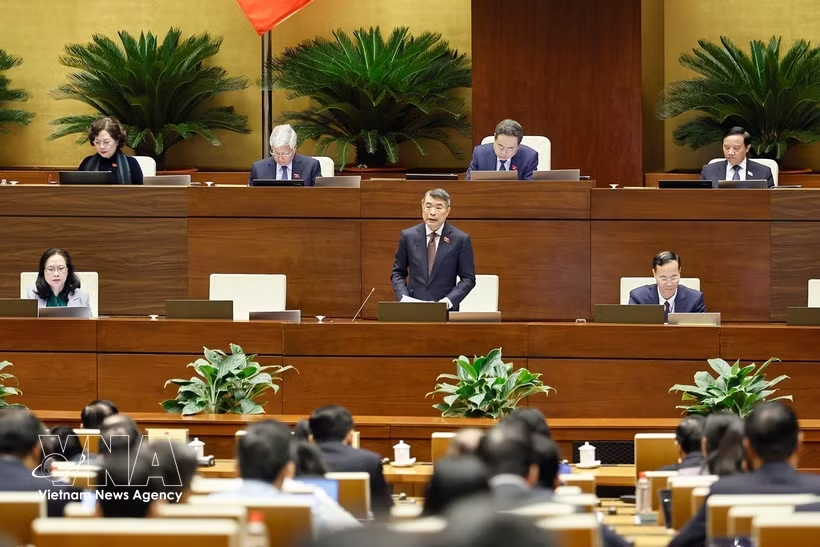
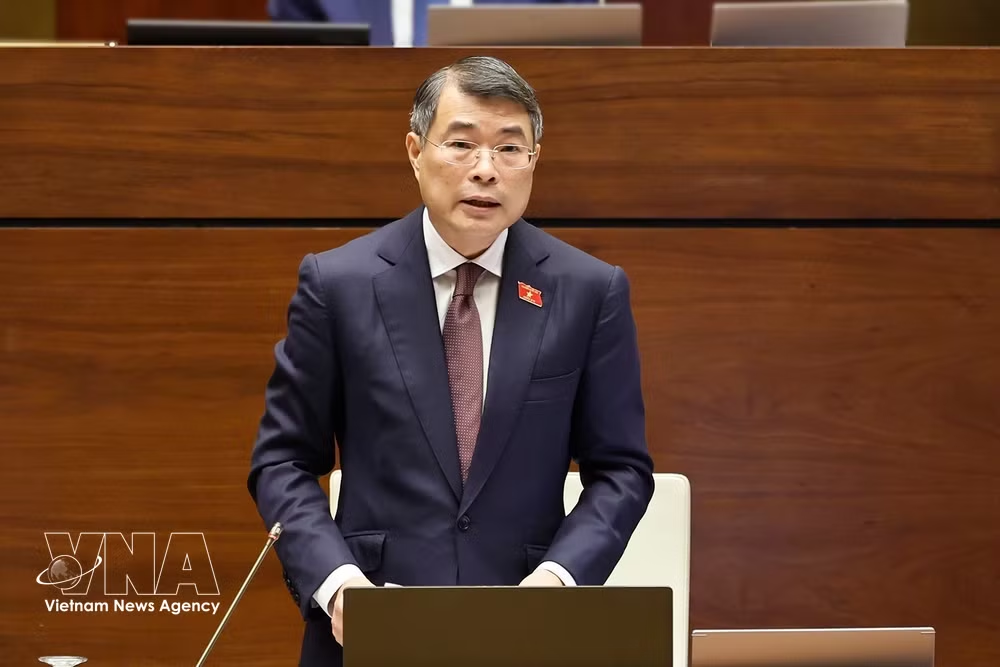
Hanoi (VNA) – Prime Minister Le Minh Hung answered questions raised by National Assembly deputies and voters on November 12, stressing the need to maintain macroeconomic stability and control inflation while maximising resource mobilisation, improving productivity and growth efficiency, and laying the foundation for economic growth of 10% or higher in 2027.
Controlling inflation, consolidating macroeconomic foundations
Reporting to the National Assembly, PM Hung said the Government has identified inflation control, currency stability and the firm consolidation of macroeconomic foundations as central and consistent priorities in its direction and management.
He said the Government has introduced a range of coordinated measures to reduce input costs and mitigate adverse impacts on people and businesses. These included tax cuts, reductions, exemptions and extensions; a 2% reduction in electricity prices; and guidance on a 30% reduction in income tax for businesses and household businesses in 2026-2027. Tax exemptions and reductions are expected to reduce State budget revenue by 256.7 trillion VND (about 10 billion USD) in 2026.
He also highlighted measures in monetary policy and the management of prices of goods and services.
Thanks to the proactive, timely and coordinated implementation of these policies, the average consumer price index (CPI) growth in the first 10 months was kept at 4.57%.
The PM described this as a positive result amid rising global inflation.
Alongside inflation control, the Government has directed efforts to mobilise and efficiently use resources for growth, while strongly promoting key growth drivers and sectors.
Updated figures as of October show that total social investment reached 3.11 quadrillion VND by the end of September, up 15.1%. State budget revenue in the first 10 months was estimated at 2.44 quadrillion VND, equivalent to nearly 96.4% of the annual estimate and up 11% year on year. Public investment disbursement reached nearly 708.6 trillion VND, or more than 74% of the plan, representing a 19.7% increase in the disbursement rate and a rise of over 217 trillion VND in absolute terms compared with the same period last year.
Foreign direct investment (FDI) attraction remained a bright spot, with registered capital reaching 54.85 billion USD in the first 10 months, up 74%, while disbursed FDI totalled 24.08 billion USD, up 13.1%. Import-export turnover surpassed the 1 trillion USD mark for the first time, with a trade surplus of 7.31 billion USD recorded in October alone.
In addition, around 578 trillion VND from recurrent expenditure has been allocated to healthcare, education and social welfare in the first 10 months.
From July 1, the statutory pay rate increased by 8%, allowances for commune-level officials and civil servants rose from 25% to 55%, and healthcare workers became eligible for expanded allowances set at 30-80%. The government has promoted health check-up policies, increased teachers' allowances, expanded the provision of free textbooks, and increased investment in healthcare and educational facilities and equipment.
Maximising resource mobilisation
Highlighting the tasks ahead, PM Hung said the Government is determined to achieve economic growth of more than 10% for the whole of 2026 while keeping inflation at around 4.5%, thereby laying the foundation for the 2027 plan and the 2026-2030 period.
Under the socio-economic development plan adopted by the NA on November 7, the economic growth target for 2027 is 10%, with inflation kept at around 4.5%. The plan sets out 45 key socio-economic indicators and 11 groups of major tasks and solutions.
To achieve the growth target, the Government has identified the need to maximise the mobilisation of resources across the economy. Calculations show that total social investment in 2027 will need to reach around 36-38% of GDP, equivalent to 6-6.4 quadrillion VND. Of this, development investment from the State budget is expected to amount to around 1.76 quadrillion VND, accounting for 27-29%.
Measures to mobilise capital will focus on increasing budget revenue, saving recurrent expenditure and public investment spending, issuing various types of bonds, securing official development assistance (ODA) loans and mobilising credit resources. The Government will also encourage greater investment by State-owned enterprises and attract private investment and FDI. At the same time, it will develop a modern medium- and long-term capital market to attract international investment funds and stable, long-term foreign indirect investment flows.
Alongside resource mobilisation, the Government will focus on improving productivity, quality and competitiveness, while ensuring the efficient use of investment capital, promoting substantive digital transformation in State governance and public services and improving the management capacity of local authorities.
Alongside efforts to promote growth, the Government has identified the continued consolidation of macroeconomic foundations and inflation control as priority tasks. It will flexibly manage macroeconomic policy instruments; ensure adequate supplies of petroleum and electricity; press ahead with comprehensive reforms across sectors to reduce intermediate costs; secure supplies of essential goods; ensure transparent and public pricing; and strictly handle violations. It will also proactively develop management scenarios and assign localities specific CPI control targets.
On social welfare, PM Hung underscored the principle of placing people at the centre of development, as its subjects and ultimate beneficiaries. Economic development must go hand in hand with social progress and equality, ensure social welfare and improve people’s material and spiritual well-being, so that everyone can benefit from the fruits of development.
The Government will focus on implementing action programmes to realise resolutions of the Party Central Committee, the Politburo and the National Assembly on cultural, educational and healthcare development. It will respond to natural disasters, adapt to climate change, develop rural infrastructure and effectively implement the integrated National Target Programme./.