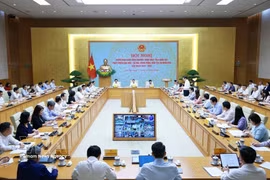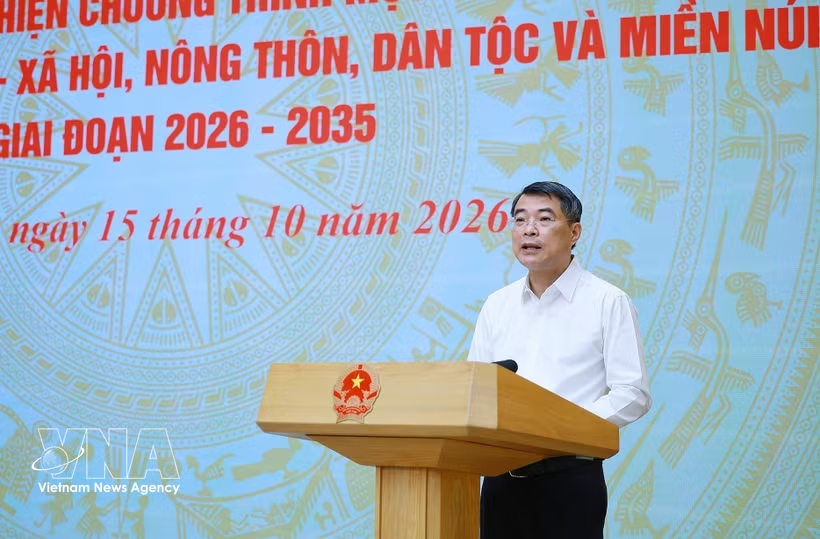
Hanoi (VNA) – Prime Minister Le Minh Hung on October 15 called for decisive and coordinated action to implement the 2026–2035 national target programme on cultural and social development, rural development, and development in ethnic minority and mountainous areas, stressing that people must not be kept waiting for policies and support to reach them.
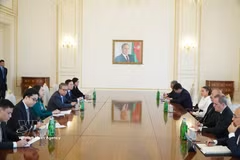
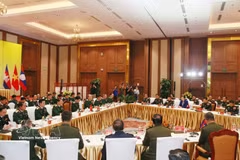
Chairing a conference to launch the programme, the Prime Minister, who heads the Central Steering Committee for its implementation, emphasised that it brings together four previous national target programmes and covers a broad range of sectors, beneficiaries and resources.
The Government issued Decree No. 367/2026/ND-CP on October 12, detailing the programme’s contents, implementation mechanisms and policies. The comprehensive document incorporates most necessary guidance, enabling implementation to begin promptly without requiring ministries and agencies to issue additional guidance in most cases.
PM Hung welcomed participants’ practical contributions and acknowledged challenges arising from the integration of the national target programmes. These include the broad scope of the new programme, complex coordination requirements, incomplete consolidation of steering committees in some localities, uneven implementation capacity at grassroots level, limitations in digital monitoring and reporting, and difficulties in mobilising counterpart funding and other resources.
He urged ministries, sectors and localities to identify these problems early and take timely action, clearly defining the authority, roles and responsibilities of each level and agency.
Under the guiding principle of “coordinated policies – unified action”, the PM stressed that people must be placed at the centre of the programme rather than treated merely as passive recipients of assistance. Integration must deliver substantive improvements, reduce fragmentation and duplication, and ensure that policies and tasks continue uninterrupted during the transition.
He called for clear accountability, with one lead agency assigned primary responsibility for each task. Decentralisation and delegation of authority must go hand in hand with adequate resources, implementation capacity, inspection and supervision. Local authorities should be empowered to make decisions, organise implementation and take final responsibility for results.
State funding must be concentrated on key priorities that directly affect people’s lives, particularly access to clean water, residential land, production land and essential living conditions. Priority should go to disadvantaged areas, ethnic minority and mountainous communities, vulnerable groups and policy beneficiaries. Scattered or overlapping investments must be avoided, while losses, wastefulness and misconduct must be prevented, he stressed.
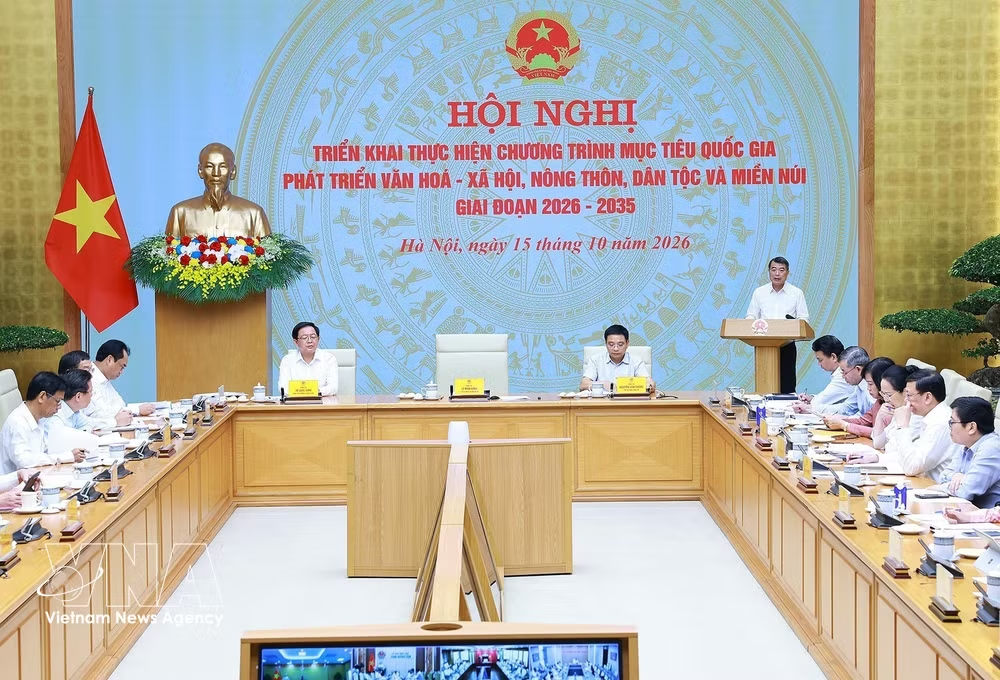
The Government leader noted that programme effectiveness should be measured by progress towards targets, the efficient use of resources and tangible benefits for residents. Officials must clearly define who is responsible for each task, what must be done, the deadline and the expected outcome, with the performance of heads of agencies directly linked to implementation results.
He instructed ministers, heads of agencies and provincial-level People’s Committee chairpersons to take direct responsibility for the progress, quality and effectiveness of assigned tasks. Matters within an agency’s authority must be resolved proactively, without waiting for others, shifting responsibility or leaving gaps in implementation.
The Ministry of Agriculture and Environment, as the standing body of the Central Steering Committee, was tasked with coordinating implementation, helping localities address difficulties, developing a question-and-answer system and strengthening monitoring and programme data management. It must also complete the committee’s operating regulations, assign tasks to members and submit the 2026 work programme before October 20.
The Ministry of Finance was urged to balance resources, complete the allocation of central budget funding for 2026 and prepare plans and estimates for 2027. Funding must be directed to the right objectives, beneficiaries and tasks, with priority given to disadvantaged areas.
Relevant ministries were asked to finalise programme targets, technical standards and professional guidance no later than October 2026. Provincial and municipal authorities must accelerate the disbursement of funding carried over from the 2021–2025 programmes, formulate five-year and annual implementation plans, and consolidate their steering committees before October 25.
The Prime Minister also stressed that funding allocation must not be rigidly tied to disbursement progress alone, although local leadership and implementation performance will remain important criteria. Localities should mobilise counterpart funding and effectively combine legitimate resources from policy and commercial credit, businesses, cooperatives and communities.
Concluding the conference, the Government leader reaffirmed the programme’s importance to economic, cultural and social development, particularly in rural, ethnic minority and mountainous areas. He called on ministries, agencies and localities to demonstrate stronger responsibility, closer coordination and more decisive action, stressing that implementation must deliver measurable improvements in people’s lives and support sustainable development./.