Vietnamese NA President’s China visit facilitates bilateral cooperation: Chinese researcher

Looking ahead, Liu Ying, a research fellow at the Chongyang Institute for Financial Studies, Renmin University of China, identified four priorities, namely making cooperation mechanisms more practical, strengthening connectivity between laws and regulations, deepening regional coordination, and reinforcing people-to-people exchanges.

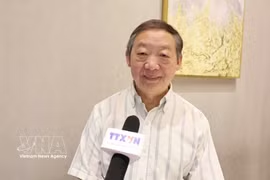
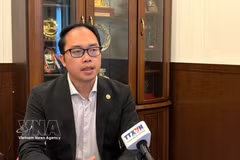
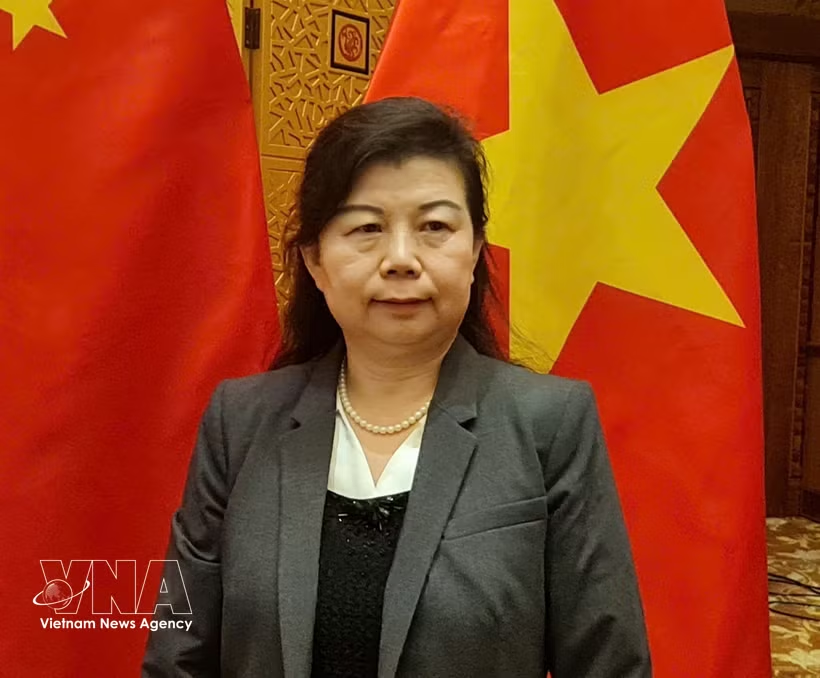
Liu Ying, a research fellow at the Chongyang Institute for Financial Studies, Renmin University of China. (Photo: VNA)

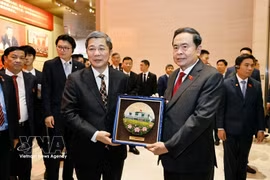
Beijing (VNA) - The official visit to China by President of the Vietnamese National Assembly (NA) Tran Thanh Man, particularly his co-chairing of the second meeting of the cooperation committee between the Vietnamese NA and the National People’s Congress (NPC) of China, is significant in promoting legislative cooperation, improving coordination mechanisms and strengthening the legal foundation for bilateral relations.

The assessment was made by Liu Ying, a research fellow at the Chongyang Institute for Financial Studies, Renmin University of China.

In an interview with Vietnam News Agency correspondents in Beijing, Liu said the visit and meeting carried significance in three main aspects.

First, the cooperation mechanism provides an important institutional platform for the two legislative bodies to strengthen exchanges and coordination, promote bilateral collaboration and create a favourable legal environment for building a Vietnam-China community with a shared future that carries strategic significance.

Second, legislative cooperation helps improve laws and related mechanisms, supporting economic, trade and investment ties. As economic relations continue to expand, legislative exchanges, institutional coordination and the sharing of governance experience can help create a more stable, transparent and predictable environment for cooperation.

Third, closer legislative ties can translate strategic orientations into concrete measures, establishing an institutional foundation for broader cooperation. Legislative bodies can also help address difficulties in implementing bilateral agreements, contributing to stable and mutually beneficial relations.

Looking ahead, Liu identified four priorities, namely making cooperation mechanisms more practical, strengthening connectivity between laws and regulations, deepening regional coordination, and reinforcing people-to-people exchanges.

She said the two sides should maintain regular exchanges through the cooperation committee and specialised committees, and expand cooperation from the central to local legislative bodies. Meetings should also deliver concrete, actionable outcomes rather than merely exchanging views or issuing joint statements.

Regarding legal connectivity, Liu noted that differences between the two countries’ legal systems could create institutional barriers, increase transaction costs and complicate the implementation of joint projects. She recommended greater exchanges of experience in investment protection, trade and intellectual property, alongside enhanced judicial cooperation, mutual legal assistance and arbitration to resolve disputes arising from cross-border business activities.

The two sides can also expand legislative exchanges into emerging fields such as the digital economy and artificial intelligence (AI), she said.

The goal, Liu stressed, is not to eliminate differences between the two legal systems but to improve coordination and connect relevant rules in areas of shared cooperation. Better regulatory connectivity will help businesses reduce costs and risks and improve operational efficiency.

She also called for stronger legislative coordination through regional mechanisms, noting that both countries participate in the Asia-Pacific Economic Cooperation (APEC) forum and other regional economic cooperation frameworks. Exchanges could promote coordination on rules, standards and cross-border governance, including infrastructure connectivity, environmental protection, transboundary river management and transnational crime combat.

Liu further highlighted people-to-people exchanges as essential to strengthening the social foundation of bilateral relations. The two legislative bodies could promote exchanges among young lawmakers, legal professionals and experts to facilitate experience sharing, personnel training and broader public support for cooperation.

Assessing the visit’s overall contribution, Liu said high-level legislative exchanges help consolidate political trust, strengthen strategic communication and reinforce confidence in the stable development of bilateral relations. Stronger legislative mechanisms will also translate shared orientations into practical laws, plans and actions.

Economically, improved legal frameworks could facilitate trade, investment, logistics and infrastructure connectivity while opening up opportunities in emerging sectors such as AI. Greater transparency and predictability will provide fresh momentum for economic development, she added./.

VNA
See more

President of the European Council Antonio Costa (R) welcomes General Secretary of the Communist Party of Vietnam Central Committee and President To Lam in Brussels, Belgium, on October 22, 2026. (Photo: VNA)

Proactive diplomacy turns commitments into tangible benefits

Beyond safeguarding independence and self-reliance, diplomacy must proactively anticipate developments, prevent conflicts, expand cooperation and mobilise external resources to create a peaceful environment for sustainable development and enhance Vietnam’s international standing.

☀️ Morning digest on November 9

☀️ Morning digest on November 9

Activities of Party General Secretary and President To Lam's official visit to Japan, the 10th National Buddhist Congress, and the sixth political consultation at the deputy foreign minister level between Vietnam and Spain are among news highlights over last weekend.

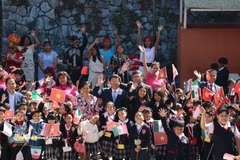
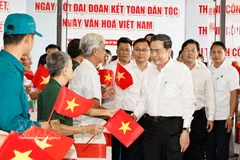
The Vietnamese delegation takes photo with students at the primary school named after the Socialist Republic of Vietnam (Photo: VNA)

CPV values traditional friendship with Mexican Labour Party

Deputy head of the CPV Central Committee’s Commission for Publicity Tran Thanh Lam proposed deeper theoretical exchanges and sharing of experience in Party building and national development; stronger cooperation in education, science, culture, external information, press, publishing and traditional medicine.

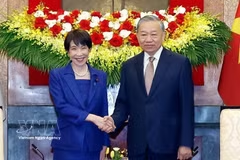
General Secretary of the Communist Party of Vietnam (CPV) Central Committee and President To Lam and Japanese Prime Minister Sanae Takaichi during her official visit to Vietnam in May, 2026. (Photo: VNA)

Top Vietnamese leader’s Japan visit to open up new space for bilateral cooperation

The visit is expected to further deepen ties through Party, State, parliamentary and people-to-people channels, while creating breakthroughs in economic, financial, scientific and technological cooperation, innovation, education and training, digital and green transformation, and supply chain diversification, thereby contributing to a peaceful and stable environment for development in both countries.

Politburo Member and Head of the Party Central Committee’s Commission for Publicity Trinh Van Quyet (R) meets with Jiri Mäntysalo, Vice Chairman of the Communist Party of Finland. (Photo: VNA)

Vietnam, Finland move to strengthen political trust, expand cooperation

Politburo Member and Head of the Party Central Committee’s Commission for Publicity Trinh Van suggested that Finland further promote its role as a bridge between Vietnam and the European Union (EU), while Vietnam could serve as a bridge between Finland and the Association of Southeast Asian Nations (ASEAN). He called for effective utilisation of the EU-Vietnam Free Trade Agreement (EVFTA) and urged Finland to encourage the remaining EU member states to ratify the EU-Vietnam Investment Protection Agreement (EVIPA) at an early date.

Representatives of the Japanese State and the Embassy of Vietnam in Japan welcome General Secretary of the Communist Party of Vietnam Central Committee and President To Lam and his spouse at Haneda International Airport in Tokyo. (Photo: VNA)

Top Vietnamese leader begins official visit to Japan

The visit is expected to further translate the potential and achievements of bilateral cooperation into concrete outcomes, strengthen the longstanding bonds between the two countries and ensure that the friendship nurtured across generations continues to deliver lasting benefits to both peoples.

General Secretary of the Communist Party of Vietnam Central Committee and President To Lam, his spouse Ngo Phuong Ly and a high-ranking Vietnamese delegation leave Hanoi on November 8 for a four-day official visit to Japan at the invitation of the Japanese State. (Photo: VNA)

Top leader and spouse depart for official visit to Japan

General Secretary of the Communist Party of Vietnam Central Committee and President To Lam, his spouse Ngo Phuong Ly and a high-ranking Vietnamese delegation left Hanoi on November 8 for a four-day official visit to Japan at the invitation of the Japanese State.

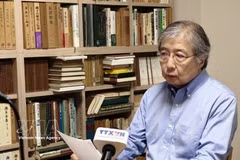
Toshiro Nishizawa, a Senior Fellow at Graduate School of Public Policy under the University of Tokyo in an interview with the Vietnam News Agency (VNA)'s correspondent in Japan (Photo: VNA)

Top leader’s visit to deepen Vietnam-Japan strategic cooperation: expert

The upcoming visit to Japan by General Secretary of the Communist Party of Vietnam Central Committee and President To Lam is expected to give fresh impetus to the Vietnam-Japan Comprehensive Strategic Partnership, reflecting the strategic priorities of both countries, according to a Japanese expert.

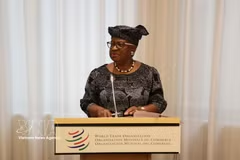
WTO Director-General Ngozi Okonjo-Iweala speaks at the event (Photo: VNA)

WTO hails Vietnam’s 20-year journey since accession

Joining the WTO was a strategic choice for Vietnam, closely associated with its Doi Moi (Renewal) process, opening-up policy and international economic integration. Over the past two decades, international economic integration has become a driving force for institutional reforms, trade expansion, foreign investment attraction and enhancement of the country's international standing.

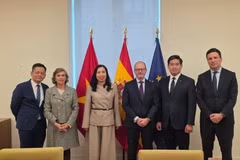
Vietnamese Deputy Minister of Foreign Affairs Le Thi Thu Hang (third, left) and other delegates at the political consultation (Photo: The Ministry of Foreign Affairs)

Vietnam, Spain seek to deepen Strategic Partnership

Vietnam asked Spain to continue voicing its support for and urging the European Commission (EC) to swiftly lift the IUU “yellow card” imposed on Vietnamese seafood, while actively encouraging EU member states to ratify the EU-Vietnam Investment Protection Agreement (EVIPA) at an early date.