Vientiane (VNA) – Prime Minister Le Minh Hung’s official visit to Laos on October 8-9, at the invitation of Lao Prime Minister Saleumxay Kommasith, strengthened political trust, encouraged economic cooperation, and boosted the confidence of Vietnamese businesses operating in the neighboring country.
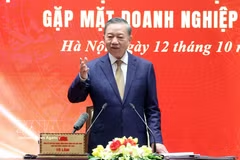
At the 2026 Laos-Vietnam Investment Promotion Conference in Vientiane, the two PMs held direct dialogue with businesses and investors from both countries, affirming their determination to address bottlenecks in institutional frameworks, administrative procedures, transport infrastructure and payment connectivity. The goal of these efforts is to boost bilateral trade to 10 billion USD by 2030.
Meeting with the Vietnamese community in Laos on October 9, PM Hung stressed that bilateral ties are nurtured not only by leaders but also by the people, and the close bonds among communities, citizens and businesses of both countries.
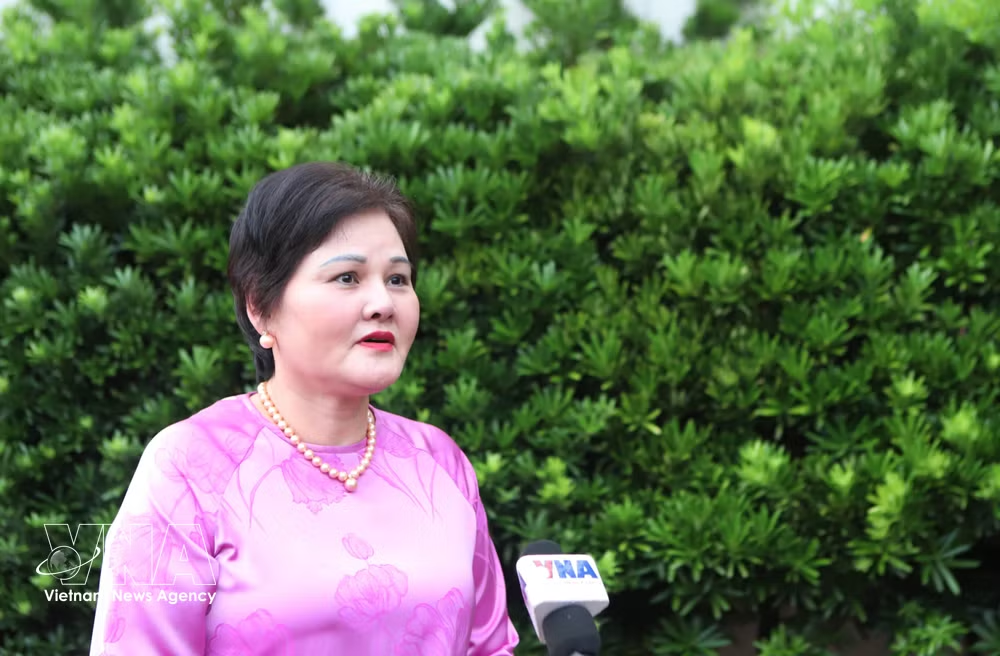
Pham Thi Minh Huong, Executive Vice President of the Association of Vietnamese Businesspeople Abroad, member of the Standing Committee of the General Association of Vietnamese People in Laos, and Chairwoman and General Director of Gold Phuc Company, expressed confidence in the prospects for economic cooperation between Vietnam and Laos. She said the attention of the two governments’ leaders and their resolve to remove barriers to investment and business were practical encouragement for enterprises.
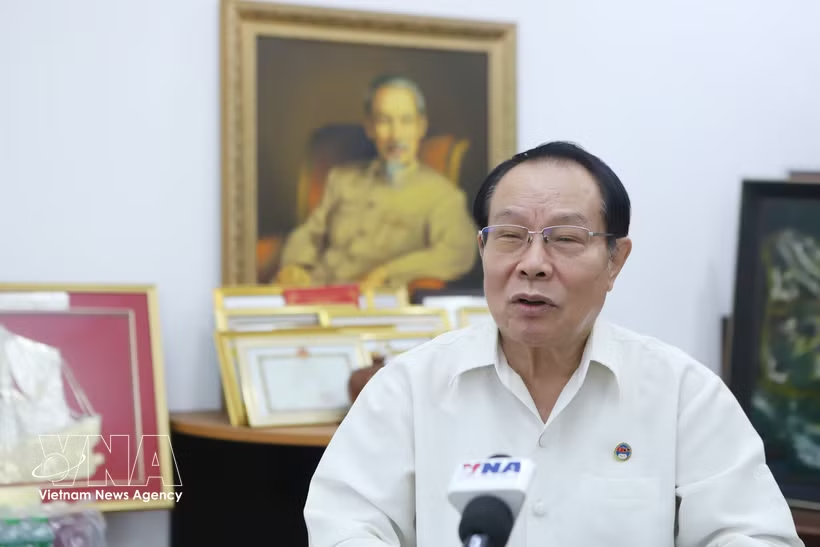
Sharing this view, Duong Dinh Bang, Chairman of the Vietnamese Business Association in Laos (AVILA), said the emphasis on “strategic cohesion” in economic cooperation has strengthened investor confidence. When relevant agencies handle business proposals with clear accountability and pass issues beyond their authority to the Vietnam-Laos Intergovernmental Committee, it enables enterprises to plan long-term and grow their operations.
Vietnamese businesspeople in Laos expected the commitments made by the two countries’ leaders to be translated into practical measures in four key areas.
First, a more favourable legal and administrative environment is needed to reduce costs, improve transparency and facilitate investment planning. Second, stronger transport, infrastructure and financial connectivity, including the Hanoi-Vientiane expressway, the Vientiane-Vung Ang railway and more effective use of Vung Ang Port, could lower logistics costs and improve the flow of goods. Facilitating payments in Vietnamese dong and Lao kip would also help businesses manage capital more efficiently and reduce risks.
Third, investment should increasingly target higher value-added sectors, including renewable energy, high-tech agriculture, deep processing, logistics, banking and finance, digital transformation and tourism. Linking production with local processing would raise product value while creating jobs and improving incomes for Lao workers.
Fourth, Vietnamese-owned businesses in Laos can bridge the two economies by helping Vietnamese enterprises connect with local partners, distribute products and develop business networks. Better access to capital, stronger management capacity and closer sectoral links would help them fulfil this role.
Data presented at the conference showed that bilateral trade reached nearly 3 billion USD in 2025, up 32.7% year-on-year. Laos remained Vietnam’s largest overseas investment destination, with more than 300 projects and total registered capital exceeding 7 billion USD. In the first nine months of 2026, Vietnamese investors launched 24 new projects in Laos worth 670 million USD, 1.7 times the figure recorded in the same period of 2025. However, bilateral trade stood at only around 1.65 billion USD in the first eight months of 2026, highlighting the considerable room for growth and the effort required to meet the 2030 target.
PM Hung’s visit has provided fresh impetus for economic cooperation and highlighted the Vietnamese community’s role in connecting the two economies. When political commitments are translated into concrete implementation mechanisms, infrastructure is improved, and businesses better utilise their resources, bilateral cooperation will have more favourable conditions for substantive and effective development./.