Sa Chau fish sauce - specialty condiment of Nam Dinh province

Sa Chau village of Giao Chau commune in Giao Thuy district, the northern province of Nam Dinh, has long been famous for the traditional production of fish sauce whose pungent smell can grasp any visitor’s attention before they reach the village’s gate.
Sa Chau fish sauce - specialty condiment of Nam Dinh province ảnh 1Fish is fermented with salt in vats and laid out in the sun (Photo: VNA)

Nam Dinh (VNA) – Sa Chau village of Giao Chau commune in Giao Thuy district, the northern province of Nam Dinh, has long been famous for the traditional production of fish sauce whose pungent smell can grasp any visitor’s attention before they reach the village’s gate.

Long-standing craft of fish sauce production

The production of fish sauce in Giao Chau commune dates back centuries and originates in Sa Chau village. As the condiment is completely made by hand, the production process is extremely meticulous.

Ingredients are mainly “nuc” and “cuom” fish or tiny prawn, all of which must be fresh, not frozen or decomposed. Locals divide one year into sunny and rainy seasons and they make fish sauce in the sunny season in the middle of the year while selling the product in the year’s beginning or ending months, when it rains a lot.

Not only fish but salt is also carefully selected. The salt used for making fish sauce is bought from late April through May and features dry and white flakes. In particular, salt must be kept in warehouse for more than one year to get rid of the acrid taste before use.

The production process here is also more sophisticated than that in other places. Every 10 kilogrammes of fish is marinated with about 1.2 - 1.3 kilogrammes of salt and kept for six months so that the fish completely breaks down. After that, the mixture is poured into a bamboo basket covered with coarsely homespun fabric to extract pure fish sauce.

The sauce is later contained in aluminum crocks and left in the sun until white salt appears in the surface. As the condiment must not be contaminated with water, people must cover it carefully on rainy days.

Producing fish sauce at first appears to be a leisured craft but is in fact a highly strenuous job. Only one batch of fish marinated improperly or polluted with rainwater could ruin their months of hard work.

Mai Thi Ty, an experienced maker in Sa Chau village, said the local fish sauce is laid out in the sun but not cooked so that it can soak up the “taste” of the nature. For example, if it is April, and it is not until the next March can the condiment be obtained and continue to be exposed to the sun.

She added making fish sauce is also an unstable craft as it depends on fish quality, fermenting techniques, and other skills. Each family has their own production secrets, and all throw themselves wholeheartedly into the craft or the prestige of the entire village will be eroded.

The Sa Chau fish sauce has by now become renowned far and wide and been distributed to various provinces and cities nationwide, from northern mountainous provinces such as Dien Bien and Son La to others in the south like Ho Chi Minh City and Tay Ninh province.

Concern over preservation of traditional craft

Each tonne of fish can generate 300 litres of fish sauce. There are many types of Sa Chau fish sauce. The top-quality one, laid in the sun for a long time, has stable prices while others with shorter “sunbathing” periods are cheaper.

Therefore, not many young people get involved in this job, which concerns many veteran makers.

Nguyen Van Hai, a local resident, said the Sa Chau fish sauce is completely made by hand with many different steps. The craft is also dependent on weather conditions, and a small mishandling can lead to an unqualified product. All of these factors have made the craft strenuous and discouraged the young from upholding it.

The craft is facing the risk of becoming obsolete. Most people come to know this specialty condiment via their acquaintances’ introduction. Many families have also had to do some other jobs while waiting for the fish to ferment.

Hai said the village is now in dire need of young workers, voicing her concern that though her family is known for their delicious condiment, they have yet to find out anyone to maintain the craft.

There are about 30 households making fish sauce in Sa Chau at present, including 10 with large-scale production. All have received food safety certificates granted by the sub-department for agro-forestry-fishery products of Nam Dinh province./.

VNA

See more

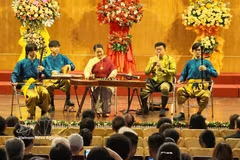
Singer Dang Duong is among the artists featured in the national concert Proud to Be Vietnamese 2026. (Photo of the organisers)

Concert to celebrate unity and pride

The programme carries profound political, cultural and social significance, helping promote historical values and the Vietnamese tradition of paying tribute to the past generations, while nurturing love for the homeland and country and strengthening bonds among generations of Vietnamese people.

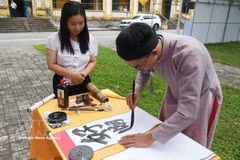
A visitor watches a calligraphy demonstration at the first Vietnam Calligraphy Festival 2026. (Photo: VNA)

Vietnam Calligraphy Festival celebrates national cultural heritage

The festival features more than 100 exhibition booths, bringing together calligraphy clubs from across the country, calligraphers, artisans, culture researchers, businesses and representatives of traditional craft villages. Exhibitions, exchanges, discussions and hands-on activities celebrate calligraphy and promote Vietnam’s cultural values.

Tourists experience writing calligraphy through virtual reality at Hanoi's Temple of Literature. (Photo: VNA

Hanoi works to unlock heritage resources

When innovation deepens understanding of traditional values rather than replacing them, heritage becomes not only something to preserve but also a resource for sustainable tourism, economic development and reinforcement of Hanoi’s position as a UNESCO Creative City.

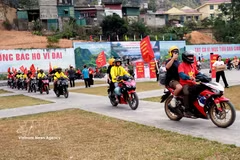
Following the launch ceremony, the 100-motorbike convoy travels from Dong Van across Ma Pi Leng Pass, taking in spectacular mountain scenery and the Nho Que River before finishing at Pa Vi Ha in Meo Vac commune. (Photo: VNA)

100 motorbikes conquer Ma Pi Leng Pass to promote safe travel

A convoy of 100 motorbikes set off on a journey across Ma Pi Leng Pass on October 21 as part of a roadshow campaign to promote safe motorcycle travel in the northern province of Tuyen Quang, home to the Dong Van Karst Plateau UNESCO Global Geopark.

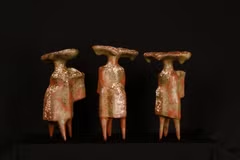
The work "Khong gian cua nui" (The Space of Mountains) by Le Lang Luong. (Photo: Published by VNA)

Vietnam-Japan sculpture exhibition to bring artists together in Kanagawa

The “Dialogue” exhibition in Japan's Kanagawa prefecture from November 8-11 will feature more than 30 works by artists from both countries, including 26 pieces by 13 contemporary Vietnamese sculptors from different generations. These artists have developed distinctive artistic languages and made their own marks on Vietnam’s contemporary art scene.

A performance at the event (Photo: VNA)

Vietnamese in Hungary stage first Great National Unity Festival

The event also served as a showcase for Vietnamese culture, customs, cuisine and traditions, in step with Vietnamese Culture Day. It encouraged Vietnamese of all generations to hold onto their cultural identity while spreading the image of Vietnam and its people among Hungarians, adding to people-to-people exchanges and mutual understanding between the two countries.

An ao dai fashion show at the festival. (Photo: VNA)

Vietnamese culture shines at festival in RoK

A celebration marking the seventh founding anniversary of the Vietnamese Migrant Women’s Association (VMWA) in Ansan, Gyeonggi province, the Republic of Korea, took place on October 18, featuring cultural exchanges and activities to mark Vietnamese Women’s Day (October 20).

Vietnam harnesses culture as growth driver

Vietnam harnesses culture as growth driver

Under a March 17, 2026 action plan from the municipal Party Committee, which follows the Politburo’s Resolution 80-NQ/TW dated January 7, 2026, on Vietnamese cultural development, the city is moving beyond preservation alone. It is now upholding heritage values while developing cultural products, spaces and markets tied to innovation and global integration.

The Ao dai parade passes through Bankstown Plaza and Bankstown Station before returning to the Bryan Brown Theatre. (Photo: VNA)

Sydney hosts first Vietnamese Ao dai street parade

Colourful traditional Vietnamese Ao dai (traditional long dresses) brought a festive touch to the streets of Bankstown, Sydney, on October 17, as more than 20 Vietnamese people from different generations took part in an Ao dai street parade held as part of the Viet Soul 3 Festival.