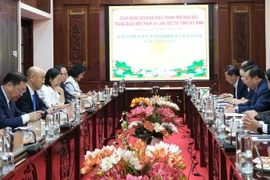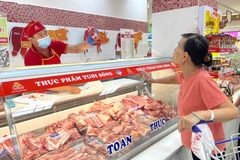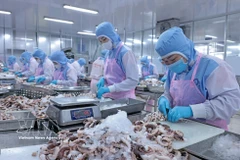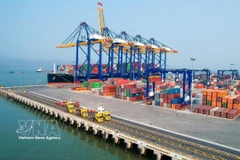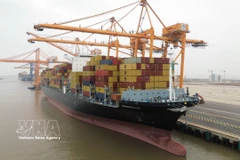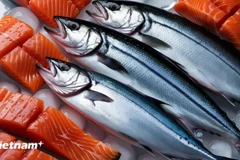
Tay Ninh (VNA) – Leveraging its position as a gateway linking the Southeast and Mekong Delta regions, Tay Ninh province is asserting its role as a strategic hub in expanding agricultural supply chains to Muslim markets, especially the Middle East and Africa, which have emerged as promising destinations for Vietnamese agricultural exports, particularly Halal-certified products.
Unlocking potential from strategic markets
With a combined population of over 1.8 billion, mostly Muslims, the Middle East and Africa represent vast potential for Halal products - a field in which Vietnam is esserting capabilities. Agricultural, aquatic and processed food, as well as coffee, cashew nuts, pepper and cassava-based products, enjoy high competitiveness in these regions.
According to the Ministry of Foreign Affairs, Vietnam’s trade with Middle Eastern and African partners doubled between 2016 and 2024 to about 34 billion USD. However, this remains below potential given the high complementarity between the two sides’ economies.
As a gateway between the Southeast region and the Mekong Delta, Tay Ninh aims to become a key link in the agricultural supply chain to these markets. The province now has 57 Halal-certified enterprises and 48 firms trading through the UAE, with many products already meeting Islamic market standards.
Huynh Van Phap, Deputy General Director of Thanh Thanh Cong – Bien Hoa JSC (TTC AgriS), said the company operates a circular agricultural ecosystem with nearly 91,000 hectares of raw material areas across Vietnam, Laos, Cambodia and Australia, and 200,000 hectares under cooperation in Indonesia, the world’s most populous Muslim nation.
TTC AgriS runs 10 modern factories applying international standards such as ISO, HACCP, BRC, Kosher, Organic (the EU and the US), and Halal certification. Nearly 200 products ranging from sugar, rice and banana to pineapple are developed according to global standards. Phap said the company seeks to sign MoUs with UAE partners and international Halal organisations to build a fully integrated Halal value chain, from raw materials and processing to logistics and e-commerce, while promoting Tay Ninh’s Halal products to Muslim countries.
Gabor Fluit, CEO of the Netherlands' De Heus Group, said Tay Ninh’s geographical advantages make it a strategic base in Vietnam’s agricultural value chain, connecting HCM City with Phnom Penh. The province’s position in the Southern Key Economic Region offers favourable conditions to develop disease-free livestock zones meeting import requirements.
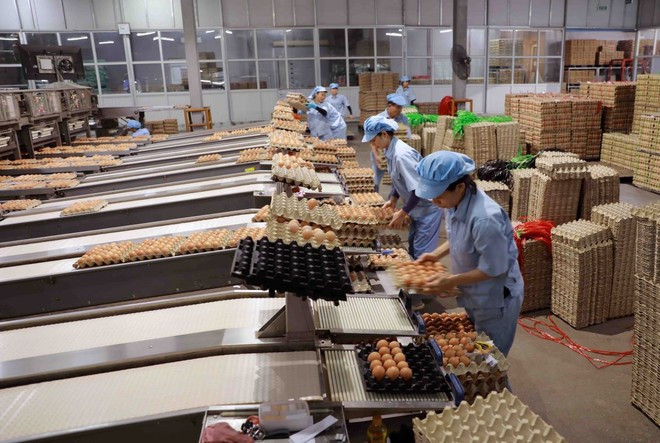
He noted that De Heus’s new DHN Tay Ninh 2 and 5 projects, covering 25 hectares each, mark a major step in building a modern livestock value chain in Vietnam. These Global GAP-standard farms apply high-tech systems to ensure disease control, optimise production and reduce environmental impact through closed, green farm models.
Regional linkages – Key to global reach
The Mekong Delta, Vietnam’s main agricultural hub, not only ensures national food security but also serves as a gateway for exports to emerging markets beyond Asia.
According to La Trong Ky, Vice Director of Can Tho’s Department of Agriculture and Environment, the city leads the Delta in aquaculture, rice and fruit production, with 93,000 hectares of aquaculture yielding 640,000 tonnes annually, and rice and fruit output exceeding 4 million tonnes and 100,000 hectares respectively. Many local fruits have reached markets in China, Japan, India and Europe.
Ky said Can Tho has strong potential to become a leading Halal export hub for the Middle East and Africa but called for support in meeting Halal certification costs, standardising production and improving traceability to boost competitiveness.
Chau Thi Le, Deputy Director of Tay Ninh’s Department of Industry and Trade, said the province ranks ninth nationwide in export turnover, trading with 130 countries and territories. In 2024, total import-export value reached 28 billion USD, with a 3.11 billion USD trade surplus. Yet trade with the Middle East and Africa remains modest.
Tay Ninh aims to become a strategic connector between the Southeast, the Mekong Delta and Cambodia, as well as a safe, transparent and business-friendly investment destination.
With its geographic advantages and business-friendly policies, Tay Ninh is well positioned to become an international trade gateway contributing to Vietnam’s logistics strategy through 2030./.