Thailand targets Vietnam in Southeast Asia tourism push

TAT will focus on families and shopping in Vietnam, while its Malaysian campaign will emphasise food, shopping and travel to secondary cities.

Bangkok (VNA) - The Tourism Authority of Thailand (TAT) is targeting five Asian markets, including Vietnam, with campaigns promoting wellness, food and Thai culture, alongside fiscal 2027 targets for 6.2% growth in revenue from ASEAN visitors.

TAT also aims to increase arrivals from the Association of Southeast Asian Nations (ASEAN) by 4.3% in the same financial year. Apart from Vietnam, the other priority markets are Malaysia, Indonesia, Singapore and Taiwan (China).

The strategy, outlined in a Commerce Ministry statement on October 23, 2026, follows a policy set by Deputy Prime Minister and Commerce Minister Suphajee Suthumpun to bring together the commerce, culture, and tourism and sports ministries.

Suphajee’s policy aims to turn Thailand’s hosting of the 2026 Annual Meetings of the International Monetary Fund (IMF) and World Bank into lasting economic benefits by connecting tourism, Thai products and cultural influence, or soft power, The Nation reported.

The initiative linking tourism, trade and culture aims to expand market opportunities, increase the value of goods and services, and distribute income to businesses and local communities.

TAT will focus on families and shopping in Vietnam, while its Malaysian campaign will emphasise food, shopping and travel to secondary cities.

For Indonesia, TAT will promote wellness and Muslim-friendly tourism. In Singapore, the authority will target visitors with strong spending power and an interest in quality travel experiences.

TAT’s Taiwan strategy centres on Thai food and culinary tourism, alongside the “Go Thai Be Free” campaign presenting Thailand as an open and welcoming destination for LGBTQ+ travellers.

TAT has presented seven tourism routes in Bangkok and 20 travel programmes through the Association of Thai Travel Agents (ATTA) to encourage meeting participants to extend their stays and spend more in Thailand./.

VNA
See more

Thailand diversifies oil sources to ensure energy security

Thailand diversifies oil sources to ensure energy security

Although the diversification of oil import sources has helped reduce the risk of domestic oil shortage, it has not immediately reduced energy costs because import prices depend on market mechanisms, transportation costs, foreign exchange rates and the terms of oil contracts.

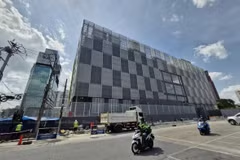
ST Telemedia Global Data Centres (Thailand), an affiliate of Singapore Telecom, is developing three data cehtres in Thailand including this facility on Rama IX Road in Bangkok. (Photo: bangkokpost)

Thailand tightens regulations on data centres

The new rules focus on controlling investment scale, electricity and water consumption, environmental impacts, and preventing investors from reserving resource quotas beyond their actual needs.

A road is under construction in Dong Nai city, Vietnam. (Photo: VNA)

ADB: Southeast Asia needs 7.1 trillion USD in infrastructure investment by 2040

ADB estimates that the region will need an average of 476 billion USD in infrastructure investment annually during 2026–2040, equivalent to 8.7% of GDP. However, at current investment levels, government budget resources would cover only around 45% of this demand, leaving an annual financing gap of 264 billion USD.

Kyodo News publishes an article titled “Sculptures by Japanese, Vietnamese artists on display in Yokohama,” (Screenshot photo)

Japanese media widely cover top Vietnamese leader ’s visit

Japanese media have continued extensive coverage of General Secretary of the Communist Party of Vietnam (CPV) Central Committee and President To Lam’s activities in Japan, highlighting his meetings with representatives of leading financial institutions at the Tokyo Stock Exchange, witnessing of cooperation agreement signing and participation in cultural exchanges.

Thailand pushes for establishment of ASEAN emergency public health centre

Thailand pushes for establishment of ASEAN emergency public health centre

The draft agreement stipulates that ACPHEED will comprise three specialised centres based in three ASEAN member states. Vietnam will oversee the centre for prevention and preparedness; Indonesia will host the centre for detection and risk assessment; and Thailand will be responsible for the centre for response and risk communication.

Indonesia designates 31 mln ha of waters as conservation areas

Indonesia designates 31 mln ha of waters as conservation areas

Head of the Convention and Marine Resource Balance working team at the ministry’s Directorate of Ecosystem Conservation Ahmad Sofiullah said this week that it is a strategic effort to ensure the sustainability of Indonesia’s marine ecosystems.

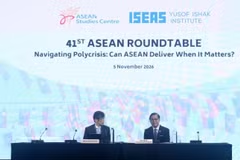
Thai Deputy Prime Minister and Minister of Foreign Affairs Sihasak Phuangketkeow (R) takes part in the Q&A session at the 41st ASEAN Roundtable. (Photo: VNA)

Thailand calls on ASEAN to proactively address polycrisis

Thai Deputy Prime Minister and Minister of Foreign Affairs Sihasak Phuangketkeow noted that no single member state could tackle challenges ranging from major-power competition and economic fragmentation to climate change and energy and food security on its own. Regional cooperation is therefore a strategic imperative, enabling ASEAN not only to overcome crises but also to sustain its development momentum.

Palm oil and palm oil-based products are among Indonesia’s promising export commodities. (Photo: VNA)

Indonesia to launch commodity export monitoring platform next year

DSI will draw on data from customs authorities, trade activities and the financial system, alongside contracts and documents uploaded by exporting companies. The platform will monitor the volume, quality, prices and destination markets of various commodities, as well as transactions between related parties.