Vietnam reaffirms ASEAN support for UN radiation scientific committee

ASEAN called on countries to continue providing scientific data, strengthening international cooperation and participating widely in global surveys, including those on medical exposure.

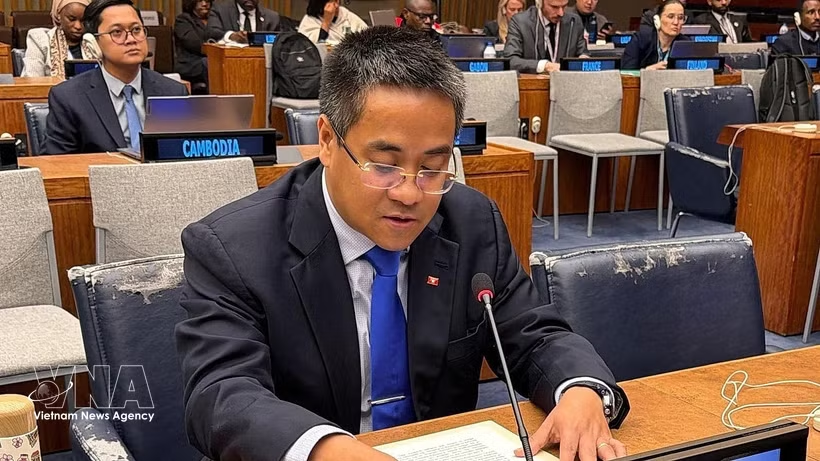
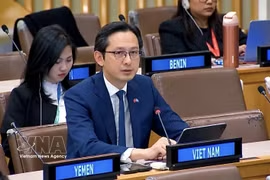
Minister Counsellor Nguyen Hai Luu, Deputy Permanent Representative of Vietnam to the UN, speaks at the session. (Photo: VNA)

New York (VNA) – Vietnam, on behalf of the Association of Southeast Asian Nations (ASEAN), has reaffirmed the bloc’s support for the independent and objective scientific role of the United Nations Scientific Committee on the Effects of Atomic Radiation (UNSCEAR).

Delivering a statement at a session entitled “Effects of atomic radiation” held by the Special Political and Decolonisation Committee (4th Committee) of the 81st session of the UN General Assembly (UNGA 81) in New York on October 21, Minister Counsellor Nguyen Hai Luu, Deputy Permanent Representative of Vietnam to the UN, stressed the need to strengthen developing countries’ capacity and international cooperation on radiation safety.

Luu highlighted UNSCEAR’s contributions since its establishment in 1955 in providing independent, objective and evidence-based assessments of the sources, levels, effects and risks of ionising radiation. He said that these assessments provide an important scientific basis for developing international radiation protection and safety frameworks and standards, including those of the International Atomic Energy Agency (IAEA), thereby helping protect human health and the environment.

ASEAN called on countries to continue providing scientific data, strengthening international cooperation and participating widely in global surveys, including those on medical exposure. At the regional level, the bloc reaffirmed its commitment to promoting nuclear and radiation safety cooperation, including through the ASEAN Network of Regulatory Bodies on Atomic Energy (ASEANTOM).

It also underscored the importance of sharing information and expertise and cooperating with relevant international organisations in line with their respective mandates.

ASEAN expressed concern over financial and operational difficulties affecting UNSCEAR, stressing the need for adequate and stable resources and appropriate support to enable the committee to fulfil its mandate effectively while maintaining its scientific independence.

At the session, many countries also reiterated their support for UNSCEAR’s role, emphasising scientific independence, international cooperation and sufficient resources for its work./.

VNA

See more

Thailand pushes for establishment of ASEAN emergency public health centre

Thailand pushes for establishment of ASEAN emergency public health centre

The draft agreement stipulates that ACPHEED will comprise three specialised centres based in three ASEAN member states. Vietnam will oversee the centre for prevention and preparedness; Indonesia will host the centre for detection and risk assessment; and Thailand will be responsible for the centre for response and risk communication.

Indonesia designates 31 mln ha of waters as conservation areas

Indonesia designates 31 mln ha of waters as conservation areas

Head of the Convention and Marine Resource Balance working team at the ministry’s Directorate of Ecosystem Conservation Ahmad Sofiullah said this week that it is a strategic effort to ensure the sustainability of Indonesia’s marine ecosystems.

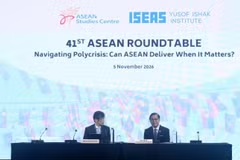
Thai Deputy Prime Minister and Minister of Foreign Affairs Sihasak Phuangketkeow (R) takes part in the Q&A session at the 41st ASEAN Roundtable. (Photo: VNA)

Thailand calls on ASEAN to proactively address polycrisis

Thai Deputy Prime Minister and Minister of Foreign Affairs Sihasak Phuangketkeow noted that no single member state could tackle challenges ranging from major-power competition and economic fragmentation to climate change and energy and food security on its own. Regional cooperation is therefore a strategic imperative, enabling ASEAN not only to overcome crises but also to sustain its development momentum.

Palm oil and palm oil-based products are among Indonesia’s promising export commodities. (Photo: VNA)

Indonesia to launch commodity export monitoring platform next year

DSI will draw on data from customs authorities, trade activities and the financial system, alongside contracts and documents uploaded by exporting companies. The platform will monitor the volume, quality, prices and destination markets of various commodities, as well as transactions between related parties.

Philippines increases rice imports from Cambodia

Philippines increases rice imports from Cambodia

Cambodia has contracted to supply a further 87,344 tonnes to the Philippines between September and December. If all orders are fulfilled, its rice exports to the market could reach around 209,000 tonnes in 2026.

Students get free meals under the national school feeding programme at Hun Sen Svay Cek Primary School (Photo: khmertimeskh)

Cambodia expands school meal programme

Cambodian Prime Minister Hun Manet stressed that his Government would proactively allocate budget and strengthen management capacity, with the aim of expanding the school meal programme to more than 7,000 primary schools nationwide. The move is expected to improve students' nutrition and learning conditions.