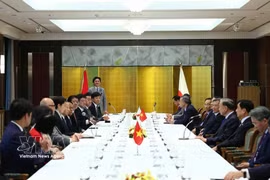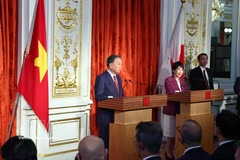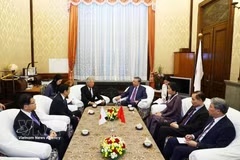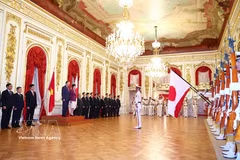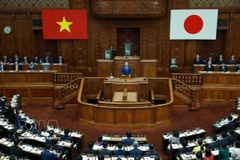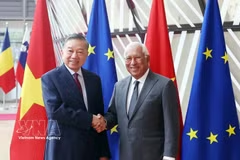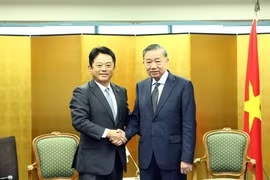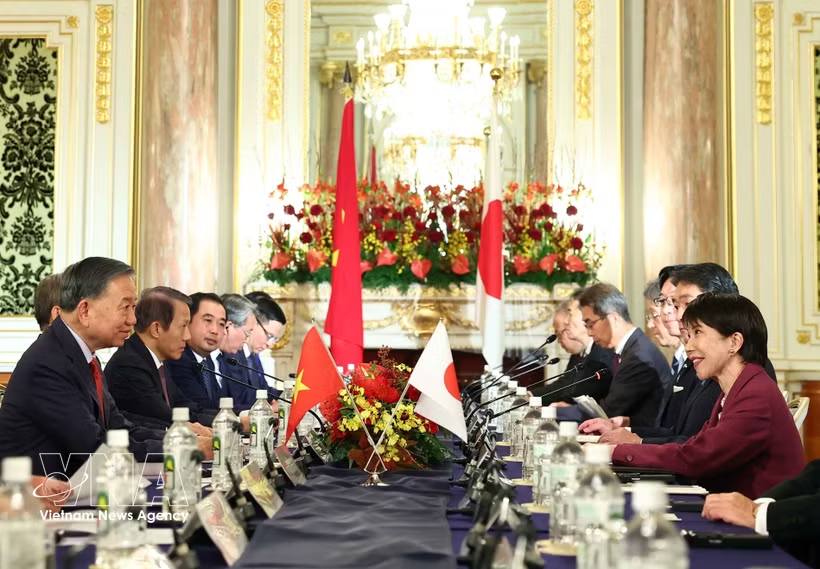
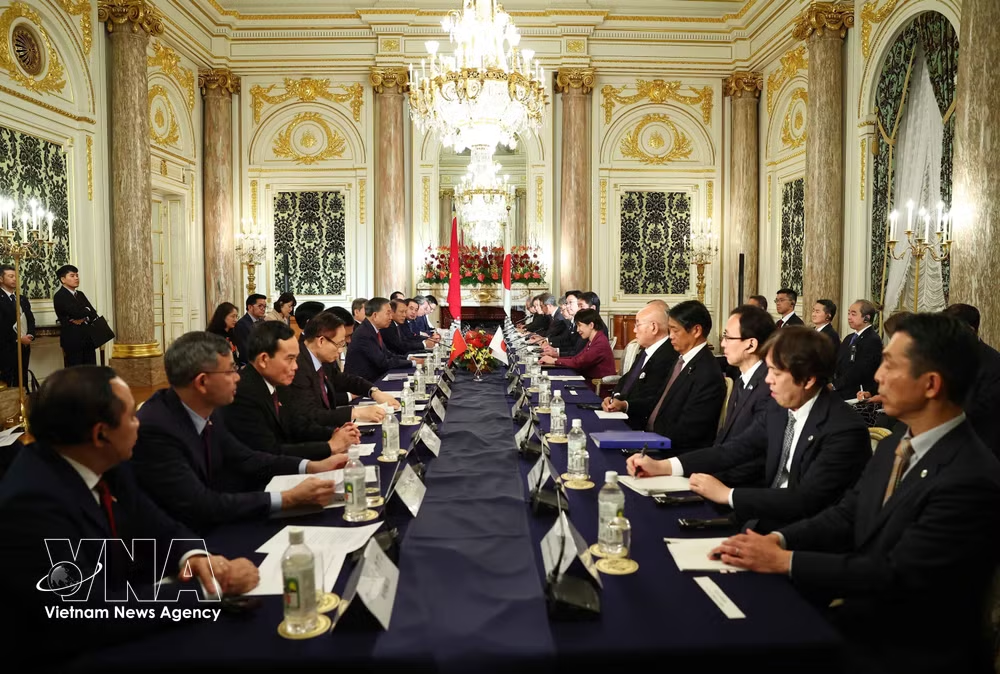
Tokyo (VNA) - Vietnam always considers Japan one of its most important strategic partners and a sincere, trusted friend accompanying Vietnam in realising its sustainable development goals, General Secretary of the Communist Party of Vietnam Central Committee and President To Lam told Japanese Prime Minister Takaichi Sanae during their talks in Tokyo on November 9.
Expressing his delight at meeting Takaichi again, General Secretary and President Lam voiced Vietnam’s support for Japan in playing a positive role in the region and the world, and successfully realising its new Growth Strategy.
Takaichi, for her part, thanked Vietnamese leaders for their warm reception during her May visit and said Vietnam is a priority partner in Japan’s foreign policy and new Growth Strategy.
Both leaders said the Vietnam–Japan Joint Vision Statement is a key basis to lift the Comprehensive Strategic Partnership to a new level as partners advancing together and co-creating for mutual benefit, high-quality growth, strategic autonomy and resilience.
Host and guest reviewed bilateral ties and welcomed the comprehensive, substantive and effective development since the 2023 upgrade to a Comprehensive Strategic Partnership. They noted that nearly 80% of commitments and agreements have been delivered on, with much progress. Both sides said the results stem from high political trust, determined leadership, mutual understanding, common interests, better cooperation effectiveness, future-oriented efforts and broad public support in both countries.
The two leaders agreed to keep fostering political trust, maintain all-level exchanges; push cooperation through Party, State, Government and parliamentary channels, people-to-people exchanges and local cooperation, uphold the role of the two parliamentary friendship groups, and improve dialogue mechanisms in diplomacy and national defence-security.
On economic cooperation, they vowed to tighten economic linkages to ensure economic security and enhance strategic autonomy, continue quality Japanese investment in Vietnam tied to technology transfer and quality workforce training; propel new-generation ODA in AI, semiconductors, energy, digital transformation and green transition; and push large-scale, quality infrastructure projects in Vietnam.
General Secretary and President Lam welcomed the signing of the agreement facilitating Japan’s non-refundable aid projects in Vietnam. He proposed that both sides start construction of the Vietnam–Japan University and Cho Ray Hospital projects on schedule, and called for close cooperation to reach 80 billion USD in trade by 2030.
PM Takaichi affirmed that Vietnam plays an important role in Japan’s efforts to diversify and upgrade its supply chains. Japan will facilitate deeper and more substantive participation by Vietnamese businesses in Japanese companies’ supply chains.
Japan is also ready to cooperate with Vietnam to ensure energy security and build up energy reserves, while promoting the early implementation of LNG-fired power projects in Vietnam under the POWERR ASIA initiative.
The two sides agreed to advance science and technology and innovation as a pillar of bilateral cooperation, based on partnership, co-creation and public-private cooperation. They will promote cooperation in space technology, marine and ocean affairs, artificial intelligence (AI), digital technology, semiconductors, medical technology, advanced biotechnology, high-tech agriculture and strategic minerals.
They also agreed to strengthen joint research projects, particularly in AI, and expand the NEXUS programme to provide more research opportunities for doctoral students in semiconductors and AI. The two sides will effectively implement 14 projects under the Joint Crediting Mechanism (JCM).
General Secretary and President Lam proposed establishing a network of scientists in six fields: robotics, semiconductor chips, energy technology, biotechnology, high-speed railways and quantum technology. PM Takaichi affirmed Japan’s commitment to actively support Vietnam, including by contributing to the country's plan to train 100 PhD holders in AI.
The two sides agreed to strengthen human resource connectivity, promote people-to-people exchanges and local-level cooperation, and expand collaboration in healthcare, labour and education. They will work closely to organise the third Vietnam-Japan Local Cooperation Forum in 2027.
They also agreed to enhance educational cooperation and high-quality human resource development, promote healthcare cooperation, particularly in elderly care, and accelerate negotiations towards signing a bilateral social insurance agreement. The two sides will also launch consultations on a consular notification and contact agreement.
General Secretary and President Lam proposed that Japan facilitate and ease visa requirements for Vietnamese technology engineers.
PM Takaichi shared that the Japanese Government is developing an information channel to support Vietnamese citizens facing difficulties in Japan.
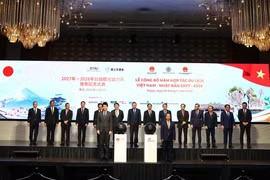
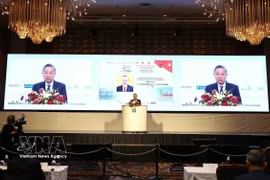
Looking ahead to the 55th anniversary of diplomatic relations between Vietnam and Japan, the two sides agreed to launch the Vietnam-Japan Tourism Year 2027-2028.
Against the backdrop of rapid and complex developments in the regional and global situation, the two sides reaffirmed their commitment to close coordination on regional and international issues of mutual concern, making positive contributions to peace, stability and development in the region and the world. They also pledged mutual support at multilateral forums and within international and regional organisations, including the United Nations, APEC and ASEAN.
The Japanese PM pledged to work alongside and support Vietnam in successfully hosting APEC Year 2027, and expressed her hope to visit Vietnam again soon.
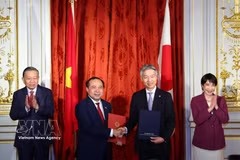
Following their talks, the two leaders adopted the Vietnam-Japan Joint Vision Statement, entitled “Partners Advancing Together and Co-creating for Mutual Benefit, Highquality Growth, Strategic Autonomy and Resilience.” They also witnessed the exchange of nine cooperation documents between ministries and agencies of the two countries in areas including maritime policy, environment, energy, education, grant aid and justice./.