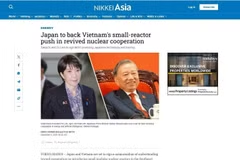
Tokyo (VNA) - Vietnam's economic development and the diversification of its trade and investment partners are reshaping Japan's traditional role while opening up new avenues for cooperation in technology, energy and human resource development, according to Nikkei Asia.
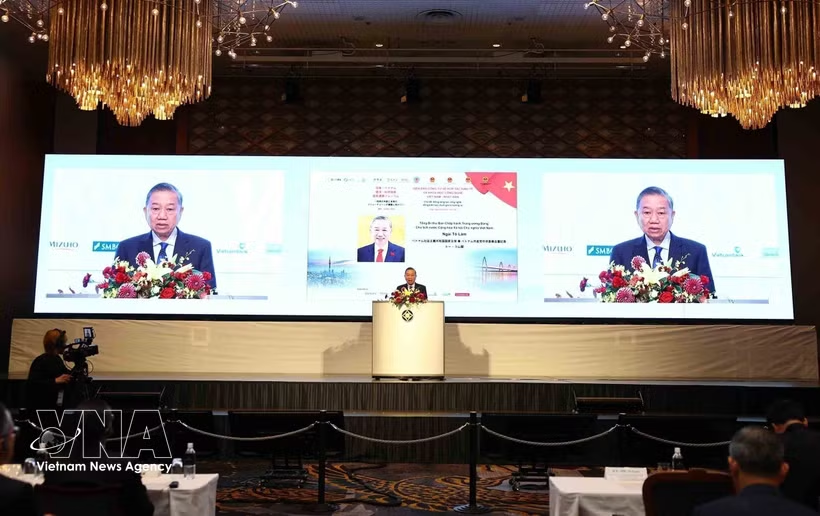
In its article, published on November 8 on the occasion of General Secretary of the Communist Party of Vietnam Central Committee and President To Lam’s ongoing official visit to Japan, Nikkei Asia reviewed changes in Vietnam-Japan relations after decades of cooperation.
The evolution of Japan's traditional role is perhaps most visible in development assistance, the article said.
Over the past three decades, Japan has made important contributions to Vietnam’s industrialisation and modernisation through providing official development assistance (ODA) capital, direct investment, technology transfer and management experience. However, as Vietnam’s economy has developed and diversified its trade and investment partners, Japan’s relative position in traditional areas of cooperation has evolved.
In trade, although two-way turnover continues to grow, Japan's share of Vietnamese exports nearly halved from 10.7% to 5.6% between 2010 and 2025.
Futaba Ishizuka, a researcher at the Institute of Developing Economies, a Japanese government-affiliated think tank, said “This is not about Japan losing influence".
"Vietnam is increasingly concerned about the middle-income trap," she said, referring to a situation in which a country's growth stalls and it struggles to become an advanced economy.
Nikkei Asia quoted Ishizuka, noting that Japan still has much to offer, from lessons on moving beyond an export-dependent growth model to building up domestic technological capabilities.
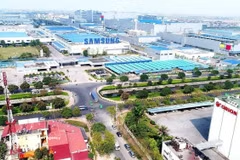
In investment, Japanese businesses are facing growing competition from partners with rapidly increasing foreign direct investment (FDI).
Japanese investment is also becoming more diversified. After decades centred heavily on manufacturing, companies have increasingly expanded into retail, logistics and other services, Nikkei Asia said.
According to Akira Miyamoto, founder and CEO of SuFex Trading, Japanese manufacturers are finding it harder to rely on the low-cost labour model that underpinned earlier waves of investment into Vietnam.
Regarding ODA, Japan remains Vietnam's largest ODA provider, but Japanese development assistance has fallen sharply from levels in the early 2010s and no longer defines the relationship as it once did, the article stressed.
Kenichi Yamamoto, a former Japan International Cooperation Agency (JICA) official who worked on Vietnam, said Japan's aid system has struggled to adjust.
According to him, the Vietnamese Government has been streamlined and officials are under growing pressure to get projects moving quickly as the country pursues high economic growth. But Japan and JICA haven't been able to keep up with that pace.
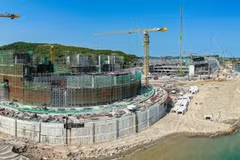
Against this backdrop, the two countries are seeking to improve the quality and added value of cooperation. During General Secretary and President Lam’s visit, they are expected to promote collaboration in artificial intelligence (AI), small modular reactor (SMR) technology, nuclear power and human resource training, Nikkei Asia reported.
Tran Van Tho, professor emeritus at Waseda University, said the changing economic balance between the two countries reflects Vietnam's development rather than simply a loss for Japan.
"Japan's relative presence will inevitably decline, but the trust built between the two countries remains an important asset," he said.
Trade, investment and ODA will continue to underpin ties, while technology, energy and human resource development offer new avenues for advancing the Comprehensive Strategic Partnership for peace and prosperity in Asia and the world substantively and sustainably./.