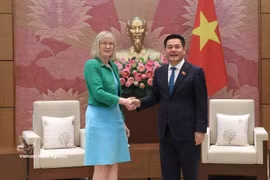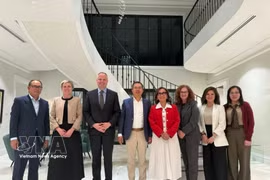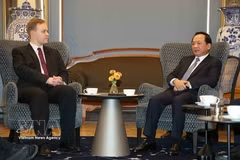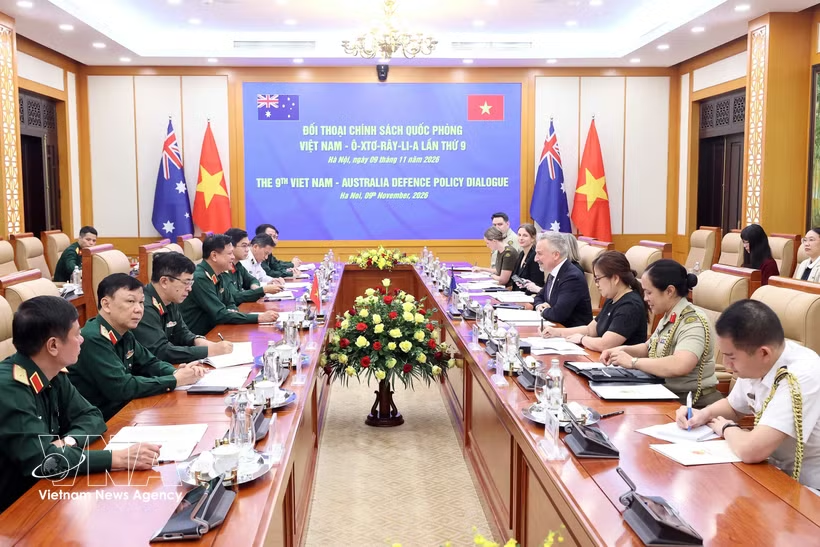
Hanoi (VNA) – The 9th Vietnam–Australia defence policy dialogue took place at the headquarters of the Vietnamese Ministry of National Defence in Hanoi on November 9, co-chaired by Sen. Lt. Gen. Nguyen Truong Thang, Deputy Minister of National Defence, and Hugh Jeffrey, Deputy Secretary of Strategy, Policy and International at the Australian Department of Defence.
Thang highlighted the strong development of bilateral defence ties across multiple fields, particularly following the elevation of relations to a Comprehensive Strategic Partnership in March 2024.
The two sides have effectively implemented defence cooperation in various areas, including delegation exchanges and contacts at all levels, particularly high-level ones; dialogue and consultation mechanisms; training; United Nations peacekeeping operations; cooperation between military services and arms; defence industry; war legacy remediation; military medicine; and search and rescue, he said.
Thang expressed his sincere appreciation to the Australian Department of Defence for providing air transportation support on eight consecutive occasions to help Vietnam deploy its Level-2 Field Hospital to the United Nations Mission in South Sudan (UNMISS).
The Vietnamese Ministry of National Defence hopes to continue to receive scholarships from the Australian side for training programmes at various levels, the deputy minister said, affirming its readiness to host Australian military personnel for Vietnamese language courses and the international defence officials' course.
The Vietnamese ministry welcomes the participation of an Australian Army delegation in the third Vietnam International Defence Expo, scheduled to take place in Hanoi from December 10 to 13, Thang stated.
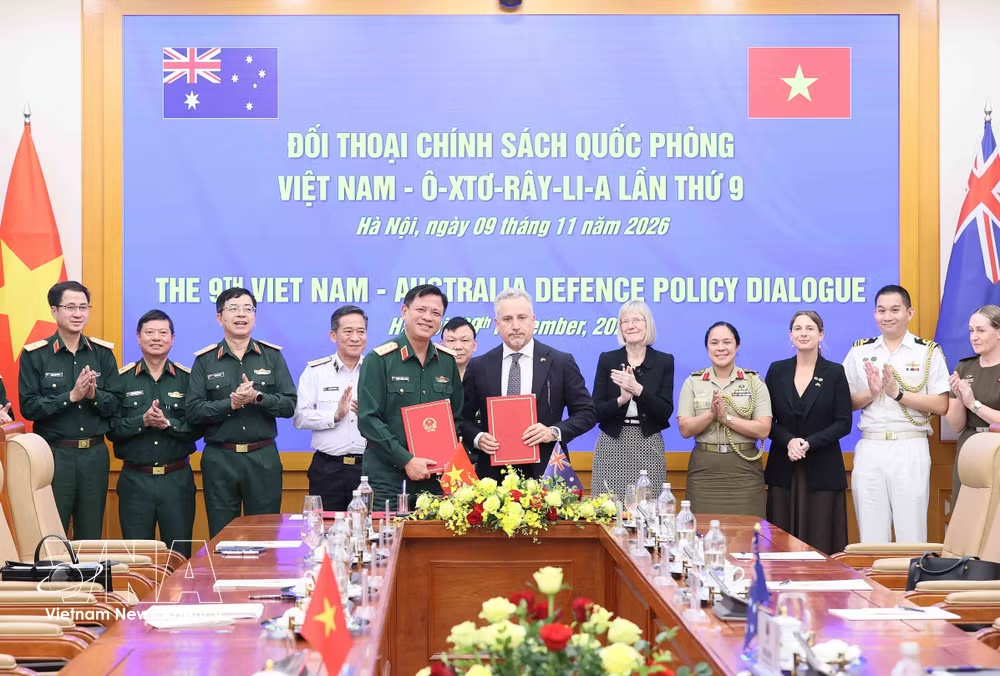
For his part, Jeffrey described the dialogue as an important opportunity to further deepen bilateral defence ties.
Building on the outcomes of the ninth dialogue, he proposed that the two sides continue effectively implementing the agreed cooperation activities while exploring new areas that meet their respective needs and interests, with a focus on maritime security, and search and rescue.
Jeffrey affirmed that the Australian Department of Defence will actively support Vietnam in strengthening the DNA testing capacity to identify the remains of Vietnamese soldiers who laid down their lives during the war. Australia will also promote cooperation and the sharing of information and documents in this area, contributing to Vietnam's 500-day campaign to accelerate the search for, recovery and identification of fallen soldiers' remains.
These efforts will help consolidate and further develop the Vietnam–Australia Comprehensive Strategic Partnership in an increasingly substantive and effective manner, he added.
During the dialogue, the two sides exchanged views on global and regional developments and issues of shared concern.
Thang reaffirmed Vietnam's consistent position of resolving maritime disputes through peaceful means in accordance with international law, including the 1982 United Nations Convention on the Law of the Sea (UNCLOS). He also stressed the importance of fully and effectively implementing the Declaration on the Conduct of Parties in the East Sea (DOC) and working towards a substantive, effective and efficient Code of Conduct in the waters (COC).
Looking ahead, the two sides agreed to effectively implement the common perceptions reached by the two countries' senior leaders and defence ministries, as reflected in the joint statement on deepening the Vietnam–Australia Comprehensive Strategic Partnership and the updated joint vision statement on further defence cooperation between the Australian Department of Defence and the Vietnamese Ministry of National Defence, signed in August 2026.
Priority areas of cooperation will include delegation exchanges at all levels, dialogue and consultation mechanisms, training, UN peacekeeping operations, war legacy remediation, cooperation between military services and arms, military medicine, and border management. The two sides will also consider expanding collaboration into other potential areas such as the defence industry, cybersecurity, humanitarian assistance and disaster relief, science – technology, and innovation.
They will step up consultations and mutual support within regional and international defence – security mechanisms and forums, particularly ASEAN-led ones such as the ASEAN Defence Ministers' Meeting Plus (ADMM+), according to the officials./.