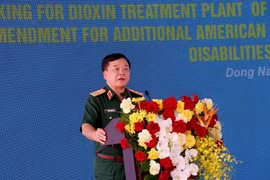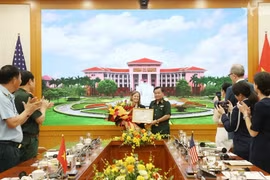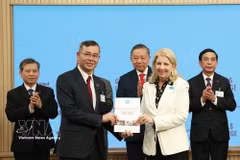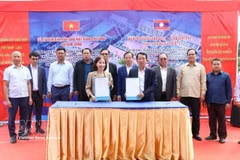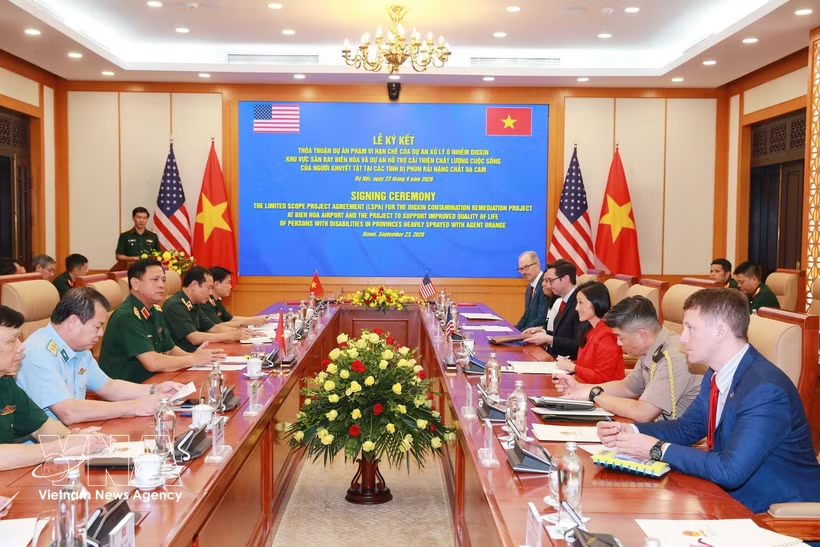
Hanoi (VNA) - Vietnam and the US signed two limited-scope project agreements (LSPAs) in Hanoi on September 23 to advance efforts to address the post-war chemical and Agent Orange/dioxin contamination in Vietnam.
The signing ceremony was co-chaired by Deputy Minister of National Defence Senior Lieutenant General Nguyen Truong Thang, who is also Head of the National Steering Committee 701 for addressing the consequences of bombs, mines and chemicals after the war in Vietnam, and US Ambassador to Vietnam Jennifer Wicks.
The agreements cover additional US funding for dioxin remediation at Bien Hoa Air Base and support for improving the quality of life of people with disabilities, regardless of the cause of their disabilities, in heavily sprayed Agent Orange areas and other priority provinces.
The dioxin remediation project at Bien Hoa Air Base will receive an additional approximately 130 million USD, bringing total US grant funding for the project to around 430 million USD, up from the previous 300 million USD.
Launched in 2019, the project has so far confirmed around 41 hectares as remediated in accordance with its applicable standards and regulations. The Air Defence-Air Force Service, as the project owner, will continue working with Vietnamese and US agencies to ensure its quality, progress, safety, and effectiveness.
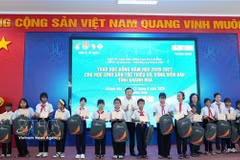
The second project will receive 91 million USD in US grant assistance to expand medical care, rehabilitation, social services, community inclusion and policy implementation capacity for people with disabilities. Activities will initially be carried out in Ca Mau and Quang Ngai provinces before expanding to other areas, subject to the project's scope and available resources.
Thang said cooperation between Vietnamese and US agencies in addressing the consequences of chemicals/dioxin has produced significant results and was regarded by the two countries' senior leaders as a bright spot in bilateral cooperation.
However, he noted that major tasks remain, requiring substantial financial resources as well as advanced technologies and equipment. Vietnam aims to complete the Bien Hoa project by 2031, involving the treatment of approximately 500,000 cubic metres of contaminated soil, while expanding healthcare and quality-of-life support for victims of chemicals/dioxin and people with disabilities.
Thang affirmed that Vietnamese agencies would closely coordinate with US authorities and contractors to create favourable conditions for the successful implementation of the two projects.
US Ambassador Jennifer Wicks said that since taking office in Vietnam three months ago, she had participated in several activities regarding the settlement of war consequences, including events marking War Invalids and Martyrs Day on July 27 and mine-clearance activities in Quang Tri province.
The Ambassador said she was impressed by the progress made by the two countries in addressing post-war issues, describing such cooperation as an important foundation for the Comprehensive Strategic Partnership and for expanding bilateral ties into new areas.
The diplomat said the two agreements demonstrated a shared commitment to building a brighter future and expressed her appreciation for Vietnam's cooperation in addressing the war aftermath.
She also highlighted the US's assistance for Vietnam's efforts to identify the remains of Vietnamese people missing in the war, including the provision of advanced DNA analysis technology and archival information.
Wicks affirmed the US's support for Vietnam's “500-day campaign” to accelerate the search for, recovery and identification of martyrs' remains./.