Hanoi (VNA) – Deputy Prime Minister Ho Quoc Dung has asked the Ministry of Agriculture and Environment to closely coordinate with relevant agencies to urgently review and carefully assess provisions to be included in the revised Land Law, stressing that they will have far-reaching impacts on various aspects of social life.
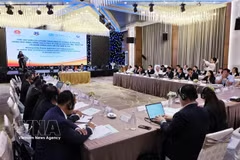
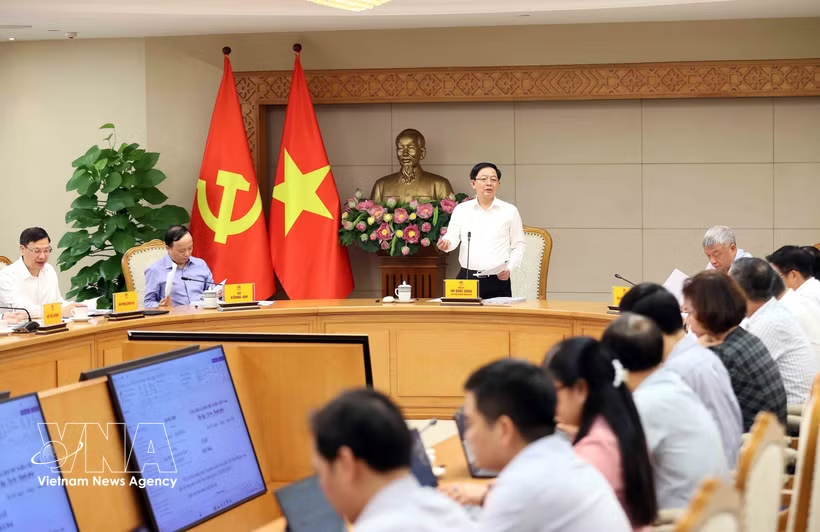
Chairing a meeting with several ministries and sectors on the revised law on September 21, the Deputy PM said the ministry should clearly distinguish between matters to be stipulated in the law and those to be further guided by the Government’s decrees.
Dung commended the participating agencies for clarifying issues and proposing solutions to difficulties in the draft revised Land Law, particularly those concerning decentralisation of land-recovery authority, notarisation, compensation policies and land-price determination.
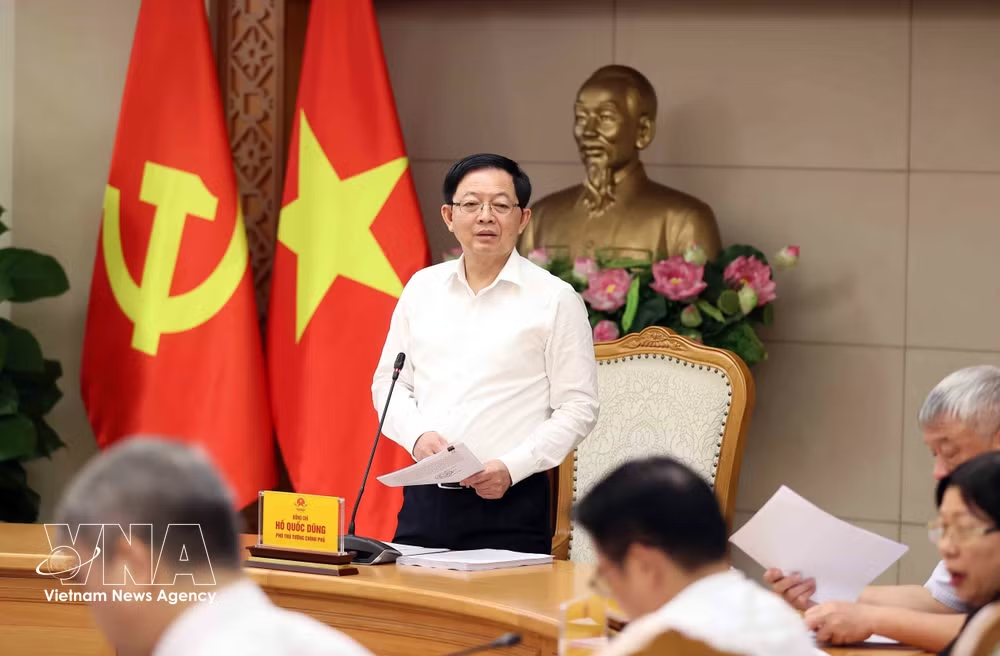
He stressed that the revised Land Law should contain only framework and principle-based provisions, helping minimise frequent amendments when new issues arise in practice.
For issues that remain subject to differing views, including notarisation and certification, deduction of advance compensation and resettlement costs, land-price determination, land payments for BT projects and unified planning, the Deputy PM assigned the Ministry of Agriculture and Environment to work with relevant agencies to conduct further thorough reviews and reach agreement on the draft.
He stressed that the process must ensure feasibility and effectiveness while minimising obstacles in implementing the law once enacted.
According to the ministry, it has completed the draft law dossier after consulting ministries, sectors, localities, affected groups, businesses and relevant organisations, while reviewing 64 laws and codes directly related to the draft law. It has also incorporated opinions from National Assembly deputies and the Ministry of Justice’s appraisal.
The draft law follows a new legislative mindset under the Political Bureau’s Resolution No. 66-NQ/TW on reforming lawmaking and enforcement to meet development requirements in the new era. Accordingly, the law would provide framework and principle-based regulations, while frequently changing matters would be assigned to the Government, ministries, sectors, and localities for regulation.
The draft comprises 13 chapters and 115 articles, compared with 16 chapters and 260 articles in the 2024 Land Law. Detailed provisions on procedures will be delegated to the Government./.