Vietnam could face super typhoon like Yagi every seven years

If global average temperatures rise by two degrees Celsius, Vietnam could experience such a super typhoon once every 13 years on average. The frequency would increase to once every nine years under the three-degree warming scenario and once every seven years if temperatures rise by four degrees.

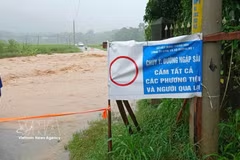
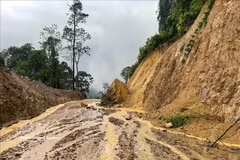
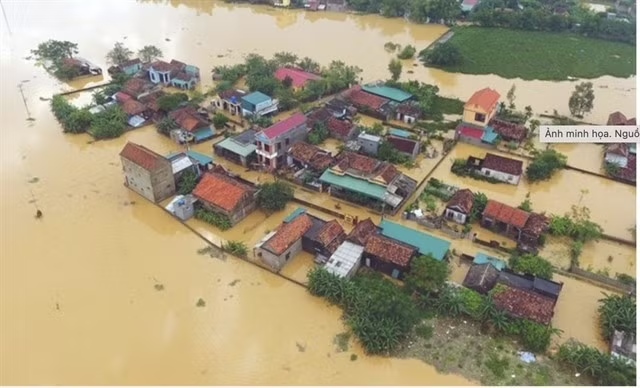
Typhoon Yagi caused severe losses in many provinces in Vietnam in 2024. (Photo: VNA)

Hanoi (VNS/VNA) – Vietnam could face a super typhoon comparable in intensity to Typhoon Yagi, which struck the country in 2024, on average once every seven years if global temperatures rise by four degrees Celsius, according to updated 2025 climate change scenarios.

The Ministry of Agriculture and Environment has released the updated 2025 Climate Change Scenarios and integrated the document into the National Climate Change Database.

The scenarios provide a scientific basis for management, policymaking, planning, risk management and proactive adaptation to climate change.

Under the high-emissions scenario, the number of hot days could increase by more than 50 days by the end of the 21st century, while the number of days with extreme heat could rise by around 20 days.

By contrast, the number of days with severe cold and damaging cold in northern Vietnam and the north-central region is projected to fall sharply.

Notably, maximum one-day and five-consecutive-day rainfall could increase by around 30–40% in the northern and southern regions. The number of days with heavy rainfall is also projected to rise significantly, particularly in the south.

In some areas of northern Vietnam, the Central Highlands and the South, the number of days with rainfall exceeding 100mm could increase by 80-100% under the high-emissions scenario.

These changes point to a growing risk of extreme rainfall, highlighting the need to strengthen disaster prevention and response capacity and improve climate change adaptation.

Another major new feature is that, for the first time, the 2025 scenarios provide information on extreme climate events under global warming thresholds of 1.5, two, three and four degrees Celsius above pre-industrial levels.

According to the scenarios, as global temperatures rise, super typhoons comparable in intensity to Typhoon Yagi (2024) are likely to occur more frequently.

If global average temperatures rise by two degrees Celsius, Vietnam could experience such a super typhoon once every 13 years on average.

The frequency would increase to once every nine years under the three-degree warming scenario and once every seven years if temperatures rise by four degrees.

Under the four-degree warming scenario, northern Vietnam could be affected by a super typhoon once every 13 years on average, while the corresponding frequency in the central region is once every 16 years.

In the South, such storms are projected to be much less frequent, occurring approximately once every 133 years.

For the first time, the 2025 climate change scenarios also include an in-depth assessment of urban areas, focusing on Hanoi and Ho Chi Minh City.

The assessment considers the combined effects of global warming and urbanisation, highlighting trends in rising temperatures, more frequent hot weather, the urban heat island effect and extreme rainfall.

The scenarios indicate that climate change will affect a range of climate-sensitive sectors, including public health, rice production and infrastructure.

In addition to intensifying extreme weather events, climate change is expected to accelerate sea-level rise as the planet warms.

By 2100, the average sea-level rise is projected to reach around 46.1cm under the low-emissions scenario and as much as 63.7cm under the high-emissions scenario.

Assoc. Prof. Pham Thi Thanh Nga emphasised that climate change scenarios should not be confused with weather forecasts or climate predictions.

Rather, they are scientifically grounded hypothetical scenarios that illustrate possible future climate trends based on the relationships between socio-economic activities, greenhouse gas emissions, climate change and sea-level rise.

She said effective use of the scenarios requires consideration of the uncertainties involved and the selection of scenarios appropriate to the intended purpose./.

VNA
See more

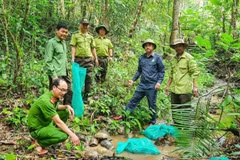
Six of the newly recorded species are of conservation significance, representing four orders and five families. (Photo published by VNA)

Dakrong Nature Reserve records 35 new bird species

Dakrong Nature Reserve in the central province of Quang Tri has recorded 35 bird species not previously documented, including several endangered and rare species listed on the International Union for Conservation of Nature (IUCN) Red List.

An overview of Soc Son waste-to-energy plant in the Nam Son Waste Treatment Complex, in Hanoi (Photo: VNA)

Hanoi targets collection and treatment of all industrial solid waste

Hanoi aims to ensure that all industrial solid waste from its hi-tech parks, industrial parks and industrial clusters is collected and treated in line with regulations under a new plan to strengthen waste management and tighten control on scrap collection, storage and recycling facilities across the capital.

UNICEF Representative in Vietnam Silvia Danailov (first, right) honours first winners of the teaching materials competition. (Photo: VNA)

Deputy minister urges early action on disaster risks

Rapidly shifting climate conditions and increasingly overlapping hazards mean disaster risk reduction can no longer stand alone; it must sit at the heart of sustainable development, tightly integrated with climate response, water security, social welfare and economic growth.

General Secretary of the Communist Party of Vietnam Central Committee and President To Lam speaks at the groundbreaking ceremony for a project to upgrade the Bac Hung Hai irrigation system. (Photo: VNA)

Hung Yen: Project to modernise Bac Hung Hai irrigation system launched

General Secretary of the Communist Party of Vietnam Central Committee and President To Lam stressed that the development of Bac Hung Hai must be integrated into broader efforts to ensure water security, protect the environment and promote sustainable development in the Red River Delta.

Illustrative image (Source: VNA)

Northern region to experience cold spell

The cold air is forecast to reach northeastern Vietnam from the evening and night of October 4 before spreading to other parts of the north and the area from Thanh Hoa to Hue. Winds will shift to the northeast at levels 2-3 inland and levels 3-4 along coastal areas.

Deputy Minister of Industry and Trade Truong Thanh Hoai and CEO of GWEC Ben Backwell chairs a offshore wind development workshop in Hamburg on September 24, 2026. (Photo: VNA)

Vietnam, Germany promote cooperation in offshore wind development, supply chains

At the discussion session, representatives of the ministry, offshore wind developers, equipment manufacturers and international financial institutions, including CIP, Siemens and KfW, discussed Vietnam’s offshore wind investment potential and the Vietnamese Government’s plans to achieve an offshore wind capacity target of 17GW by 2035, including measures to attract international investment to the country.

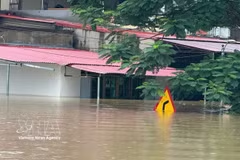
In Kim Tan commune, Thanh Hoa province, flood has submerged more than half of the ground floors of two- and three-storey houses. (Photo: VNA)

Floods affect over 16,000 homes, nearly 25,000ha of crops

The floods submerged and damaged 22,499ha of rice, crops and vegetables, along with 2,172ha of other crops. A further 1,175.62ha of aquaculture areas were affected. Some 1,999 metres of irrigation canals were eroded or damaged, while 15 schools were flooded.

Landslides block roads in mountainous areas of Thanh Hoa (Photo: VNA)

Heavy rains cause widespread damage in Phu Tho, Thanh Hoa

Prolonged heavy rains from September 13–17 have caused flooding and landslides, damaging homes, crops, roads and infrastructure in Phu Tho and Thanh Hoa provinces, with local authorities mobilising forces for emergency response.

White-rumped langurs are rescued and conserved at the Endangered Primate Rescue Centre (EPRC) in Cuc Phuong National Park. (Photo: VNA)

Ninh Binh establishes Kim Bang white-rumped langur conservation area

Covering a total area of 3,182ha, the conservation area comprises 3,016.81ha of natural forest, 64.25ha of plantation forest and 100.94ha of land without forest, with no water surface area. It is located in the Ly Thuong Kiet, Tam Chuc and Nguyen Uy wards of Ninh Binh province.