Lam Dong (VNA) – The People’s Committee of Lam Dong province has decided to establish the Ta Kou Nature Reserve in Ham Thuan Nam and Tan Thanh communes.
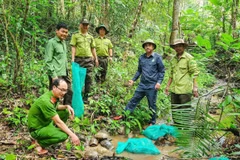
The reserve, covering 8,408 hectares, aims to protect and maintain the area and quality of natural forests, conserve biodiversity, endangered and rare species, and natural habitats typical of the region. It will also restore degraded forests, improve ecosystem functions and landscape values, and promote scientific research, environmental education and ecotourism in line with conservation requirements.
The reserve covers 7,342 hectares of natural forest, 281 hectares of planted forest and 785 hectares of land without forest cover. It is divided into three zones, namely a strictly protected zone, an ecological restoration zone, and a service and administration zone.
Following its establishment, the reserve’s management board is expected to coordinate scientific research, training, environmental education, forest environmental service payments, and livelihood support programmes for people living in the buffer zone. Plans for ecotourism, resort, and recreational activities will be reviewed to make sure they align with conservation goals.
Total funding for the reserve’s development plan for 2026–2030 is estimated at nearly 76 billion VND (3 million USD), sourced from public investment funds, recurrent budget expenditure and other sources.
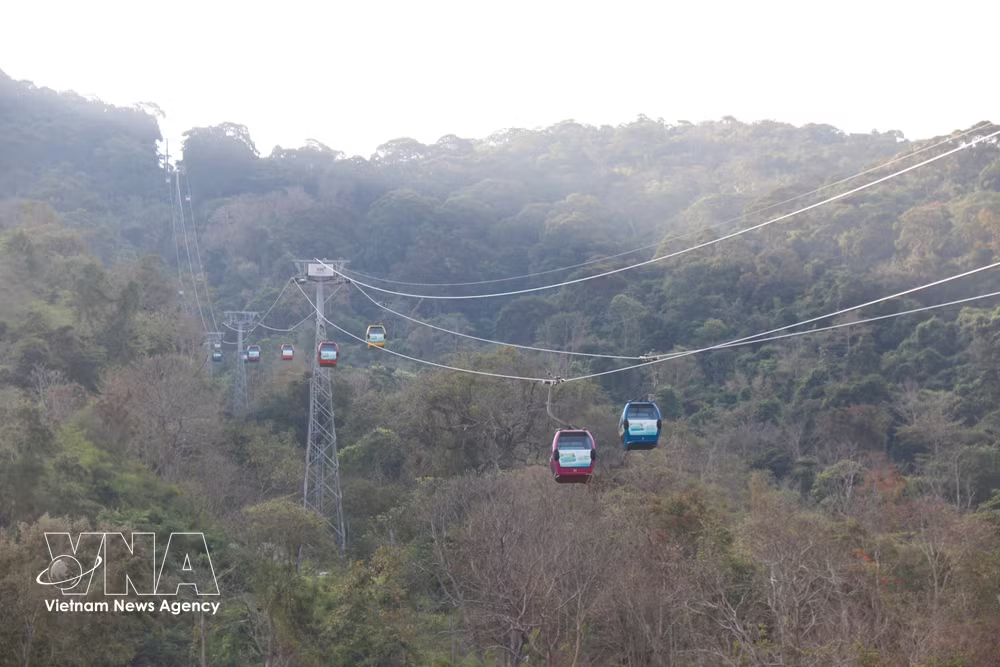
Ta Kou is considered an important site for nature and biodiversity conservation, featuring forest ecosystems typical of Vietnam’s south-central coastal region, diverse mountainous landscapes and many rare plant and animal species.
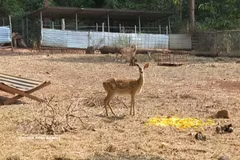
Preliminary surveys have recorded around 287 animal species, including 62 mammals, 135 birds, 65 reptiles, and 25 amphibians. At least 32 animal species are endangered or rare, including black-shanked douc langurs and water monitors.
The area is also rich in plant resources, including valuable species and medicinal plants traditionally used by local communities.
These ecological values make Ta Kou an important area for priority conservation./.