Hanoi (VNA) - With significant contributions to the country’s sustainable development, nuclear technology is now being widely applied not only in the energy industry but also in various other fields such as medicine, agriculture, environmental protection, food safety, and promoting scientific advancement.
From the foundations in radiation research...
After the country’s reunification, the Nuclear Research Institute (later renamed the Vietnam Atomic Energy Institute) was established, marking a new phase focusing on promoting the application of atomic energy for peaceful purposes and advancing research and implementation activities with ministries and sectors on the application of atomic energy.
In 1977, Vietnam restored its membership in the International Atomic Energy Agency (IAEA) and began receiving technical assistance and cooperation programmes. In 1984, the Da Lat reactor was restored and its capacity doubled, focusing on producing radioactive materials for medical diagnosis and treatment, as well as analysing geological ore samples, biological samples, agricultural products, and environmental studies.
Vo Van Thuan, former Director of the Institute for Nuclear Science and Technology, shared that the Centre for Nuclear Techniques in Ho Chi Minh City was the first to apply radiographic imaging techniques to inspect the quality of bridges, roads, and construction works, and carry out non-destructive testing in industry.
In Hanoi, the Institute for Nuclear Science and Technology conducted environmental geological sample analysis and developed applications in various industrial sectors. Notably, environmental radiation monitoring techniques were used to track the developments of the Chernobyl and Fukushima nuclear accidents. In 1990, the Hanoi Irradiation Centre received the first semi-industrial gamma radiation source sponsored by the IAEA to implement irradiation processes for food preservation and to intensify nuclear energy applications in health care and other industries.
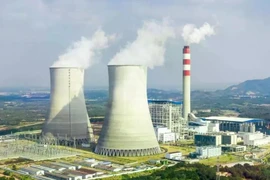
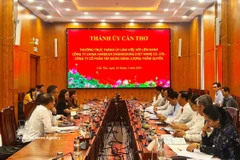
According to Thuan, nuclear power is considered the most important application of the nuclear energy sector. Therefore, the Vietnam Atomic Energy Institute began studying the nuclear power planning programme under the nuclear technology research programme KC-09. Based on forecasts and research, in 2002, the Prime Minister established a government task force to direct the pre-feasibility study of the country’s first nuclear power plant project and develop a comprehensive strategy for the application of atomic energy. In 2006, the Government approved the Strategy for Peaceful Use of Nuclear Energy. In 2007, the National Assembly passed the Law on Atomic Energy, a legal framework to promote the application of atomic energy for peaceful purposes.
...to the application of nuclear energy
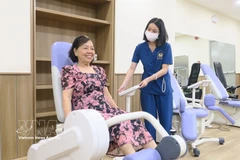
Thuan emphasised that the application of atomic energy across various sectors has affirmed its important role in life and in promoting socio-economic development. Particularly in the medical field, Vietnam has progressed from simply using X-rays and Cobalt radiotherapy to now having 85 external cancer radiotherapy accelerators and several brachytherapy machines, nearly 10,000 X-ray units, 400 CT scanners, 40 SPECT and PET scanners. It also has seven small accelerators working in coordination with the Da Lat reactor to produce radioactive pharmaceuticals. These devices are distributed nationwide in nearly 100 oncology and nuclear medicine centres.
Vietnam has made advances in the calibration and quality management of radiation sources and nuclear medical diagnostic machines, improving healthcare quality for its people. Radiotherapy capacity meets nearly 60% of demand, and over 30% of cardiovascular, endocrine, and metabolic disorders are diagnosed early through nuclear medicine.
Additionally, in the process of promoting the application of atomic energy for peaceful purposes, agricultural experts have used radiation-induced mutation breeding to develop more than 80 new crop varieties, including 55 high-yield and high-quality rice varieties such as the famous ST-25 rice, which has now become a world-leading brand.
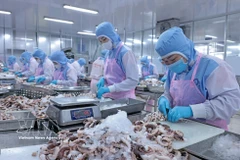
The atomic energy sector has successfully transferred radiation technology to a commercial scale. Currently, the country has 23 industrial irradiation centres, most of which are private enterprises, equipped with eight gamma sources and 15 electron accelerators primarily used for food preservation and sterilisation of medical equipment, mainly serving export demands.
Tran Chi Thanh, Director of the Vietnam Atomic Energy Institute, stated that in the new phase, Vietnam’s atomic energy sector will move towards in-depth development, gradually mastering core technologies and progressing towards independently designing and manufacturing large-scale, high-demand equipment.
To meet practical needs, training experts and a strong R&D workforce have become a top urgent priority, Thanh stressed.
As part of the cooperation programme with Russia, Vietnam is currently constructing a new Nuclear Science and Technology Centre in the southern province of Dong Nai, which is expected to include a research reactor with a capacity of over 10 MW, 20 times more powerful than the Da Lat reactor.
Since late 2024, with the official restart of the Ninh Thuan nuclear power project, aimed at ensuring sustainable economic development from the 2030s onward, Vietnam's atomic energy sector has entered a new phase of in-depth development. This highlights the country's mission not only to develop and successfully apply atomic energy for socio-economic benefit, but also as a demonstration of Vietnam’s scientific and technological advancement./.
See more
High-speed East–West railway – A breakthrough solution for southern green logistics
Becamex has proposed two strategic railway lines, the Bau Bang – Cai Mep high-speed route and the HCM City – Can Tho line, aiming to develop a green logistics backbone for the region.
Vietnam’s garment industry rebounds, but challenges loom
Businesses in the sector are facing mounting challenges - from high capital and logistics costs to growing pressure to green their operations and navigate shifting trade policies.
Entire Cao Bang - Ca Mau expressway must be inaugurated on December 19: PM
PM Chinh, who is head of the steering committee, asked all parties involved to strive hard to achieve the goal of putting 3,000 kilometres of expressways and approximately 1,700 kilometres of coastal roads into operation in 2025, thus creating momentum to welcome the 14th National Party Congress and meeting the travel needs of the people during New Year 2026 and the Lunar New Year Festival.
Vietnam to be among countries with highest growth in 2025: Press conference
Many international organisations have continued to provide positive and optimistic assessments of Vietnam’s economic situation, forecasting that in 2025 Vietnam will be one of the countries with the highest growth in the region and the world.
Government leader presides over meeting on national key transport projects
Noting that there are less than two months left until December 19 - the date set for the simultaneous ground-breaking and inauguration ceremonies of major projects, the PM emphasised that this is a crucial period to accelerate progress and make breakthroughs in the implementation of key projects and works.
Vietnam exports first shipment of tilapia to Brazil
This shipment is one of 32 containers, totalling 700 tonnes of tilapia, ordered and imported by JBS Group from Vietnam. The products will first be distributed through HORECA supermarket and distribution network, and showcased in JBS's product display centre in Brazil.
Green industry lures more FDI to Mekong Delta
The Mekong Delta region, having earned the monikers of the rice bowl, fruit and seafood basket of the country, and following the restructuring of administrative units, is now standing at the threshold of becoming a modern, sustainable industrial centre.
Vietnam registers nearly 18,000 new enterprises in October
Nearly 18,000 enterprises with registered capital of 172.5 trillion VND (6.6 billion USD) and 93,600 workers were established in Vietnam in October this year, according to the National Statistics Office.
Bad debt settlement fully benefits from new policy from H2 2026
Resolution 42, enacted in 2017 to pilot bad debt settlement for credit institutions, was introduced in response to a sharp rise in non-performing loans (NPLs). It empowered credit institutions to seize and liquidate collateral assets, expediting debt recovery. After more than six years of implementation, the resolution delivered certain results but expired last year.
Manufacturing sector improves with business confidence hitting 16-month high
New orders increased for the second consecutive month, and at a much faster pace than in September. The rate of expansion was the quickest since July 2024, reflecting improved customer demand.
Retail sales growth remains stable over 10 months
With the current recovery momentum, the trade and services sector is expected to continue being a bright spot in Q4, driving GDP growth and ensuring a balance between domestic consumption and exports amid ongoing global economic fluctuations.
Bac Ninh hosts investment promotion policy dialogue with Asian partners
Vu Van Chung, deputy director of the agency, said Asian countries remain Vietnam’s largest investment partners, with more than 35,600 valid projects and total registered capital of 402 billion USD, accounting for nearly 80% of total FDI inflows into the country.
Vietnam emerges as ASEAN’s leading next-generation trade hub
Singapore’s The Business Times noted that the Vietnamese Government is intensifying investment efforts to advance ambitious reform agendas and realise its growth objectives for 2026.
ASEAN meeting to drive regional cooperation, growth by removing barriers
Running from November 5–11, CCS 111 focuses on advancing service liberalisation and facilitation in ASEAN by removing barriers, enhancing transparency, reducing policy risks, and simplifying administrative procedures to enable businesses and service providers to operate more efficiently.
Vietnam determined to build transparent global trade system
The Government of Vietnam on November 6 updated the World Trade Organisation (WTO)’s Committee on Rules of Origin (CRO) on adjustments to the agencies and organisations authorised to issue certificates of origin (C/O), as well as on the application of QR codes in the C/O issuance process.
Vietnam opens largest int’l semiconductor exhibition
SemiExpo Vietnam 2025, themed “Powering Vietnam’s Semiconductor Ambition,” brings together around 5,000 delegates and feature 200 booths from major global technology corporations such as Lam Research, Coherent, Qorvo, Amkor, GlobalFoundries, Micron, Tokyo Electron, KLA, STMicroelectronics, Soitec, and Siemens.
Hanoi launches digital booths to promote e-commerce
Hanoi will open an online store showcasing Hanoi's products on the e-commerce platform Shopee. It will introduce digital tools such as electronic signatures, e-contracts, e-invoices, and product traceability systems for local producers and businesses participating in the booth.
Fresh impetus for Vietnam’s fruit, vegetable exports
China, the US, the Republic of Korea (RoK), and Japan continued to be Vietnam’s major import markets, offering strong potential for export acceleration in the remaining months of the year.
International Financial Centre draws investor interest ahead of November launch
Despite the obstacles, Vietnam is moving in the right direction. If executed effectively, the IFC could become a strategic step toward Vietnam’s goal of achieving high-income status by 2045.
Vietnamese agribusinesses need to be empowered for green growth
Implementing ESG is essential for businesses of all sizes to remain resilient amid rapid market shifts. Those who commit early to sustainable and responsible practices will gain stronger positions in global value chains.