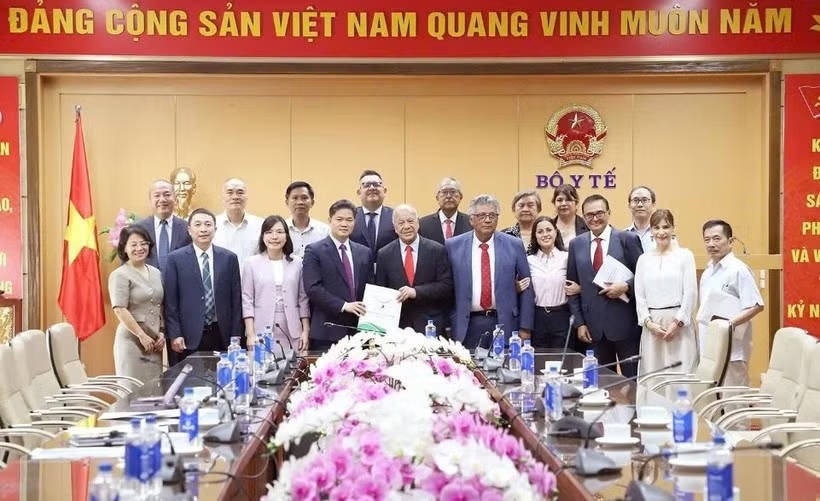
Hanoi (VNA) – Vietnam and Mexico are working to strengthen comprehensive cooperation in traditional medicine and acupuncture, building on more than two decades of practical collaboration that has helped improve healthcare and foster friendship between the two countries.
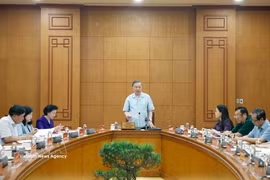
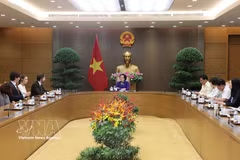
Standing Deputy Minister of Health Vu Manh Ha held a working session with visiting General Secretary of the Mexican Labour Party Alberto Anaya Gutierrez on August 17.
At the meeting, Ha praised the Mexican Labour Party for its active support for health cooperation between the two countries, as well as its sustained collaboration with the National Hospital of Acupuncture for more than 20 years.
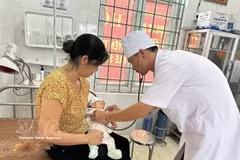
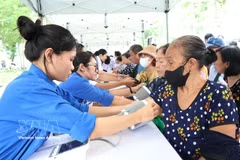
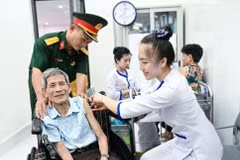
Under the cooperation framework, three Vietnam’s acupuncture centres named after President Ho Chi Minh in Mexico City, Monterrey and at the Autonomous University have maintained stable operations. They have become practical models of cooperation, helping provide healthcare services for Mexican people while promoting Vietnam’s traditional medicine.
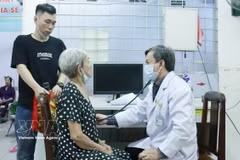
Vietnamese specialists have examined and treated hundreds of thousands of Mexican patients. Many Vietnamese professors, doctors and other specialists have also travelled to Mexico to teach, share experience and provide treatment.
The cooperation is humanitarian and non-profit in nature, including support provided for elderly people, low-income earners and those facing difficult circumstances, according to the official.
Bilateral health collaboration was further strengthened following a visit to Mexico by a delegation from the Vietnamese Ministry of Health led by Deputy Minister Do Xuan Tuyen in November 2025. During the visit, a memorandum of understanding on health cooperation was signed between the two health ministries, while a new deal inked between the National Hospital of Acupuncture and the Mexican Labour Party.
The agreements provided a basis for expanding cooperation in acupuncture, traditional medicine, training and expert exchanges.
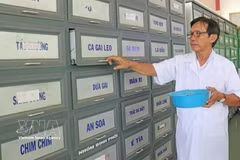
Ha said Vietnam considers developing traditional medicine an important task for the health sector. The Ministry of Health is currently drafting a strategy on traditional medicine development through 2030, with a vision to 2045. It is also continuing to improve mechanisms and policies to create a cornerstone for the sector’s sustainable development.
A consistent direction for Vietnam is to combine traditional and modern medicine in healthcare, he noted, adding that the ministry will continue to standardise professional guidelines and technical procedures, while developing strong national- and regional-level traditional medicine centres.
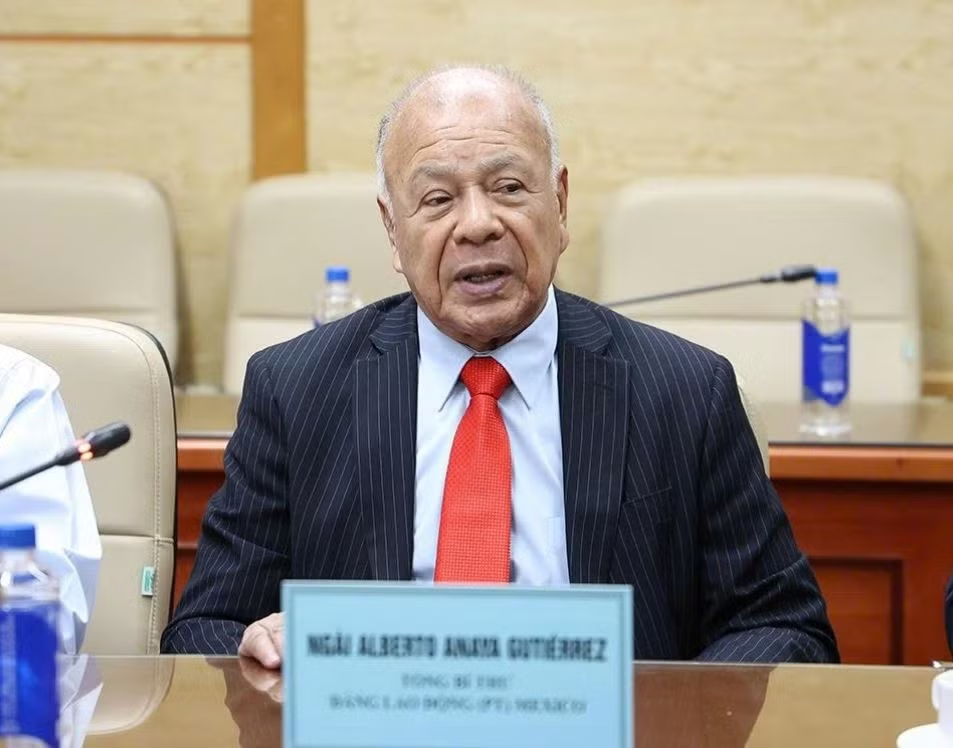
Sharing the orientations outlined by Ha, Alberto Anaya Gutierrez highlighted the importance of and significant potential for health cooperation between Vietnam and Mexico to grow further.
He proposed stronger ties in human resources training, scientific research, technology application, the prevention and treatment of diseases using traditional medicine, as well as the integration of traditional and modern medicine.
The Mexican official also called for greater information and experience sharing, technology transfer, expert exchanges and more practical cooperation programmes to build on achievements and expand collaboration.
Participants at the meeting, including senior representatives of the Mexican Labour Party and leaders of units under Vietnam’s Ministry of Health, highlighted the results achieved over more than 20 years of cooperation in traditional medicine.
They said the meeting provided an opportunity to review existing cooperation and identify new directions, particularly in traditional medicine, medicinal plants and acupuncture – an area that has become a symbol of relations between Vietnam and Mexico.
Ha asked relevant agencies from both sides to maintain existing connections while improving their quality, sustainability and scale. He also called for regular review of implementation to make timely adjustments and add activities suited to actual needs and conditions.
Regarding training and human resources development, the deputy minister proposed that the two sides increase training for Mexican doctors and specialists in acupuncture, increase expert exchanges, and jointly organise training courses, scientific workshops and academic exchange programmes in both countries.
The efforts are expected to help build a local pool of qualified professionals and ensure the long-term sustainability of cooperation programmes.
The cooperation is also part of efforts to implement the Politburo’s Resolution No. 59-NQ/TW on international integration in the new situation, under which international cooperation in science and technology should directly contribute to strengthening national scientific and technological capacity, helping Vietnam gradually master strategic technologies and enhance its competitiveness./.