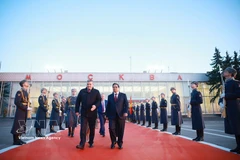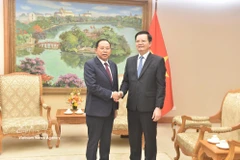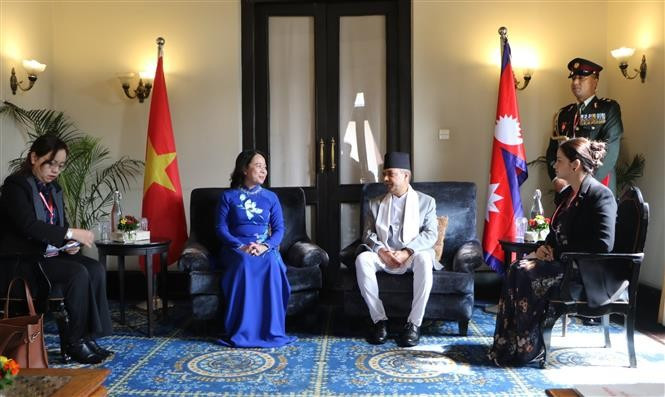
Kathmandu (VNA) – Vietnamese Vice State President Vo Thi Anh Xuan held talks with Nepali Vice President Ram Sahaya Prasad Yadav in Kathmandu on August 24, during which they shared their countries’ development goals and mapped out major directions to enhance bilateral cooperation.
Both sides agreed that Vietnam and Nepal are entering a new stage of development. Vietnam is pursuing strategic breakthroughs to become a high-income developed country by 2045, while Nepal aims to reach middle-income status by 2030. They underlined the need to strengthen exchanges, share experiences, and support each other in realising these goals.
To consolidate political trust and diplomatic ties, the leaders agreed to increase high-level contacts and delegation exchanges, and promote cooperation among agencies and organisations.
They also concurred on leveraging each country’s potential and advantages to further expand economic, trade, and investment cooperation. Both sides will consider negotiating bilateral trade and investment agreements and establish a joint working group or committee on economic collaboration. Trade and investment promotion will be stepped up to help businesses from both countries connect. Vice President Xuan suggested Nepal create favourable conditions for Vietnamese firms to explore opportunities in infrastructure, energy, and digital transformation.
Highlighting the similarities in history, culture, Buddhist values, and natural landscapes that can complement each other in tourism development, the two leaders agreed to assign relevant agencies to review and promote cooperation frameworks in tourism, culture, education, and aviation. They also consented to strengthen links between Buddhist centres, develop pilgrimage tourism routes, and expand Buddhist tourism. The two sides further pledged to coordinate in organising activities to celebrate the 50th anniversary of diplomatic ties in 2025, and to promote the role of the Vietnam–Nepal Friendship Association and the Nepal Peace and Solidarity Committee in advancing these initiatives.
The leaders also underscored the need for close coordination and mutual support at regional and international forums, especially at the United Nations and within the Non-Aligned Movement. Vietnam welcomed Nepal’s interest in strengthening cooperation with the Association of Southeast Asian Nations (ASEAN) and pledged to serve as a bridge, while suggesting that Nepal help Vietnam enhance ties with South Asian countries. Both sides agreed to work together on global climate change responses, implement commitments to net-zero emissions by 2050, and participate in UN peacekeeping operations.
On this occasion, Vice President Xuan invited Vice President Yadav to visit Vietnam at a suitable time, and the latter accepted the invitation with pleasure.
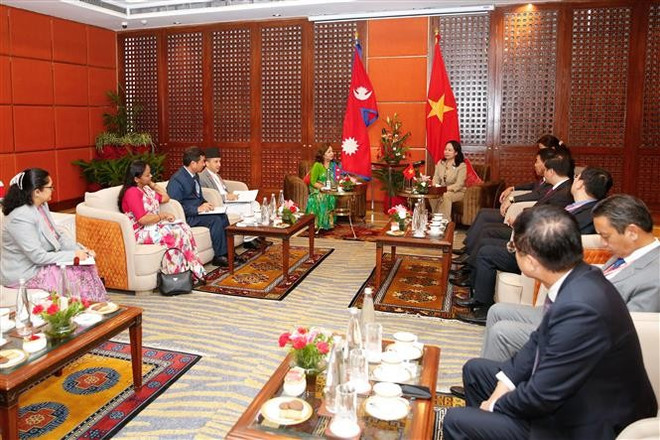
Earlier, on August 23, the Vietnamese leader met with Nepali Minister of Foreign Affairs Arzu Rana Deuba and Vietnam’s Honorary Consul in Nepal Rajesh Kazi Shrestha.
At the meeting with FM Deuba, Vice President Xuan proposed that the two foreign ministries, building on their sound political relations and existing potential, actively coordinate to develop specific programmes and push for the signing of new agreements, thereby creating a favourable framework for cooperation in economy, trade, investment, agriculture, education, tourism, and people-to-people exchanges. She welcomed the establishment of the Deputy Foreign Minister-level Political Consultation mechanism and suggested convening its first session in Vietnam in 2026.
During her meeting with Honorary Consul Shrestha, the Vice President appreciated his contributions to advancing bilateral relations, especially in economy, trade, and investment. She expressed her hope that the Honorary Consul would continue to work closely with the Vietnamese Embassy in India, concurrently accredited to Nepal, and relevant agencies to effectively implement high-level agreements, act as a bridge for business cooperation, update information on policies and laws to enterprises, and safeguard the legitimate interests of Vietnamese citizens and companies in Nepal./.