Vietnam puts forward priorities to advance ASEAN cooperation

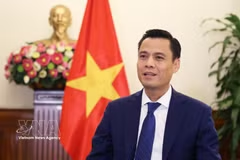
Appreciating ASEAN-BAC’s report and recommendations, Deputy Minister of Foreign Affairs Dang Hoang Giang, head of Vietnam’s ASEAN Senior Officials’ Meeting (SOM) delegation, called for simplifying procedures, reducing costs, accelerating digitalisation, upgrading the ASEAN Single Window (ASW) and effectively implementing the ASEAN Digital Economy Framework Agreement (DEFA) to make the regional market more accessible.

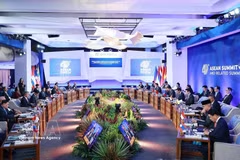
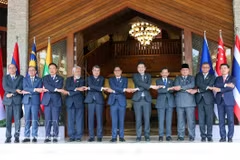
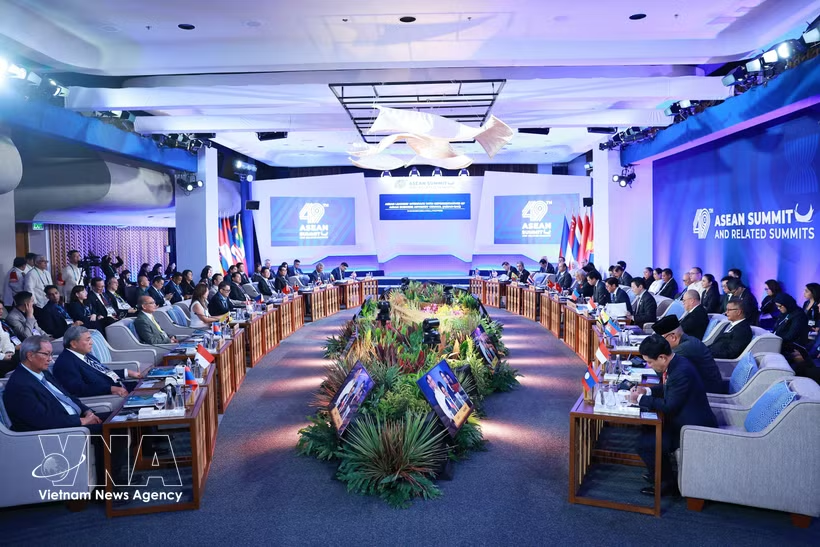
An overview of the dialogue between ASEAN leaders and the ASEAN Business Advisory Council (ASEAN-BAC) in Manila on November 15 (Photo: VNA)

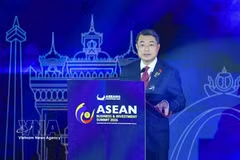
Manila (VNA) – Deputy Minister of Foreign Affairs Dang Hoang Giang, head of Vietnam’s ASEAN Senior Officials’ Meeting (SOM) delegation, has proposed three priorities for regional cooperation, namely building a more accessible and business-friendly regional market, strengthening regional connectivity and resilience, and maintaining and expanding projects delivering practical results, at a dialogue between ASEAN leaders and the ASEAN Business Advisory Council (ASEAN-BAC) in Manila on November 15, within the framework of the 49th ASEAN Summit and related summits in the Philippines.

Under the theme “Advancing Prosperity for All”, the dialogue focused on the four pillars of people, environment, digital platforms and productivity, based on ASEAN-BAC’s 2026 report and legacy projects.

Appreciating ASEAN-BAC’s report and recommendations, Giang called for simplifying procedures, reducing costs, accelerating digitalisation, upgrading the ASEAN Single Window (ASW) and effectively implementing the ASEAN Digital Economy Framework Agreement (DEFA) to make the regional market more accessible. He said that governments should also help micro, small and medium-sized enterprises (MSMEs) gain better access to finance and technology and participate more deeply in value chains.

He also underscored the importance of improving connectivity and regional resilience through coordinated development of transport, logistics, energy and digital infrastructure, alongside stronger links between regional and global supply chains.

Vietnam supports cross-border connectivity projects such as the ASEAN Power Grid (APG), Giang said, calling for greater mobilisation of private resources and assistance for businesses in making better use of existing free trade agreements (FTAs).

Regarding practical cooperation, Vietnam welcomes ASEAN-BAC’s efforts to link policy recommendations with specific initiatives, including the ASEAN Food Security Alliance and the ASEAN SME Academy 2.0, and proposes maintaining and expanding these projects across successive ASEAN chairmanships to ensure continuity and tangible outcomes, he noted.

The Vietnamese official also called on ASEAN-BAC to further strengthen its role as a bridge between governments and businesses by promptly conveying business concerns and proposing feasible solutions with measurable results. He affirmed that Vietnam will continue working with the business community to implement initiatives and translate commitments into action, contributing to building a dynamic, inclusive and resilient ASEAN Community.

Against the backdrop of global economic uncertainties, ASEAN leaders highlighted the business community’s role in driving growth and innovation, calling on businesses to contribute to the effective implementation of DEFA. They also stressed the need to strengthen public-private dialogue, incorporate business feedback into policymaking and improve the business environment, particularly for small and medium-sized enterprises.

At the ASEAN Youth Dialogue 2026 themed “ASEAN Youth Navigating a Resilient, Digital, and Inclusive Future,” Giang affirmed that young people are key actors in shaping ASEAN's peaceful and prosperous future. He proposed three areas in which governments should support young people in education and knowledge acquisition, innovation and entrepreneurship, and opportunities to contribute to society.

He called for young people’s wider access to open education and digital infrastructure, stronger digital and AI application skills, and a critical mindset to help them adapt to labour market changes. He said governments should also facilitate access to funding, ensure safe online working environments and promote responsible and ethical innovation.

He stressed the need to expand young people's access to open education and digital infrastructure, and strengthen their digital, AI and critical thinking skills to help them adapt to labour market changes. He noted that governments should also facilitate access to finance, ensure safe online working environments and encourage responsible, ethical innovation.

Young people should be empowered to take the lead in green transformation, climate change response and community development, he said.

Vietnam stands ready to facilitate academic exchanges and scientific and technological networking among ASEAN youth, while promoting connections among young entrepreneurs across the region, Giang stated.

Delegates proposed stronger implementation of the Youth, Peace and Security (YPS) agenda, greater youth participation in conflict prevention policymaking and the development of a regional framework on digital rights. ASEAN leaders recognised young people's contributions to community-building and highlighted their pioneering role in digital transformation, innovation, inclusive development and sustainable peace.

The dialogues reaffirmed ASEAN’s shared commitment to placing people and future generations at the centre of regional development, and businesses at the forefront of efforts to advance sustainable transformation of the region./.
VNA

See more

An overview of the ASEAN Leaders’ Interface with Representatives of the ASEAN Inter-Parliamentary Assembly (AIPA) in Manila on November 15 (Photo: VNA)

Vietnam proposes three key directions for ASEAN-AIPA cooperation

Prime Minister Le Minh Hung affirmed that close and effective coordination between the governments and parliaments of member states is a foundation and important driving force for ASEAN to realise its vision of a united, resilient, dynamic and people-centred community.

ASEAN signs Digital Economy Framework Agreement

ASEAN signs Digital Economy Framework Agreement

The Digital Economy Framework Agreement (DEFA), the bloc’s first standalone and legally binding digital economy agreement, establishes common rules covering digital trade, cross-border data flows, electronic payments, cyber security and artificial intelligence (AI).

An overview of the ASEAN Foreign Ministers’ Meeting on November 14, 2026 (Photo: VNA)

Vietnam backs ASEAN culture of consultation, dialogue, preventive diplomacy

Deputy Minister of Foreign Affairs Dang Hoang Giang stressed that amid conflicts and instability in various parts of the world, ASEAN should give top priority to strengthening the foundations of peace and stability, uphold the rule of law and promote the bloc’s principles and norms of conduct, particularly the Treaty of Amity and Cooperation in Southeast Asia (TAC).

The welcome ceremony for Prime Minister Le Minh Hung at Ninoy Aquino International Airport on November 14 afternoon (Photo: VNA)

Vietnamese PM arrives in Philippines for 49th ASEAN Summit

PM Le Minh Hung’s attendance underscores Vietnam's sustained commitment to the bloc, which aligns consistently with the foreign policy set forth by the 14th National Party Congress, which defines ASEAN as a bloc of strategic importance and a top priority in Vietnam’s external relations.

Deputy Minister of Foreign Affairs Dang Hoang Giang. Photo: VNA

Vietnam aims to promote ASEAN unity, resilience and practical cooperation: Deputy FM

Prime Minister Le Minh Hung's attendance at the 49th ASEAN Summit and related summits in Manila, the Philippines, from November 14-17 aims to concretise Vietnam's foreign policy of independence, self-reliance, resilience, multilateralisation and diversification, and reaffirm ASEAN's position as Vietnam's foremost strategic priority in its foreign policy.

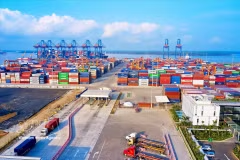
A road is under construction in Dong Nai city, Vietnam. (Photo: VNA)

ADB: Southeast Asia needs 7.1 trillion USD in infrastructure investment by 2040

ADB estimates that the region will need an average of 476 billion USD in infrastructure investment annually during 2026–2040, equivalent to 8.7% of GDP. However, at current investment levels, government budget resources would cover only around 45% of this demand, leaving an annual financing gap of 264 billion USD.

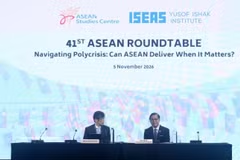
Thai Deputy Prime Minister and Minister of Foreign Affairs Sihasak Phuangketkeow (R) takes part in the Q&A session at the 41st ASEAN Roundtable. (Photo: VNA)

Thailand calls on ASEAN to proactively address polycrisis

Thai Deputy Prime Minister and Minister of Foreign Affairs Sihasak Phuangketkeow noted that no single member state could tackle challenges ranging from major-power competition and economic fragmentation to climate change and energy and food security on its own. Regional cooperation is therefore a strategic imperative, enabling ASEAN not only to overcome crises but also to sustain its development momentum.

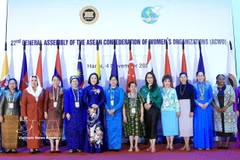
Participants in the 22nd General Assembly of the ASEAN Confederation of Women’s Organisations pose for a group photo. (Photo: VNA)

Women play key role in building united, resilient, sustainable ASEAN Community

Hosted by the Vietnam Women’s Union (VWU), the 22nd ACWO General Assembly marked another milestone in ACWO’s cooperation and development, allowing ASEAN women’s organisations to strengthen solidarity and mutual trust, share experience and identify cooperation priorities for the region’s next stage of development.

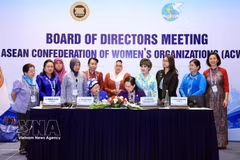
Delegates sign an agreement admitting the Timor-Leste Women’s Network Rede Feto as ACWO’s 11th member. (Photo: VNA)

ASEAN Confederation of Women’s Organisations holds Board of Directors meeting in Hanoi

Amid ongoing regional and global changes, which bring both new opportunities and challenges for women, the role of the ASEAN Confederation of Women’s Organisations in connecting organisations and promoting collective action has become increasingly important. This requires continued innovation in its operating methods, stronger ties among members and greater promotion of women's voices and roles in building a united, resilient, inclusive and sustainable ASEAN Community.

Haze in Kuala Lumpur Airport, Malaysia (Photo: VNA)

ASEAN countries step up efforts to combat transboundary haze

ASEAN already has the ASEAN Specialised Meteorological Centre (ASMC), based in Singapore since 1993. The establishment of the ASEAN Coordinating Centre for Transboundary Haze Pollution Control is expected to complement this mechanism by strengthening cooperation among member states and improving the region's response to transboundary haze pollution.