Vietnam plays pivotal role in Mekong subregional cooperation: Malaysian analyst

According to the expert, Vietnam’s strategic contribution lies in helping ASEAN recognise that Mekong-related issues are not merely development challenges for one subregion but are directly linked to the bloc’s overall economic resilience and security.

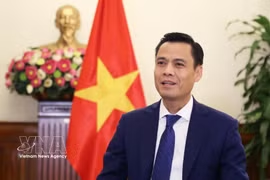
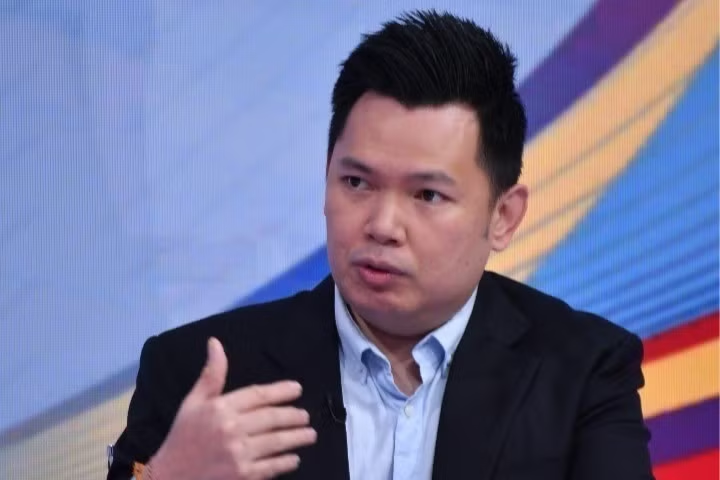
Collins Chong Yew Keat, a Malaysian foreign affairs, security and strategy analyst based in Universiti Malaya (Photo courtesy of the expert)

Kuala Lumpur (VNA) – Vietnam is playing a pivotal role in Mekong subregional cooperation by linking economic development with regional security and strategies, said Collins Chong Yew Keat, a Malaysian foreign affairs, security and strategy analyst based in Universiti Malaya.

Talking to the Vietnam News Agency on the occasion of the 49th ASEAN Summit, being held in the Philippines, Collins Chong noted that as a downstream Mekong country, Vietnam is directly affected by upstream water management, hydropower development, environmental degradation, climate change and saltwater intrusion.

These challenges affect not only Vietnam’s agricultural production, food security and people’s livelihoods but also mainland Southeast Asia as a whole, as the Mekong Delta plays a vital role in ASEAN’s food supply, trade and supply chains, he said.

According to the expert, Vietnam’s strategic contribution lies in helping ASEAN recognise that Mekong-related issues are not merely development challenges for one subregion but are directly linked to the bloc’s overall economic resilience and security.

Through mechanisms such as the Mekong River Commission (MRC), Lancang–Mekong Cooperation (LMC) and Greater Mekong Subregion (GMS) economic cooperation programme, as well as cooperation with Japan and the Republic of Korea, Vietnam has helped promote infrastructure connectivity, environmental protection and coordinated responses to cross-border challenges.

Collins Chong stressed that Vietnam has a direct interest in promoting transparency in the operation of upstream hydropower dams, sharing hydrological data and coordinating water regulation to balance the interests of countries in the river basin. Meanwhile, transport links connecting Laos, Cambodia and Thailand with Vietnam’s seaports and manufacturing hubs could help build a more integrated economic and logistics network across the subregion.

Regarding growth prospects, he said Vietnam is strengthening its position in global supply chains through industrial diversification, particularly in electronics, machinery and textiles, as well as deeper trade integration. However, the country needs to move beyond being a manufacturing destination to develop stronger technological capabilities, higher domestic value added and greater supply chain security.

The programme to develop one million hectares of high-quality, low-emission rice in the Mekong Delta exemplifies Vietnam’s efforts to combine agricultural competitiveness with sustainable development, he noted.

Regarding Vietnam–Malaysia relations, the expert said the two countries have significant opportunities to translate their Comprehensive Strategic Partnership into deeper industrial and technological cooperation. Malaysia has strengths in electronics, semiconductor packaging and testing, digital services and energy, while Vietnam offers a skilled technical workforce, expanding manufacturing capacity and an extensive network of trade agreements.

The two sides could step up collaboration in semiconductors, AI, e-commerce, cybersecurity and the application of technology to manufacturing, logistics and agriculture, he suggested.

He also highlighted the potential for renewable energy cooperation among Vietnam, Malaysia and Singapore to contribute to the ASEAN Power Grid initiative, helping strengthen energy security and reduce emissions in industrial production.

Closer links in technology, research, human resources training and business–university cooperation will enable Vietnam, Malaysia and ASEAN as a whole to improve their positions in global value chains and gradually emerge as centres of innovation and technological development, he added./.

VNA
See more

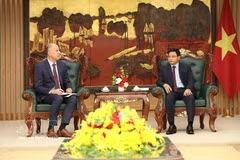
Deputy Prime Minister Nguyen Van Thang meets with Martin Sommer, head of the IMF’s Article IV consultation mission team to Vietnam, in Hanoi on November 13, 2026. (Photo: VNA)

IMF sees positive growth prospects for Vietnam, urges cautious monetary policy

Martin Sommer, head of the IMF’s Article IV consultation mission team to Vietnam, noted that inflation risks in Vietnam remain under control, but several factors could add to price pressures. He therefore called for cautious monetary policy management and readiness to respond promptly if inflationary pressures increased.

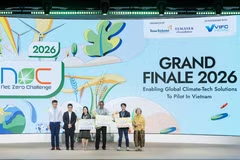
Representatives of the three first-prize-winning startups receive their awards at the event. (Photo: SGGP)

Seven green-tech startups secure 770,000 USD at Net Zero Challenge 2026

In its fourth year, the competition attracted more than 1,100 applications from 80 countries and territories, making it the most competitive edition since its launch in 2023. Nine finalists presented solutions in three categories, namely renewable energy and carbon removal; food systems and sustainable agriculture; and circular economy and waste management.

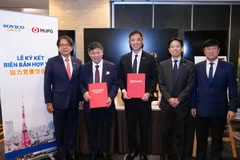
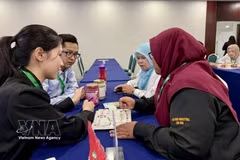
Vietnamese and Malaysian businesses connect at the event (Photo: VNA)

Vietnam, Malaysia connect businesses to boost bilateral trade cooperation

It centred on a business-to-business (B2B) matchmaking session, bringing Vietnamese and Malaysian companies together to discuss import-export needs, seek partners and explore cooperation. Vietnamese businesses aimed to connect with Malaysian importers, distributors and retailers, while expanding access for their products to Malaysia and other markets.

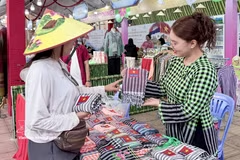
Visitors browse traditional Southern Vietnamese checked scarves on display at the Vietnam-Cambodia Trade Fair. (Photo: VNA)

Vietnam-Cambodia trade fair opens in An Giang

The fair features 150 booths representing 200 businesses, cooperatives, household businesses and production and trading establishments from both countries. The exhibition space is arranged into 10 zones showcasing products from Vietnamese localities and three zones featuring Cambodian products, creating opportunities for businesses from the two countries to promote their products, seek partners and expand markets.

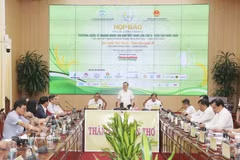
An overview of the press conference to announce the organisation of the second Vietnam International Rice Festival - Can Tho 2026. (Photo: VNA)

Festival to chart new course for rice industry

The second Vietnam International Rice Festival - Can Tho 2026 will take place from November 22 to 25, showcasing the achievements and potential of Vietnam’s rice industry while promoting Can Tho’s image, cultural identity and people, as well as the distinctive river culture of the Mekong Delta.

Japanese business representatives review Ho Chi Minh City’s investment project portfolio at the conference. (Photo: VNA)

Vietnam remains attractive destination for Japanese businesses

Fukai Akihiko, President and Representative Director at Gunma Bank and head of a business delegation from Japan’s Gunma prefecture, said cooperation between Gunma and Vietnam has continued to expand in recent years. Around 15,000 Vietnamese people currently live in Gunma, forming the largest foreign community in the prefecture.

A panoramic view of the site designated for the Ninh Thuan 1 nuclear power plant in Phuoc Dinh commune, Khanh Hoa province. (Photo published by VNA)

Vietnam to access MBIR reactor research capabilities, gradually master nuclear technology

As Vietnam develops its nuclear science and technology and prepares the necessary conditions in terms of human resources, research capacity, safety systems and technical infrastructure, participation in international research programmes and access to MBIR will enable the country to conduct experiments supporting its programme for the peaceful use of atomic energy.

Illustrative image (Photo: chinhphu.vn)

State secret list for financial sector issued

Top secret items include detailed submissions, reports, proposals, explanatory documents, and data concerning state financial and budgetary policies presented to the Party Central Committee, the Politburo, the National Assembly, the National Assembly Standing Committee, or the Government in the event of an emergency related to national defence, national security, social order and safety, or a war for the defence of the Fatherland.

At the 2026 Vietnam Food Forum (Photo: VNA)

Vietnamese food exporters see EU as major market amid stricter standards

The EU–Vietnam Free Trade Agreement (EVFTA) tariff cuts are opening doors. But the EU is also a market with a strict and frequently updated system of standards and regulations, especially in food safety, quarantine, traceability, environmental protection and sustainable development.