Vietnam remains attractive destination for Japanese businesses

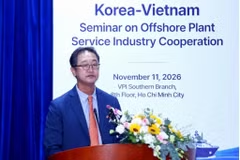
Fukai Akihiko, President and Representative Director at Gunma Bank and head of a business delegation from Japan’s Gunma prefecture, said cooperation between Gunma and Vietnam has continued to expand in recent years. Around 15,000 Vietnamese people currently live in Gunma, forming the largest foreign community in the prefecture.

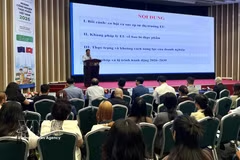
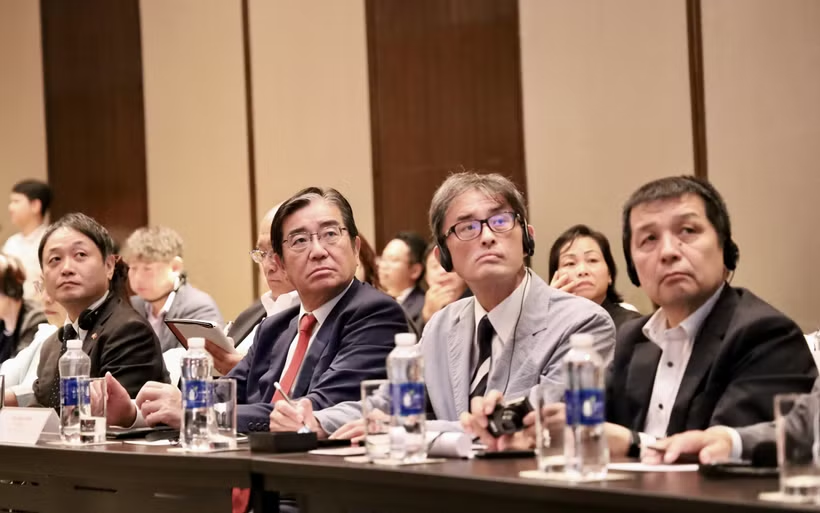
Japanese business representatives review Ho Chi Minh City’s investment project portfolio at the conference. (Photo: VNA)

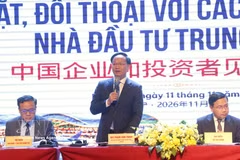
Ho Chi Minh City (VNA) – Strong growth prospects, a skilled workforce and a stable political and social environment are making Vietnam an attractive destination for Japanese businesses and investors, participants at an investment promotion conference heard in Ho Chi Minh City on November 12.

The 2026 Japan Investment Promotion Conference was jointly organised by the municipal Investment and Trade Promotion Centre (ITPC) and Japan’s Gunma Bank.

Fukai Akihiko, President and Representative Director at Gunma Bank and head of a business delegation from Japan’s Gunma prefecture, said cooperation between Gunma and Vietnam has continued to expand in recent years. Around 15,000 Vietnamese people currently live in Gunma, forming the largest foreign community in the prefecture. Many skilled Vietnamese workers are contributing to local economic development in manufacturing, programming and other sectors, he noted.

About 60 businesses from Gunma have invested and operated in Vietnam, with many planning to expand their operations and increase investment. Ho Chi Minh City, one of Vietnam’s leading economic centres, has attracted particular interest thanks to its strong growth and connectivity advantages.

Fukai said Vietnam is one of the most attractive economies in ASEAN for businesses seeking new investment opportunities. Its manufacturing sector is gaining ground, supported by an abundant workforce and its strategic location in the region. Foreign investors have established production facilities in various industries, including automobiles, electronics and garments.

Vietnam’s growing pool of well-educated information technology professionals is another advantage. The rapid development of the IT sector has attracted international companies to software development and digital services. Meanwhile, expanding tourism, accommodation, hotel and business process outsourcing (BPO) services are creating further investment opportunities.

Yoshinori Wakatabi, Chairman and Representative Director of Yosen Kogyo, said his company has established a legal entity and opened its first food business outlet in Hanoi last month. It is now exploring further investment opportunities in Ho Chi Minh City.

Operating in sectors ranging from electronic components and food production to environmental services, construction and retail, the company is particularly interested in the southern metropolis’s infrastructure development, information technology and computer-related industries.

Wakatabi pointed out that Japanese businesses often struggle to understand Vietnam's business environment and regulations. He called for more information-sharing seminars and practical investment incentives, particularly in land and taxation, to facilitate project implementation and factory construction.

Cao Thi Phi Van, ITPC Deputy Director, said Japan is among Ho Chi Minh City’s leading economic partners in investment, trade and development cooperation. Japanese investors have 84 newly licensed projects in the city, with total registered capital exceeding 43 million USD.

She highlighted potential cooperation in manufacturing, supporting industries, electronics and semiconductors, automobiles, green transport, new materials, garment and footwear production, food processing and the circular economy.

The city is also developing a new economic space connecting markets, manufacturing, logistics, infrastructure, human resources and services. For 2026–2030, it has identified around 250 projects calling for investment across nine sectors, including seaports and logistics, high technology, transport infrastructure, education, housing, healthcare, trade and services, and culture and sports.

Van affirmed that the city would continue improving its investment environment, reforming administrative procedures and expanding digital transformation in public management, while supporting investors throughout the process from initial market research to project implementation and expansion.

Both sides also called for regular exchanges of information on policy changes, investment opportunities, market demand and Japanese industry standards to encourage more technology-driven businesses to establish long-term operations in Vietnam./.
VNA

See more

A panoramic view of the site designated for the Ninh Thuan 1 nuclear power plant in Phuoc Dinh commune, Khanh Hoa province. (Photo published by VNA)

Vietnam to access MBIR reactor research capabilities, gradually master nuclear technology

As Vietnam develops its nuclear science and technology and prepares the necessary conditions in terms of human resources, research capacity, safety systems and technical infrastructure, participation in international research programmes and access to MBIR will enable the country to conduct experiments supporting its programme for the peaceful use of atomic energy.

Illustrative image (Photo: chinhphu.vn)

State secret list for financial sector issued

Top secret items include detailed submissions, reports, proposals, explanatory documents, and data concerning state financial and budgetary policies presented to the Party Central Committee, the Politburo, the National Assembly, the National Assembly Standing Committee, or the Government in the event of an emergency related to national defence, national security, social order and safety, or a war for the defence of the Fatherland.

At the 2026 Vietnam Food Forum (Photo: VNA)

Vietnamese food exporters see EU as major market amid stricter standards

The EU–Vietnam Free Trade Agreement (EVFTA) tariff cuts are opening doors. But the EU is also a market with a strict and frequently updated system of standards and regulations, especially in food safety, quarantine, traceability, environmental protection and sustainable development.

Laos accelerates 47 power projects for export to Vietnam

Laos accelerates 47 power projects for export to Vietnam

A notable project is the 600 MW Monsoon Wind Power Plant, located in Dakcheung district of Xekong province and Xanxay district of Attapeu province. Featuring 133 turbines, the project began commercial operations on August 22, 2025, and supplies electricity to Vietnam Electricity (EVN) under a 25-year power purchase agreement.

Minister of Industry and Trade Le Manh Hung holds working sessions with leaders of major Japanese corporations on November 10 to discuss investment cooperation opportunities in Vietnam’s mineral industry (Photo: Ministry of Industry and Trade)

Vietnam steps up cooperation with leading Japanese corporations

Minister of Industry and Trade Le Manh Hung spoke highly of economic, trade and investment ties between the two countries, highlighting the important role of Japanese businesses in developing production, transferring technology and strengthening supply chain linkages in Vietnam.

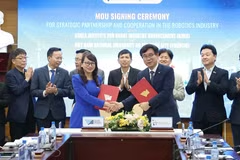
The MOU signing ceremony between Vietnam National University-Ho Chi Minh City and the Korea Institute for Robot Industry Advancement (KIRIA) on November 11, 2026 (Photo: tuoitre.vn)

Vietnam, RoK cooperate in robot industry

Vietnam National University-Ho Chi Minh City (VNU-HCM) and the Korea Institute for Robot Industry Advancement (KIRIA) will establish a cooperation framework based on their respective capabilities, strengths and networks in industry, academia, research and development (R&D).

The opening ceremony of the Vietnam International Food Industry Exhibition 2026 (Vietnam Foodexpo 2026) on November 11 (Photo: VNA)

Vietnam Foodexpo 2026 opens in Ho Chi Minh City

Vietnam Foodexpo 2026 brings together more than 500 leading enterprises from over 20 provinces and cities nationwide, alongside large national pavilions representing more than 20 countries and territories. Exhibitors are showcasing over 700 booths, creating a platform for leading technologies, products and solutions from the global food industry.

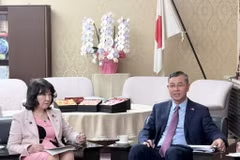
Vietnamese Finance Minister Ngo Van Tuan (right) meets with his Japanese counterpart Katayama Katsuki on November 10. (Photo: The Vietnamese Ministry of Finance)

Vietnam, Japan discuss cooperation in finance and strategic sectors

The two ministers exchanged views on the socio-economic development of their respective countries, as well as cooperation within the ASEAN-Japan framework and multilateral initiatives. They highlighted the importance of closer coordination to enhance their countries’ roles and voices at regional and international forums.

Processing frozen mangos for export in An Giang province (Photo: VNA)

Vegetable, fruit export boom hinges on technology

Pham Quoc Liem, General Director of U&I Agricultural JSC (Unifarm), said Vietnam needs chain-linked models for each key product, with clear roles for lead enterprises and clear responsibilities and benefits for stakeholders. The State should issue coordination policies and preferential credit support to build standardised raw material zones with stable productivity and quality. Research, development and commercialisation of competitive varieties will add further momentum.

At the rice handover record signing ceremony. (Photo: VNA)

Vietnamese company hands over 1,500 tonnes of rice to Cuban partner

Vietnamese rice producer AgriVMA has expanded its cultivation area from 1,000ha to more than 2,500ha across the provinces of Pinar del Rio, Granma, Sancti Spiritus and Villa Clara. Its CT16 hybrid rice variety has achieved yields of more than 7 tonnes of fresh paddy per hectare.