Vietnamese food exporters see EU as major market amid stricter standards

The EU–Vietnam Free Trade Agreement (EVFTA) tariff cuts are opening doors. But the EU is also a market with a strict and frequently updated system of standards and regulations, especially in food safety, quarantine, traceability, environmental protection and sustainable development.

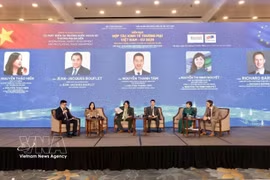
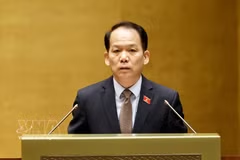
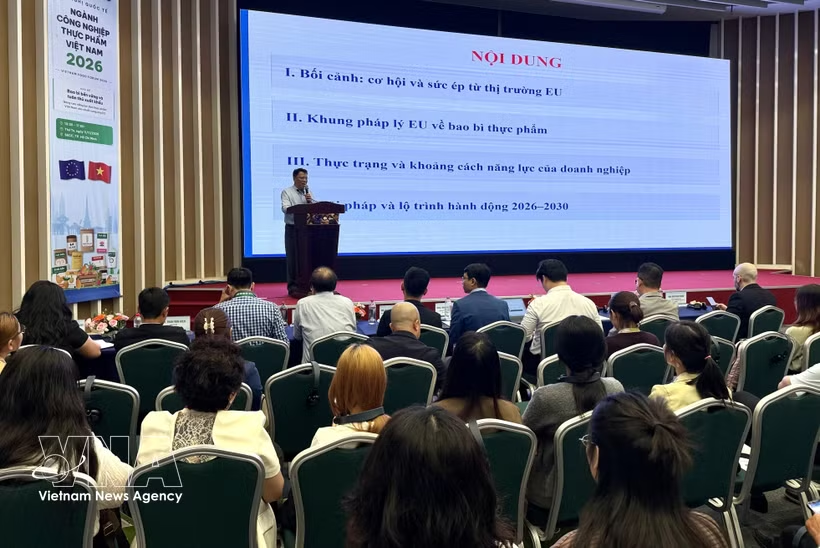
At the 2026 Vietnam Food Forum (Photo: VNA)

Ho Chi Minh City (VNA) – As Vietnamese food exporters have rich raw material sources, better processing and deeper global supply chain roles, the prize is a bigger EU share, higher value and a stronger global position.

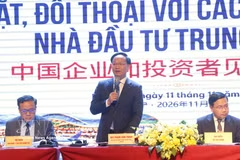
The EU is a top potential market for Vietnamese food, heard the 2026 Vietnam Food Forum in Ho Chi Minh City on November 11, held by the Vietnam Trade Promotion Agency and partners.

The EU–Vietnam Free Trade Agreement (EVFTA) tariff cuts are opening doors. But the EU is also a market with a strict and frequently updated system of standards and regulations, especially in food safety, quarantine, traceability, environmental protection and sustainable development, experts said.

Compliance now runs from product quality through production, processing, packaging, transport and distribution, they said, adding that the EU’s Packaging and Packaging Waste Regulation (PPWR) is adding a new layer of requirements for food exporters.

Nguyen Nam Phuong from Tetra Pak Vietnam said PPWR aims to cut packaging waste and make all EU packaging recyclable or reusable by 2030. From July 2026, the EU also bans Bisphenol A (BPA) in food contact packaging and materials.

Packaging is no longer just containment and branding. It has become a market-access gatekeeper for EU supply chains. Vietnamese firms must track rules, audit production and pick compliant packaging, with more focus on recyclability, waste cuts, eco-materials and food-contact safety, Phuong noted.

Gustavo Ferro, an expert from the Swiss Import Promotion Programme (SIPPO), flagged the EU trends Vietnamese suppliers must watch: food safety, private label, health food and sustainability, including packaging. In sustainable supply chain rules, sustainability carries value equal to the user.

He said current and upcoming EU sustainability rules for SMEs force changes in sourcing, business models, product formulas and production systems. Suppliers need extra work to meet buyers’ standards and certifications and complete documentation.

Le Hoang Tai, Deputy Director General of the Vietnam Trade Promotion Agency, said food-sector competitiveness will no longer hinge only on cost or quality. Meeting each market’s standards, rules and sustainability demands will matter just as much. It’s both a challenge and a driving force for production upgrades, technology investment, product improvement and management capacity enhancement.

The EU remains an attractive agri-food export market, and Vietnam’s export mix fits EU segments. Qualified outside suppliers still have room, but access depends on sanitary and phytosanitary (SPS) compliance and credible documentation, he added./.
VNA

See more

Laos accelerates 47 power projects for export to Vietnam

Laos accelerates 47 power projects for export to Vietnam

A notable project is the 600 MW Monsoon Wind Power Plant, located in Dakcheung district of Xekong province and Xanxay district of Attapeu province. Featuring 133 turbines, the project began commercial operations on August 22, 2025, and supplies electricity to Vietnam Electricity (EVN) under a 25-year power purchase agreement.

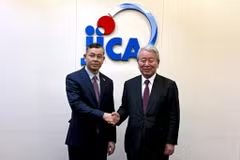
Minister of Industry and Trade Le Manh Hung holds working sessions with leaders of major Japanese corporations on November 10 to discuss investment cooperation opportunities in Vietnam’s mineral industry (Photo: Ministry of Industry and Trade)

Vietnam steps up cooperation with leading Japanese corporations

Minister of Industry and Trade Le Manh Hung spoke highly of economic, trade and investment ties between the two countries, highlighting the important role of Japanese businesses in developing production, transferring technology and strengthening supply chain linkages in Vietnam.

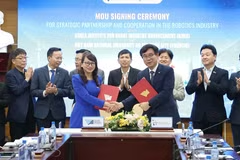
The MOU signing ceremony between Vietnam National University-Ho Chi Minh City and the Korea Institute for Robot Industry Advancement (KIRIA) on November 11, 2026 (Photo: tuoitre.vn)

Vietnam, RoK cooperate in robot industry

Vietnam National University-Ho Chi Minh City (VNU-HCM) and the Korea Institute for Robot Industry Advancement (KIRIA) will establish a cooperation framework based on their respective capabilities, strengths and networks in industry, academia, research and development (R&D).

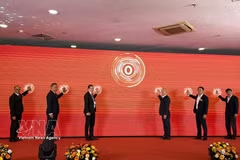
The opening ceremony of the Vietnam International Food Industry Exhibition 2026 (Vietnam Foodexpo 2026) on November 11 (Photo: VNA)

Vietnam Foodexpo 2026 opens in Ho Chi Minh City

Vietnam Foodexpo 2026 brings together more than 500 leading enterprises from over 20 provinces and cities nationwide, alongside large national pavilions representing more than 20 countries and territories. Exhibitors are showcasing over 700 booths, creating a platform for leading technologies, products and solutions from the global food industry.

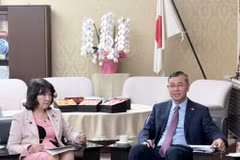
Vietnamese Finance Minister Ngo Van Tuan (right) meets with his Japanese counterpart Katayama Katsuki on November 10. (Photo: The Vietnamese Ministry of Finance)

Vietnam, Japan discuss cooperation in finance and strategic sectors

The two ministers exchanged views on the socio-economic development of their respective countries, as well as cooperation within the ASEAN-Japan framework and multilateral initiatives. They highlighted the importance of closer coordination to enhance their countries’ roles and voices at regional and international forums.

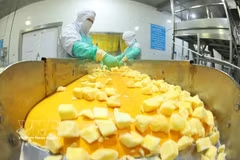
Processing frozen mangos for export in An Giang province (Photo: VNA)

Vegetable, fruit export boom hinges on technology

Pham Quoc Liem, General Director of U&I Agricultural JSC (Unifarm), said Vietnam needs chain-linked models for each key product, with clear roles for lead enterprises and clear responsibilities and benefits for stakeholders. The State should issue coordination policies and preferential credit support to build standardised raw material zones with stable productivity and quality. Research, development and commercialisation of competitive varieties will add further momentum.

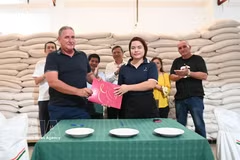
At the rice handover record signing ceremony. (Photo: VNA)

Vietnamese company hands over 1,500 tonnes of rice to Cuban partner

Vietnamese rice producer AgriVMA has expanded its cultivation area from 1,000ha to more than 2,500ha across the provinces of Pinar del Rio, Granma, Sancti Spiritus and Villa Clara. Its CT16 hybrid rice variety has achieved yields of more than 7 tonnes of fresh paddy per hectare.