Jakarta (VNA) – Southeast Asia needs around 7.1 trillion USD in infrastructure investment by 2040 to sustain economic growth, strengthen energy security and build more connected and resilient economies, according to a report released by the Asian Development Bank (ADB) on November 10.
The report, entitled “The 7 Trillion USD Challenge: Building Tomorrow’s ASEAN”, estimates that the region will need an average of 476 billion USD in infrastructure investment annually during 2026–2040, equivalent to 8.7% of gross domestic product (GDP). However, at current investment levels, government budget resources would cover only around 45% of this demand, leaving an annual financing gap of 264 billion USD.
“Southeast Asia’s growth depends on what it builds next,” ADB President Masato Kanda stressed. Factories need dependable electricity, while businesses require faster and safer ways to access markets. ADB will support governments in advancing viable projects that build investor confidence and deliver long-term benefits to people. Power and transport account for 85% of the region’s total infrastructure investment needs, estimated at 3.6 trillion USD and 2.5 trillion USD, respectively.
In the energy sector, investment should focus on expanding power generation, transmission and storage capacity, and strengthening cross-border connections through the ASEAN Power Grid. These efforts aim to enhance energy security, facilitate the use of clean energy and reduce vulnerability to global supply disruptions.
The Pan-Asia Power Grid Initiative, launched by ADB in May, is expected to promote electricity trading and cross-border connectivity across the region, building on the ASEAN Power Grid.
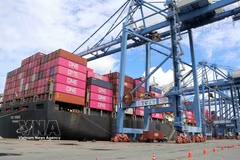
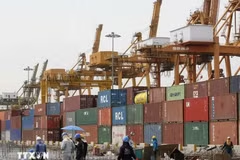
In transport, roads require the largest investment, at nearly 2 trillion USD, while railways and airports are among the sectors with the fastest-growing funding needs. ADB noted that integrated transport networks and cross-border connectivity will help reduce logistics costs and enhance Southeast Asia’s competitiveness in global markets.
Digital infrastructure requires an additional 584 billion USD, mainly for broadband networks and data centres. This investment is essential to strengthening regional digital connectivity, improving productivity and competitiveness, and supporting the implementation of the ASEAN Digital Economy Framework Agreement.
The Asia-Pacific Digital Highway initiative, also launched by ADB in May, will support investment in fibre-optic networks, submarine cables, internet exchange points and regional data centres through 2035.
Meanwhile, healthcare infrastructure will require around 227 billion USD by 2040, including funding to build approximately 49,000 new healthcare facilities, most of them primary healthcare centres. These investments will help strengthen health systems and improve the region’s preparedness for future public health emergencies./.

UN, ADB support Cambodia in strengthening rural agriculture
The Asian Development Bank (ADB) has also approved a 72-million-USD financing package to help Cambodia strengthen rural agriculture and increase women's participation in the sector.