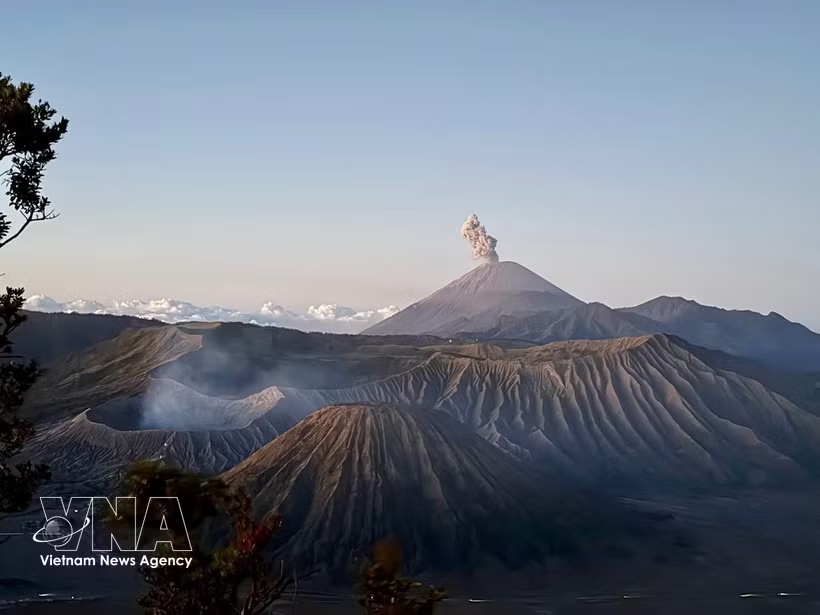
Jakarta (VNA) – The Indonesian National Disaster Management Agency (BNPB) has advised residents to remain vigilant amid activity at three volcanoes – Anak Krakatau, Merapi and Semeru – which are currently at alert level 3, and to stay away from potentially affected areas.
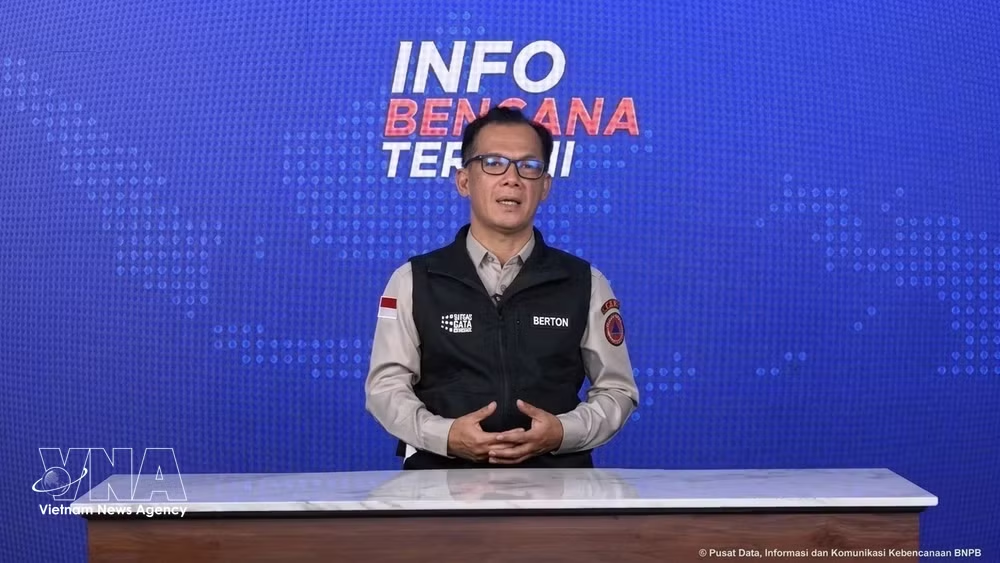
The warning was issued by Berton SP Panjaitan, Acting Head of the BNPB's Disaster Data, Information and Communication Centre, at a press conference on October 30.
Data from the Centre for Volcanology and Geological Hazard Mitigation (PVMBG) showed that as of 6am on October 30 (local time), all three volcanoes remained at alert level 3, indicating significant potential hazards and the need for heightened vigilance.
Regarding Mount Anak Krakatau, located in the Sunda Strait between Java and Sumatra, the BNPB advised residents, tourists and fishermen to stay away from dangerous areas. Volcanic activity could trigger lava flows, eruptions of volcanic materials and ash emissions, posing threats to public safety.
Berton stressed that in line with recommendations from the local disaster management agency (BPBD) and the PVMBG, all activities are prohibited within a 3km radius of Mount Anak Krakatau.
Meanwhile, Mount Merapi, located on the border between the Special Region of Yogyakarta and Central Java province, remains at alert level 3, with risks including pyroclastic flows, lava flows and the ejection of volcanic materials.
The BNPB specifically warned residents living along rivers originating from the volcano to watch out for mudslides and flows of volcanic materials, particularly during heavy rainfall in upstream areas.
In East Java, Mount Semeru, the highest mountain on Java Island, also remained at alert level 3. Potential hazards include pyroclastic flows, lava flows, incandescent rock ejections and rain-triggered lahars.
The BNPB advised people to avoid activities along the Besuk Kobokan River corridor within 13km of the volcano and to stay at least 500m away from its riverbanks.
The agency stressed that compliance with safety guidelines and warnings issued by authorities is essential to minimise risks, particularly for people living, working or travelling in areas potentially affected by volcanic activity./.