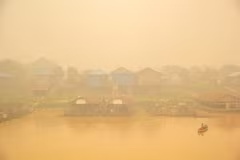
Phnom Penh (VNA) – Cambodia has approved a 690 million USD investment framework to reduce land and forest fires, curb harmful open burning and tackle seasonal haze pollution by 2035, the Ministry of Environment announced on October 27.
Minister of Environment Eang Sophalleth approved the Investment Framework for Haze-Free Sustainable Land Management 2026-2035, which proposes 15 projects with a combined estimated investment of 690 million USD, reported The Phnom Penh Post.
Funding sources could include state budgets, concessional climate finance, blended financing instruments, commercial loans, carbon credits and nature-based solutions.
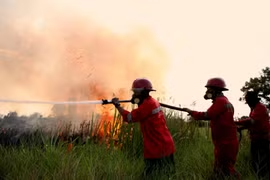
Despite stronger environmental management and fire prevention over the past decade, seasonal haze remains a challenge across the Greater Mekong Subregion, particularly during prolonged dry periods, the ministry said.
Burning agricultural residues, forest and wetland fires, and the open burning of waste contribute to domestic and transboundary air pollution, threatening public health, agricultural productivity and ecosystems while undermining climate goals.
By 2035, Cambodia aims to significantly reduce land and forest fires and eliminate harmful open burning in priority agricultural and forest areas.
The framework translates the ASEAN Investment Framework for Haze-Free Sustainable Land Management 2023-2030 into national action. It also supports Cambodia’s commitments under the ASEAN Agreement on Transboundary Haze Pollution and its nationally determined contributions under the Paris Agreement on climate change.
Beyond regulatory measures, the plan seeks to attract investment in sustainable land management by identifying priority projects, developing suitable financing strategies and strengthening public-private partnerships.
The framework was developed in cooperation with the UK Mission to ASEAN through the ASEAN-UK Green Transition Fund, with technical support from the Global Environment Centre and the Global Green Growth Institute.
The Ministry of Environment is seeking funding from regional and international financial institutions, development agencies, philanthropic organisations and private investors to implement the projects nationwide.
The ministry stressed that sustained domestic efforts and closer regional cooperation are essential to tackling cross-border haze pollution and building a more climate-resilient ASEAN./.