Philippines to remain world’s top rice importer: USDA

Rising consumer demand, coupled with disruptions to domestic production caused by El Niño and a series of storms, has left rice supplies insufficient to meet demand.

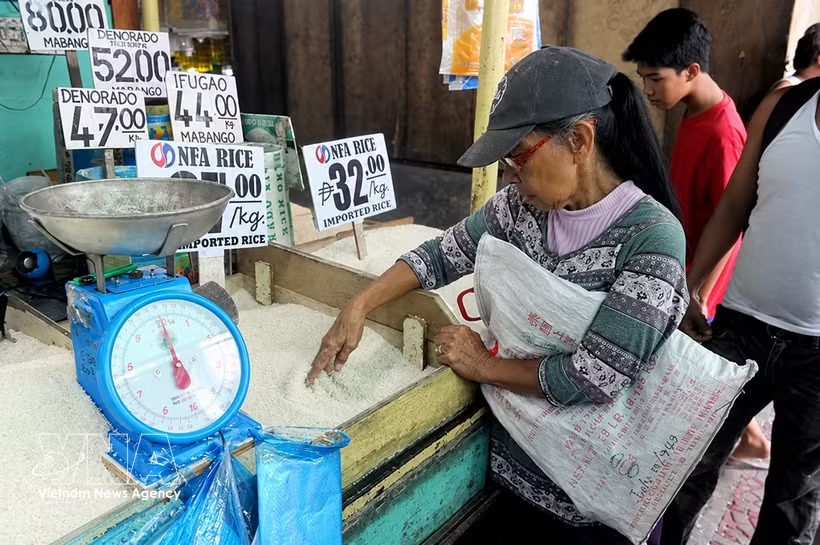
A rice shop in the Philippines (Photo: VNA)

Hanoi (VNA) – The Philippines will remain the world’s top rice importer, with imports forecast at 5.5 million tonnes this year, according to the US Department of Agriculture (USDA).

Philippine media reported that rising consumer demand, coupled with disruptions to domestic production caused by El Niño and a series of storms, has left rice supplies insufficient to meet demand.

Data from the Philippine Statistics Authority (PSA) showed that the country produced 9.03 million tonnes of unmilled rice in the first half of 2026. In the second quarter alone, output rose 5.7% annually to 4.63 million tonnes. However, production is projected to fall 17.2% to 3.1 million tonnes in the third quarter.

To ensure rice supplies and support farmers, the Philippine Government has been importing rice to make up for the shortfall while seeking to boost domestic productivity. The Department of Agriculture has also adjusted the timing of rice imports to avoid a glut during the harvest season, which could drive down farmgate prices.

The Philippines continues to rely on imported rice to meet domestic demand while seeking to stabilise supplies and safeguard farmers' incomes./.


VNA

See more

Singapore invests 107 million USD in food technology research

Singapore invests 107 million USD in food technology research

Singapore currently imports more than 90% of its food. According to Grace Fu, increasing domestic production alone would not be enough to protect the island nation from global disruptions. Singapore needed to diversify its sources of supply, build resilient supply systems and strengthen its ability to respond to unexpected events.

Prime Minister Le Minh Hung (R) and Polish Prime Minister Donald Tusk announce the elevation of Vietnam–Poland ties to a strategic partnership. (Photo: VNA)

Polish media highlight growing ties with Vietnam

The outlets also assessed that the signing of a joint statement, a five-year action plan for 2026–2030, and agreements in a range of fields will establish a solid political framework for the two countries to promote comprehensive cooperation.

Malaysia’s exports hit record high in first nine months

Malaysia’s exports hit record high in first nine months

According to the Malaysia External Trade Development Corporation (MATRADE), the country’s total trade rose 30.1% to 2.91 trillion MYR (713 billion USD), while imports increased 25.7% to 1.34 trillion ringgit (328 billion USD). The trade surplus reached 232.38 billion MYR (57 billion USD).

ADB warns of severe economic losses for Cambodia from climate change

ADB warns of severe economic losses for Cambodia from climate change

In its Asia-Pacific Climate Outlook 2026: Coastal Risks on the Rise – Actions for a Resilient Future, ADB warns that climate hazards will intensify between now and the end of the 21st century, threatening Cambodia’s port operations, fisheries, foreign trade and tourism.

Singapore’s GDP expands 5.4% year-on-year in the third quarter of 2026. (Photo: Xinhua/VNA)

Singapore maintains strong economic growth

The Vietnam Trade Office in Singapore attributed the growth largely to Singapore’s role as a regional transshipment and distribution hub for electronic components and equipment within regional supply chains.

Cambodia promotes sport ties in ASEAN

Cambodia promotes sport ties in ASEAN

As part of its commitment to regional development, Cambodia is preparing to host several major events, including the 2028 ASEAN University Games, the 2029 Asian Youth Para Games and the 2031 ASEAN Youth Games.

Police raid an online scam centre in Cambodia (Photo: AKP)

ASEAN urged to crack down on cyber, transnational scams

One of the key items on the meeting’s agenda was an ASEAN declaration on protecting children from online sexual abuse and exploitation, which addressed risks associated with artificial intelligence (AI)-generated content.