Vietnam overtakes China as RoK’s top source of foreign students

Vietnam supplied 96,834 students, or 31.5% of the total. China followed with 78,890, or 25.7%, then Uzbekistan, Nepal and Mongolia.

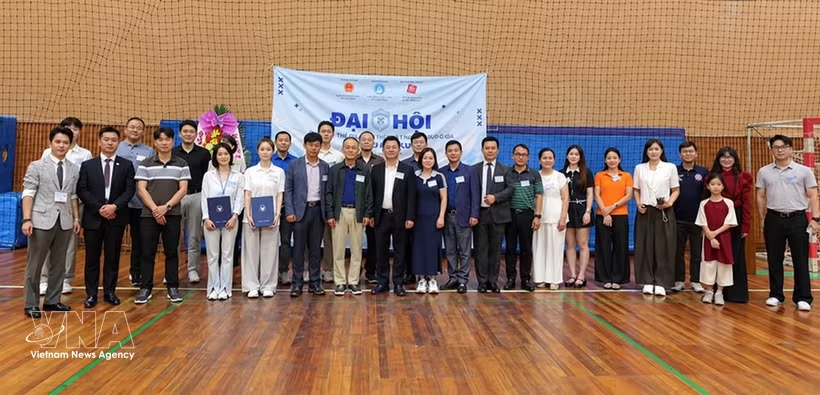
Participants in the Vietnam Student Sports Festival, held in the RoK in July 2026, pose for a group photo. (Photo: VNA)

Seoul (VNA) – Vietnam has unseated China as the Republic of Korea (RoK)’s largest source of international students for the first time, according to the 2026 Basic Education Statistics Report released by the Korean Ministry of Education and the Korean Educational Development Institute (KEDI) on October 29.

As of April 1, the RoK hosted 307,464 international students at higher education establishments, the first time the tally has topped 300,000.

Vietnam supplied 96,834 students, or 31.5% of the total. China followed with 78,890, or 25.7%, then Uzbekistan, Nepal and Mongolia.

Students pursuing degree courses totalled 223,191, or 72.6%. Asian students accounted for 92.1%, with 61.3% in social sciences and humanities and 18% in engineering.

The RoK’s international student count climbed from 12,314 in 2003 to more than 100,000 in 2016, driven by the pull of Korean culture, especially K-pop and TV dramas, alongside demand for overseas study and job prospects at Korean companies.

As the school age population shrinks, many universities, particularly those outside the capital, are ramping up overseas recruitment. Foreign students, however, remain heavily concentrated in the capital region.

The Korean Ministry of Justice counted 9,946 undocumented residents on D-2 university study visas and 21,719 on D-4-1 and D-4-7 language training visas as of August 2026. Seoul is tightening its focus on admissions and management of international students while seeking to let them contribute to the education system and the economy./.
VNA

See more

Philippines aims to become Southeast Asia’s offshore wind hub

Philippines aims to become Southeast Asia’s offshore wind hub

The Philippines aims not only to develop its first offshore wind projects but also to become a regional centre for research, technology development and services for the industry, she said, adding the government is planning to auction 3,300 megawatts (MW) of fixed-bottom offshore wind capacity, with projects targeted to come online between 2028 and 2030.

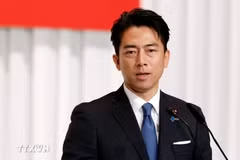
Japanese Minister of National Defence Koizumi Shinjiro (Photo: Xinhua/VNA)

Japan shores up defence ties with ASEAN

Japanese Minister of National Defence Koizumi Shinjiro said members must bridge differences to tackle shared challenges and proposed expanding Japan–ASEAN cooperation with outside partners into AI, unmanned systems and the protection of undersea critical infrastructure.

Singapore speeds up AI adoption across economic sectors

Singapore speeds up AI adoption across economic sectors

Under EnterpriseSG’s Champions of AI programme, companies will obtain support to build long-term AI transformation roadmaps, tap experts and tech solutions, and reskill workers. It starts with 24 companies across sectors, targeting firms that want AI to become a core growth engine and reshape operations system-wide.

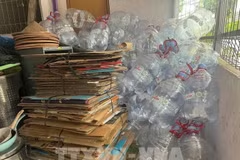
Recyclable materials sorted from household waste. (Photo: VNA)

Indonesia develops producer-funded waste management mechanism

Under the draft regulation being prepared by the Ministry of Environment and the Environmental Control Agency, producers will be responsible for waste arising from products, packaging and containers they place on the market, from product design to post-consumer management.

Singapore invests 107 million USD in food technology research

Singapore invests 107 million USD in food technology research

Singapore currently imports more than 90% of its food. According to Grace Fu, increasing domestic production alone would not be enough to protect the island nation from global disruptions. Singapore needed to diversify its sources of supply, build resilient supply systems and strengthen its ability to respond to unexpected events.

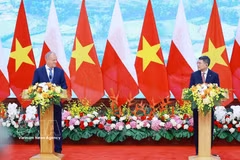
Prime Minister Le Minh Hung (R) and Polish Prime Minister Donald Tusk announce the elevation of Vietnam–Poland ties to a strategic partnership. (Photo: VNA)

Polish media highlight growing ties with Vietnam

The outlets also assessed that the signing of a joint statement, a five-year action plan for 2026–2030, and agreements in a range of fields will establish a solid political framework for the two countries to promote comprehensive cooperation.