Bangkok (VNA) - Thailand’s Cabinet on November 10 approved a draft agreement to establish the ASEAN Centre for Public Health Emergencies and Emerging Diseases (ACPHEED), and agreed to assign the Minister of Public Health to sign the deal at the 49th ASEAN Summit, scheduled to take place in the Philippines from November 15 - 17.
According to Ploythale Lakmeesangchan, Deputy Spokesperson for the Thai Prime Minister’s Office, the Cabinet also tasked the Ministry of Foreign Affairs with preparing the Full Powers document authorising the Minister of Public Health to sign the agreement and completing the ratification procedures before submitting the instrument to the ASEAN Secretariat.
The draft agreement stipulates that ACPHEED will comprise three specialised centres based in three ASEAN member states. Vietnam will oversee the centre for prevention and preparedness; Indonesia will host the centre for detection and risk assessment; and Thailand will be responsible for the centre for response and risk communication.
The ACPHEED Secretariat will also be based in Thailand. ACPHEED is envisioned as a regional resource hub to help ASEAN member states strengthen their capacity to prevent, detect and respond to public health emergencies, emerging diseases and epidemics.
It will also promote information sharing, enhance professional capacity, coordinate cooperation, and support research and development in public health.
Ploythale said ACPHEED will help strengthen public health security across the Association of Southeast Asian Nations (ASEAN), while enhancing cooperation and disease response capacity among member states.
The mechanism will also support Thailand in building a robust and sustainable healthcare system, reducing the costs and economic losses caused by disease outbreaks, and enhancing the country’s role in public health at both regional and international levels./.
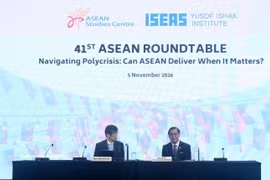
Thailand calls on ASEAN to proactively address polycrisis
Thai Deputy Prime Minister and Minister of Foreign Affairs Sihasak Phuangketkeow noted that no single member state could tackle challenges ranging from major-power competition and economic fragmentation to climate change and energy and food security on its own. Regional cooperation is therefore a strategic imperative, enabling ASEAN not only to overcome crises but also to sustain its development momentum.