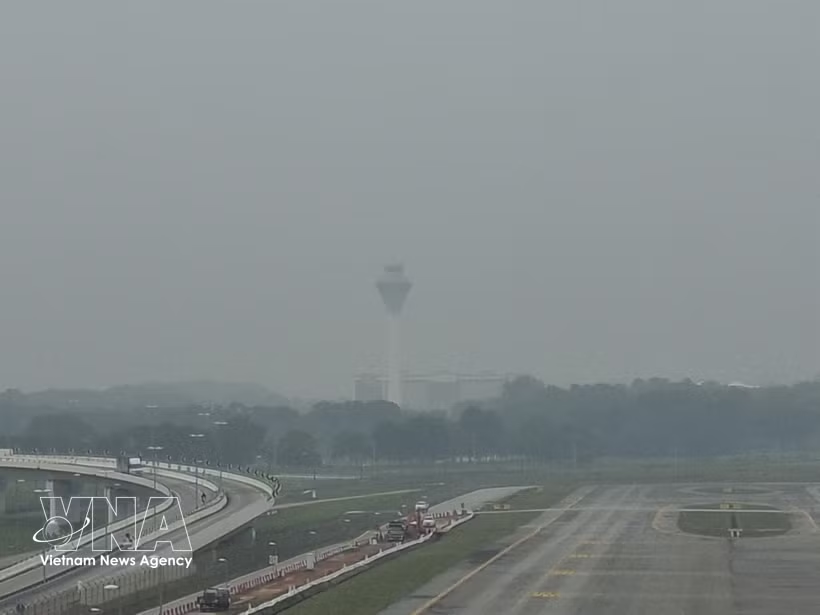
Singapore (VNA) – Singapore will accelerate the establishment of the ASEAN Coordinating Centre for Transboundary Haze Pollution Control during its ASEAN Chairmanship in 2027, aiming to strengthen regional coordination in preventing, monitoring and responding to forest and peatland fires.
Minister for Sustainability and the Environment Grace Fu told the Parliament on November 3 that Singapore would work with other ASEAN members to bring the centre into operation. The country plans to submit its instrument of ratification of the agreement establishing the centre in the coming days, while encouraging other member states to complete their respective procedures soon.
The agreement was signed by ASEAN member states on May 27, 2025, and will enter into force once at least six members have completed their ratification or approval procedures.
Vietnam has already made progress in this process. Its Government approved the agreement under Resolution No. 372/NQ-CP, dated November 19, 2025. The country subsequently submitted its instrument of approval, which was acknowledged at the 27th Meeting of the Sub-Regional Ministerial Steering Committee on Transboundary Haze Pollution in July 2026. This marked a concrete contribution by Vietnam to the regional cooperation initiative.
According to Grace Fu, once operational, the centre will serve as a focal point for coordinating efforts to prevent, monitor and respond to forest and peatland fires. It will facilitate the sharing of firefighting technology, expertise and resources, while coordinating responses to emergency assistance requests among member states.
Singapore will also promote measures to address the root causes of haze, including sustainable land and peatland management and the development of guidelines for agricultural residue burning. Fu stressed that such measures should go hand in hand with ASEAN's coordinated response mechanisms.
Transboundary haze remains a challenge for the region. In Singapore, air quality reached unhealthy levels for 18 consecutive days, from October 5 to 22, with the Pollutant Standards Index (PSI) in the western part of the country peaking at 230 on October 18.
ASEAN already has the ASEAN Specialised Meteorological Centre (ASMC), based in Singapore since 1993, which monitors fire hotspots and provides early warnings. The establishment of the new coordinating centre is expected to complement this mechanism by strengthening cooperation among member states and improving the region's response to transboundary haze pollution./.