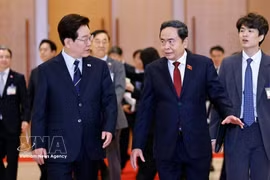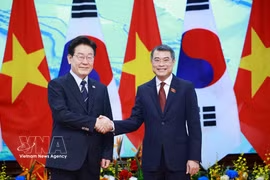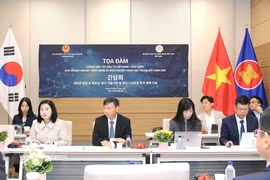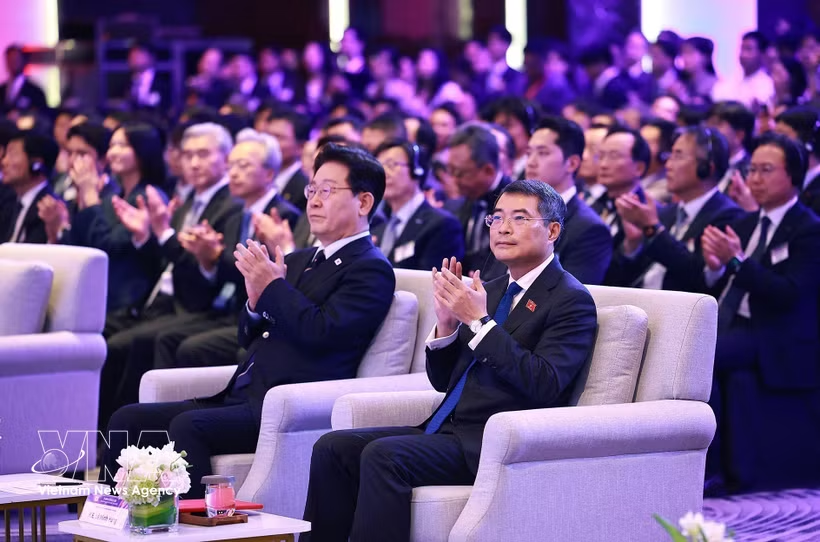
Hanoi (VNA) – Prime Minister Le Minh Hung and President of the Republic of Korea (RoK) Lee Jae Myung on April 23 attended the Vietnam – RoK Economic Forum in Hanoi, where both called for advancing bilateral cooperation in industry, investment and science-technology.
Held during President Lee’s ongoing state visit to Vietnam, the forum, themed “Advancing Industry, Investment and Science Technology Partnership,” brought together senior officials and representatives of leading businesses from both sides, including multinational corporations in energy, finance, technology, electronics, telecommunications, processing, manufacturing, mechanical engineering, construction, infrastructure, trade, tourism, and aviation.
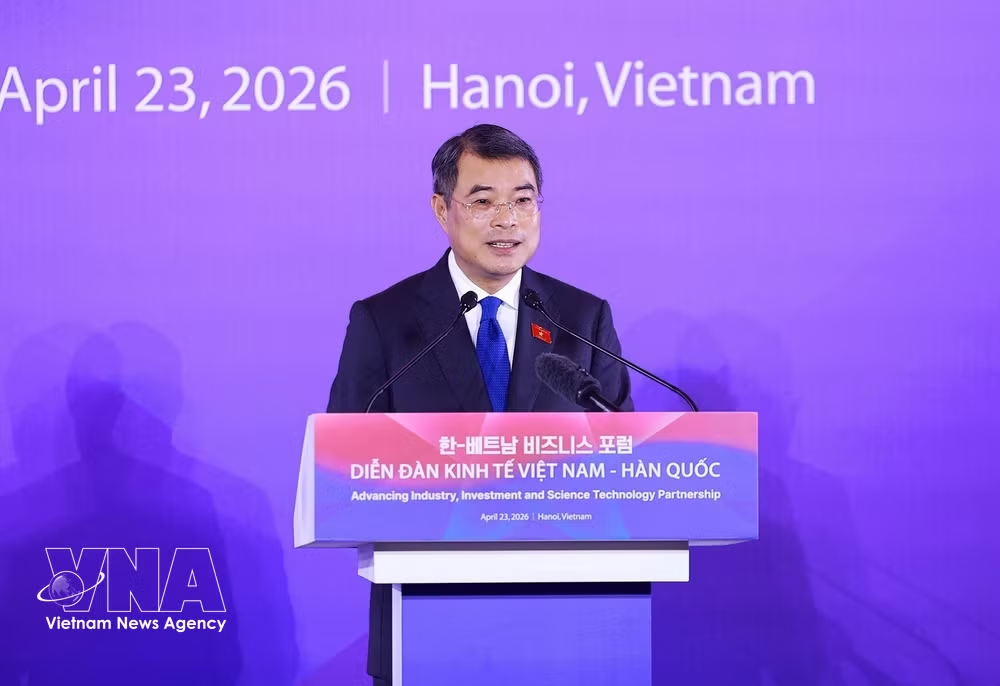
In his remarks, PM Hung highlighted the significance of the forum, saying that it underscores the fruitful cooperation achievements between the two countries over the past more than 30 years, and opens up major directions for a phase of deeper and more effective cooperation.
He noted that since diplomatic relations were established more than three decades ago, the Vietnam – RoK cooperation has expanded robustly, especially after the two countries upgraded ties to a comprehensive strategic partnership in 2022, which marked an important milestone and opened up new room for bilateral cooperation, particularly in the economic sphere.
The RoK is now Vietnam’s largest foreign investor and third-largest trading partner, with nearly 10,500 valid projects worth over 100 billion USD. The Eastern Asian country’s investment has created close to one million jobs and contributed more than 30% of Vietnam’s total export turnover, while playing an important role in shaping and developing the Southeast Asian country’s key industries, from electronics and manufacturing to high technology.
PM Hung stressed that science, technology, innovation and digital transformation are serving as strategic pillars of bilateral cooperation, opening new development space such as research and development centres in Vietnam.
Vietnam also offers Korean businesses strategic and long-term benefits, a safe and stable investment destination, a cost-competitive production base with an abundant and increasingly skilled workforce, a market of more than 100 million people with a rapidly growing middle class, and an effective gateway to other major markets through a network of new-generation FTAs, he stated, noting that these are particularly important factors helping Korean enterprises enhance their competitiveness in global supply chains.
Against the backdrop of shifting global supply chains, intensifying technology competition and the growing demand for green growth, PM Hung said bilateral economic ties should move beyond traditional trade and investment into deeper cooperation in future industries and advanced technologies.
He proposed three priorities for cooperation, calling on the two sides to foster new-generation industrial and technology ecosystems and forming production, research and innovation clusters that enable businesses from both countries to engage more deeply and closely in high-tech industries and emerging sectors; restructure supply chains toward greater flexibility, sustainability and higher value; and promote knowledge linkages and innovation, moving beyond technology transfer toward joint research, joint development and commercialisation of technology products, supported by close coordination among states, businesses and universities in both nations.
Reaffirming Vietnam’s commitment to science-driven growth and the development of the private sector as the most economic driver, PM Hung pledged further reforms to improve the investment climate and facilitate long-term and sustainable operations for foreign businesses, including those from the RoK.
The cooperation agreements exchanged among localities, agencies and businesses of the two sides on this occasion vividly demonstrate the scale, potential and vitality of the special cooperative relationship between the two countries, he said.
Welcoming the highly successful talks between President Lee and Party General Secretary and State President To Lam, PM Hung expressed confidence that, with strong government support and dynamic business communities of the two nations, the Vietnam – RoK ties will grow stronger and more effective, contributing to peace, stability and development in the region and the world.
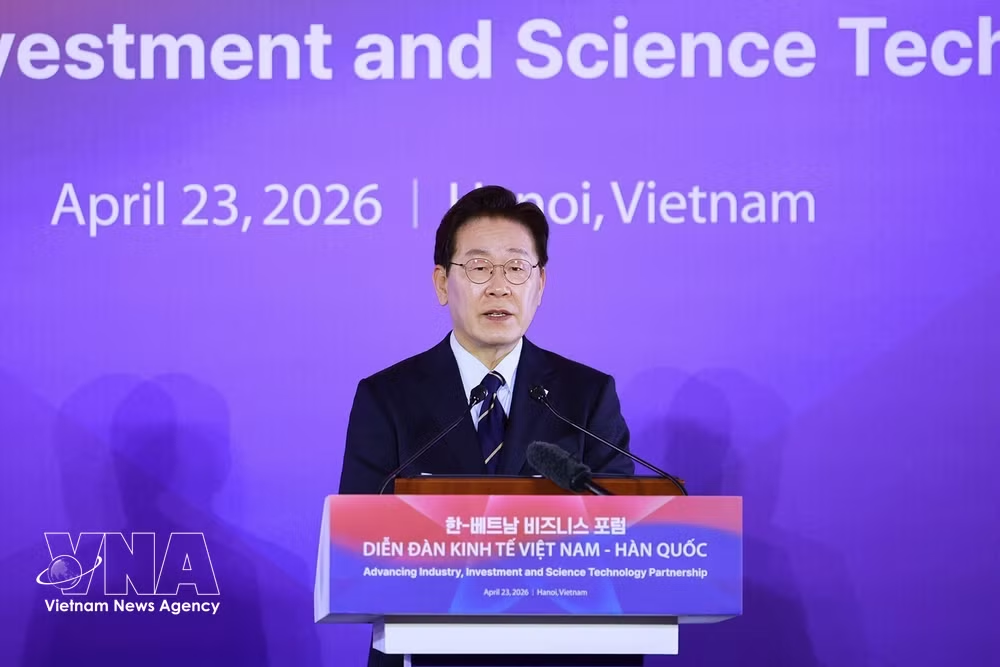
For his part, President Lee praised Vietnam’s dynamic changes, calling it an “economic heart” of ASEAN. He voiced confidence that businesses from both countries will play a central role in driving prosperity of the two nations in the future.
Reviewing major milestones in the bilateral ties, President Lee proposed three major areas of cooperation in the time to come.
Beyond existing strengths in electricity, electronics and automobiles, he suggested joint development of future spearhead industries, particularly AI, semiconductors and digital technology. He also stressed the need to strengthen cooperation in energy and supply chains with projects in renewable energy, nuclear energy, oil and rare earths.
The Korean leader also highlighted the need to boost science and innovation cooperation through a RoK – Vietnam science and technology innovation master plan, aimed at opening a new future for bilateral scientific cooperation.
He stressed that the steadfast friendship between the two nations over the past more than 30 years is the surest answer to today’s complex changes, he stressed, saying that his country will remain a strong pillar for businesses of both countries to weather turbulent times and write a new chapter of shared prosperity.
At the forum, participants agreed to promote cooperation based on three pillars — industry, toward high technology and higher value added; investment, toward quality, sustainability and deeper linkages with domestic enterprises; and science and technology, particularly innovation, digital transformation and emerging technologies.
Vietnamese and Korean businesses signed and exchanged 73 memoranda of understanding covering cooperation in various sectors, including energy, finance, technology, electronics, telecommunications, processing and manufacturing, mechanical engineering, construction, infrastructure, trade, tourism and aviation./.