Vietnam, Russia push ahead 2,200-km rail link project

Vietnam and Russia have agreed to develop a railway project linking the two countries via China and Mongolia to strengthen transport connectivity and expand regional economic cooperation.

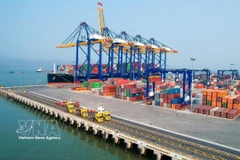
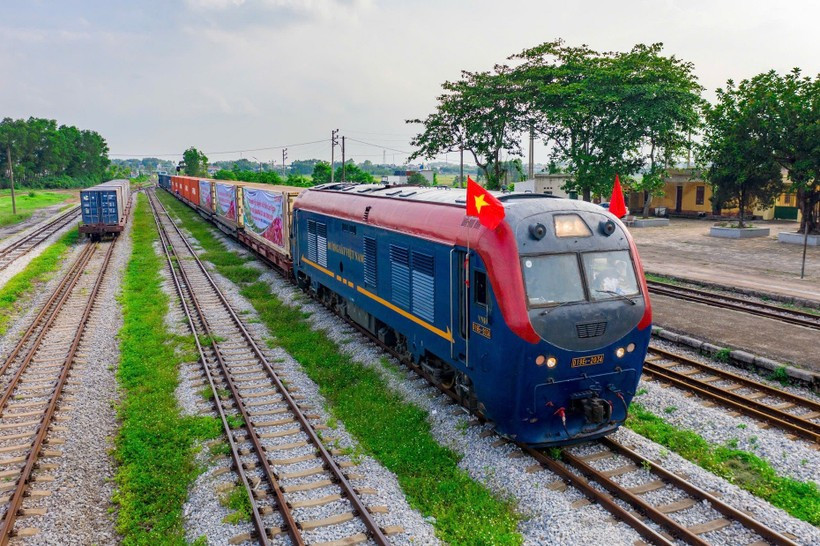
Illustrative image (Photo: VNA)

Moscow (VNA) – Vietnam and Russia have agreed to develop a railway project linking the two countries via China and Mongolia to strengthen transport connectivity and expand regional economic cooperation.

Russian Deputy Prime Minister Alexey Overchuk announced the plan at a meeting with Vietnamese Prime Minister Pham Minh Chinh on the sidelines of the 47th ASEAN Summit and Related Summits in Kuala Lumpur, Malaysia.

Under the agreement, transport enterprises of Russia, Vietnam, and China will orchestrate concrete steps for the development of the railway in 2025. Financial issues will be settled through coordination between specialised agencies and the private economic sector.

Vietnam signed a technical support agreement with China, while Russia’s FESCO Transportation Group plans to increase direct cargo train frequency to a record six trips per month, two for import and four for export.

Overchuk described Vietnam as a time-honoured and trustworthy partner of Russia, affirming that cooperation with the Southeast Asian country is a leading priority of Russia.

The line, stretching more than 2,200 kilometres, will mostly handle exports from Russia’s Tuva region, Mongolia, and southern China. Along with bringing economic value, the project holds strategic importance as it is expected to strengthen Russia’s position in the Eurasian transport network while providing Vietnam with opportunities to expand its logistics infrastructure and seaport system.

Experts said that this is a key project of the Eurasian region in the coming time. Capital mobilisation and human resources exchange are being carried out in tandem with technical assessments. If the line is completed on schedule, it will reshape regional trading routes, bolster economic ties, and provide an effective alternative to traditional maritime shipping routes./.

VNA
See more

Visitors look at the VinFast Minio Green, the smallest electric vehicle produced by the Vietnamese automaker, at the Gaikindo Jakarta Auto Week in Tangerang, Banten, on November 22 (Photo: Antara)

VinFast inaugurates EV plant in Indonesia

The VinFast Subang plant was completed and put into operation just 17 months after groundbreaking, demonstrating the company's rapid execution capability and strong implementation capacity. This is VinFast's fourth operational facility worldwide, and its first plant in Indonesia and Southeast Asia outside of Vietnam.

From early December, major retail chains in Ho Chi Minh City have recorded a noticeable increase in shoppers seeking Tet products. (Photo: VNA)

HCM City businesses ramp up production to meet Lunar New Year demand

From early December, major retail chains in the city have recorded a noticeable increase in shoppers seeking Tet products. Many consumers are taking advantage of promotional programmes to purchase gift items with long shelf lives, such as confectionery, soft drinks and processed foods, well ahead of the holiday peak.

Workers process fish to be tinned for export at KTC Canned Food Factory under Kien Giang Trading JSC. (Photo: VNA)

Vietnam to host seminar on export growth strategies

Vietnam's exports rose 16.1% to 430.2 billion USD in the first 11 months of 2025, while total trade hit 839.8 billion USD during the same period. This strong performance shows that exports remain a key driver of economic growth, boosting Vietnam's standing on the world stage in recent years.

The vessel carrying the 2 millionth TEU arrives at Hai Phong Port. (Photo:VNA)

Hai Phong Port reaches 2-million-TEU milestone

Handling the 2 millionth TEU in 2025 not only demonstrates Hai Phong Port’s operational capacity and the collective efforts of its workforce, but also highlights its increasingly important role in regional and global supply chains, the confidence of shipping lines, logistics firms and the business community, and the effectiveness of policies to improve the investment climate and strengthen maritime infrastructure and services.

Melons labelled with traceability codes on display at the Song Van agricultural produce store in Ninh Binh city, Ninh Binh province. (Photo: VNA)

Tracing origins hindered by fragmented data systems

As the Government accelerates the digital economy, establishing a unified national traceability system has become a crucial move to end data fragmentation and disconnection among ministries, sectors and localities.

Hyundai unveils its new Avante Hybrid model in Seoul, the Republic of Korea, on August 13, 2020. (Photo: Yonhap/VNA)

Tax cuts poised to ignite Vietnam’s hybrid vehicle boom from 2026

Experts forecast that 2026-2030 will mark a period of strong growth for hybrid vehicles in Vietnam, a trend that will invigorate the automotive sector while supporting national objectives on emissions reduction, sustainable development and the broader transition to green mobility.

Illustrative image (Photo: VNA)

Vietnam targets 1 billion USD in banana exports

Bananas have been identified as a priority product under the Project for the Development of Key Fruit Crops to 2025, with a vision to 2030, approved in October 2022. Under the plan, banana acreage is projected to reach 165,000–175,000ha by 2030, with output of 2.6–3 million tonnes.

Deputy Minister of Foreign Affairs Nguyen Minh Hang (Photo: VNA)

Event connects Vietnamese businesses with African countries

Deputy Foreign Minister Nguyen Minh Hang held that to develop Vietnam – Africa ties more strongly and substantively, it is necessary to promote the engagement of businesses, and that the Government will create favourable conditions for them to enhance fruitful cooperation.