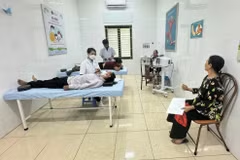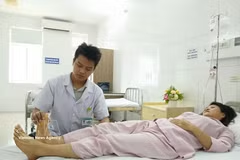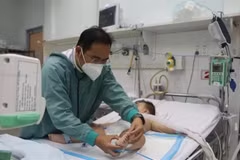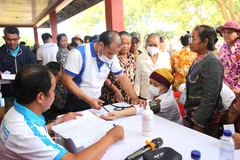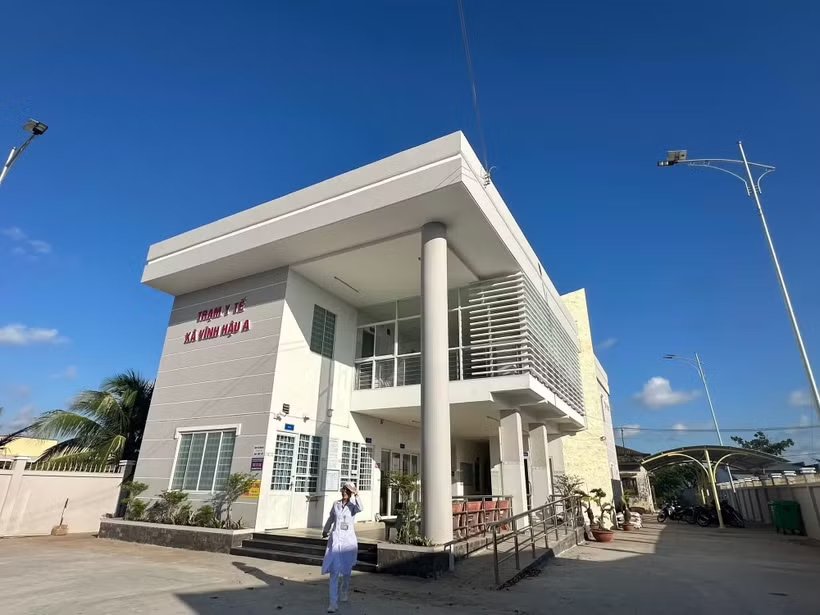
Hanoi (VNA) - Vietnam is shifting its healthcare focus from disease treatment to prevention, continuous health management and stronger grassroots healthcare, in line with the Politburo’s Resolution No. 72-NQ/TW which aims to bring more accessible and modern medical services closer to people, ensuring timely healthcare within their communities.
Over recent years, grassroots healthcare facilities have received increased investment, through efforts to strengthen infrastructure, equipment and medical personnel, improve disease prevention and enhance preparedness for public health emergencies.
Under Resolution 72, all commune-level health stations will be equipped with adequate facilities, medical equipment and personnel, with at least four to five doctors at each station by 2027. Authorities also aim to raise the proportion of health insurance-covered examinations and treatment at these facilities to over 20%.
From 2025 to 2030, localities are expected to rotate or dispatch at least 1,000 doctors annually to commune-level health stations. By 2030, each station is expected to have sufficient permanent doctors and basic medical equipment to fulfil its assigned functions.
In Quang Ninh city, these efforts have already brought encouraging results. Nguyen Minh Tuan, Deputy Director of the municipal Department of Health, said the province has transferred 502 medical staff from former district-level health centres to commune-level facilities.

All commune-level health stations have been organised as public healthcare units, with at least 18 medical workers each and an average of 27. Each station has approximately 4.7 doctors, broadly meeting Resolution 72's human resources targets for 2030.
However, differences in staffing levels between localities and the transition to the two-tier local administration model continue to pose challenges. The city is therefore preparing plans to further upgrade infrastructure, equipment and professional training.
Tuan expressed his confidence that, with continued investment and guidance from central authorities and the Ministry of Health, commune-level health stations in Quang Ninh will basically be able to fulfil their healthcare and health management responsibilities from 2027.
Meanwhile, the operation of Bach Mai Hospital and Viet Duc University Hospital's second facilities in Ninh Binh province marks another important step in expanding access to advanced medical services outside major urban centres. The two hospitals’ second facilities began operating after nearly 11.5 years since construction commenced in December 2014.
On the first day of operation, Viet Duc University Hospital's Ninh Binh facility received a 56-year-old patient from Thanh Hoa province with multiple severe injuries, including traumatic brain injury, spinal cord damage, chest injuries and tendon rupture.
The hospital immediately activated its emergency response system, mobilising specialists in neurosurgery, spinal surgery, orthopaedics and anaesthesiology. Multiple surgical teams worked simultaneously to address the patient's life-threatening injuries.
Dr. Nguyen Thanh Xuan, Deputy Head of the hospital’s Department of Neurosurgery 1 and manager of its Ninh Binh Neurosurgery Centre, said close coordination among specialists helped shorten intervention time, minimise secondary injuries and improve the patient's chances of survival and recovery.
Viet Duc University Hospital's Ninh Binh facility has 1,000 beds, with a total floor area of nearly 120,000 sq.m, while Bach Mai Hospital's Ninh Binh facility also has 1,000 beds, 37 departments and units, and 1,300 medical staff and employees.
Minister of Health Dao Hong Lan described the two facilities as key national healthcare projects, reflecting the Government's commitment to narrowing regional gaps in access to high-quality medical services, easing pressure on central hospitals and making better use of public investment.
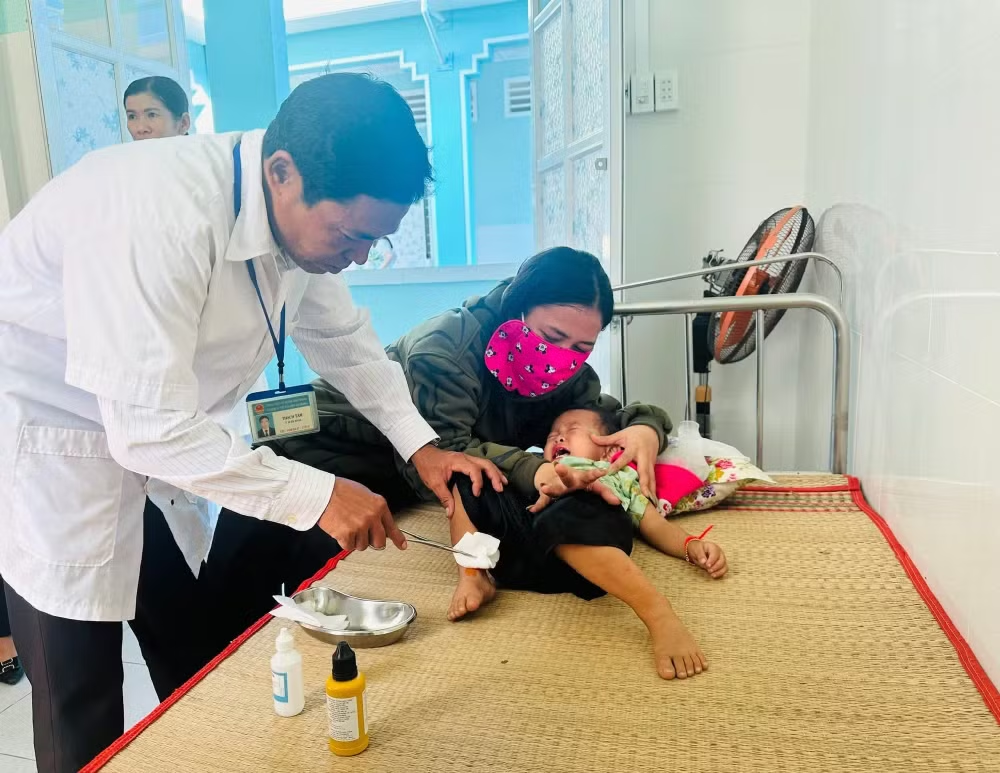
Addressing the inauguration ceremony, Prime Minister Le Minh Hung stressed that investing in healthcare is investing in the country's future. He said protecting and improving public health is not merely a social welfare policy but also a foundation for national development.
The operation of the two facilities represents a concrete step towards restructuring Vietnam's healthcare network in a more modern and balanced manner, reducing pressure on medical facilities in Hanoi while enabling residents in surrounding provinces to access advanced treatment more quickly and at reasonable costs.
The Government leader emphasised that the goal is not simply to build modern hospitals but to develop a comprehensive healthcare ecosystem in which every medical facility could maximise its capacity and effectively serve people's needs.
Investment in healthcare will not only improve social welfare and quality of life but also strengthen human resources, labour productivity and the foundations for sustainable national development, he stressed./.