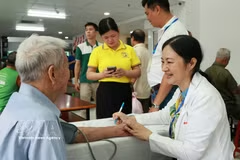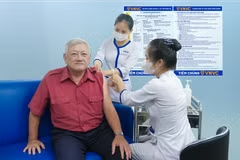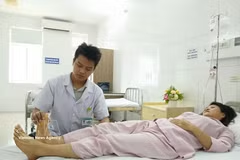
Hanoi (VNA) – From local rehabilitation programmes for people with disabilities to community-centred mental health care, Hanoi is reshaping its social welfare strategy by placing families and neighbourhoods at the heart of recovery.
This grassroots shift helps to not only expand vulnerable groups’ access to essential medical services but also restore their independence and ease the caregiving burden on families.
Bringing rehabilitation closer to home
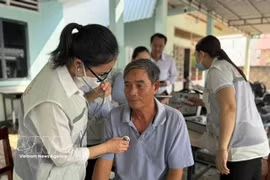
More than three years ago, a cerebral hemorrhage left Tran Thi Quyen, a resident of Tri Thuy village in Xuan Mai commune, paralysed on one side and unable to walk. While hospital treatment stabilised her condition, daily mobility remained a steep challenge until Xuan Mai launched a community-based rehabilitation and early intervention model.
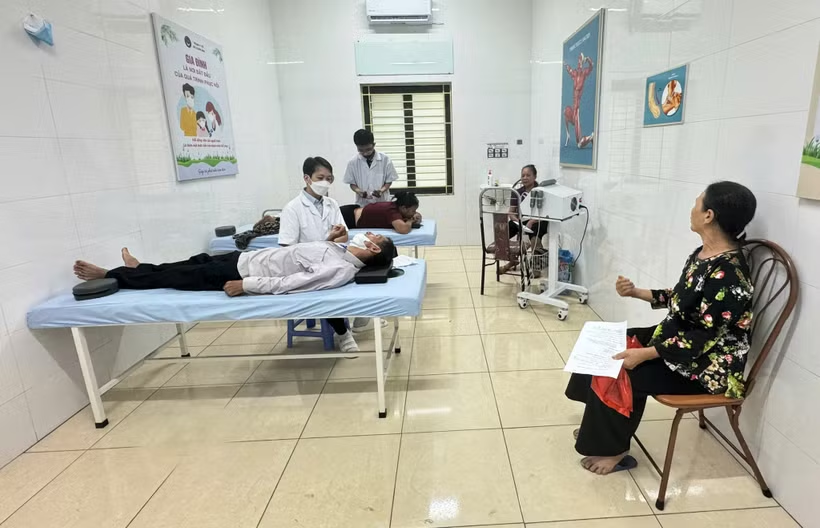
At her commune’s health station, Quyen has received guided physical therapy, acupuncture, and acupressure.
“After a period of guided training, I can now cycle by myself to the health station every day for rehabilitation,” she said.
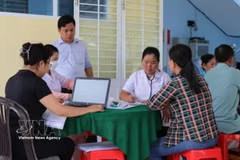
Nghiem Thi Hien, Director of the Xuan Mai health station, said the commune is home to about 1,740 people with disabilities and vulnerable individuals.
Previously, health workers mainly conducted home visits while many bedridden patients had gone years without access to rehabilitation services. Since the model was launched in July 2026, more than 500 people have been examined and screened, expanding their access to grassroots care and rehabilitation, Hien noted.
Similar initiatives are gaining traction across the capital. In Tay Mo ward, authorities have partnered with the Hanoi Rehabilitation Hospital and formed a local volunteer network. After screening, 2,756 residents with disabilities were recorded, including 296 in need of rehabilitation, providing a basis to tailor support plans to each individual's condition and needs.
In Phuc Thinh commune, health workers screened 166 people and enrolled 30 in rehabilitation programmes during September and October 2026, with about 80% showing marked improvement.
While mild cases receive a week of in-person coaching followed by instructional videos for home practice, complex cases are referred to specialised hospitals to ensure appropriate treatment.
Beyond expanding rehabilitation services for people with disabilities, Hanoi is also innovating care and support for people with mental illnesses.
At Hanoi Mental Health Care and Rehabilitation Centre No. 1 in Quang Oai commune, an integrated care complex now serves over 800 patients. The facility standardises admission and treatment protocols while adopting digital tools to monitor nutrition, food safety, and recovery progress.
Sustaining recovery through community integration
Health officials emphasised that bringing services to the grassroots level is only the beginning; long-term recovery relies on sustained family and community involvement.
Hien noted that dedicated funding is essential to retain community support workers who ensure uninterrupted home follow-ups.
To bridge geographic gaps across its five scattered health stations, Phuc Thinh commune plans to upgrade equipment and train staff so residents in remote areas enjoy equal access, according to Director of its health station Tran Ngoc Nghia.
In the mental health sector, Centre No. 1 is producing educational guides and videos to help families care for patients after discharge, strengthening the link between specialised institutions and home environments.
Dinh Hong Phong, Deputy Director of the Hanoi Department of Health, stressed that people with disabilities, the elderly, and other vulnerable groups require continuous care, rehabilitation, early intervention, and comprehensive assistance right within their communities.
Meeting this demand requires stronger coordination among hospitals, grassroots health facilities, and local forces, alongside enhanced professional capacity and continuous health management to improve the quality of life and social integration, according to the official.
Under Plan No. 418/KH-UBND, issued in October 2026, Hanoi aims to integrate lifecycle digital social welfare records for 100% of its vulnerable population into the national resident database by 2030.
As care services move closer to the people, families are equipped with vital skills, and communities join hands in support, social welfare policies go beyond immediate relief, gradually building a lasting foundation that empowers vulnerable individuals to improve their lives and integrate into society./.
See more
Health ministry gathers input on medical support plans for APEC 2027 localities
The review covered medical examination and treatment, emergency care, patient transfers, preventive medicine and food safety. The goal is to have professional plans fully ready for the event.
Vietnam highlights int’l cooperation in innovation, intellectual property, pharmaceutical development
Developing the pharmaceutical industry is not merely an economic objective but also a strategic priority for protecting public health, strengthening self-reliance and enhancing the capacity to respond to public health emergencies, said Ambassador Mai Phan Dung.
Health Ministry urges vigilance against new COVID-19 variant
The Ministry of Health's Department of Preventive Medicines advised the public not to be complacent or alarmed.
Vietnam hands over hospital expansion project to Laos
The Vang Vieng District Hospital expansion project, a gift from the Party, State and people of Vietnam to Laos, reflects the enduring affection and care that Vietnam has for Laos.
Vietnam helps shape a global framework for climate-resilient and low-carbon health systems: WHO
The World Health Organization (WHO) has published an article highlighting one of the most important lessons from a pioneering initiative that has placed Vietnam among the first countries – alongside Canada – testing indicators aligned with the WHO operational framework for building climate-resilient and low-carbon health systems.
Vietnam encourages vaccine technology transfer
Deputy Prime Minister Pham Thi Thanh Tra called on pharmaceutical group MSD (Merck Sharp & Dohme) to consider investing in a pharmaceutical and vaccine manufacturing plant in Vietnam.
Vietnam, Sweden seek to deepen healthcare cooperation through innovation
The two sides discussed new opportunities for partnership at a recent conference in Hanoi, part of Sweden-Vietnam Health Week 2026, which brings together more than 200 policymakers, healthcare leaders, researchers, medical professionals and business representatives from both countries.
What international parents look for when choosing a hospital for their child in Hanoi
Beyond clinical expertise, service quality also matters. Parents value strict patient triage to minimise cross-infection and attentive guidance from healthcare staff.
Ophthalmology experts discuss blindness prevention measures at Da Nang conference
Permanent Deputy Minister of Health Vu Manh Ha said ophthalmic techniques, technologies and treatment methods were developing rapidly, while patients were increasingly concerned about vision recovery and quality of life after treatment.
Digitalisation of healthcare procedures makes medical services more accessible
Hospitals managed by the Da Nang Department of Health have been required to stop using paper medical records from November 1, while the facilities under ministries and sectors, as well as private ones, will do so from January 1, 2027.
Ho Chi Minh City accelerates efforts to provide health check-ups for all residents
Statistics from the municipal Department of Health showed that, as of November 9, more than 9.53 million people had undergone health examinations and screening or had their health records updated, representing 74.6% of the city's population.
Male plastic surgery: Why masculine aesthetics require a different approach
Plastic surgery has long been associated with procedures for women, but men also seek treatment for abdominal fat, enlarged breasts and age-related changes around the eyes and face. The American Society of Plastic Surgeons (ASPS) includes liposuction, gynecomastia surgery and eyelid surgery among procedures performed on male patients.
Vietnam, Denmark expand cooperation in high-tech healthcare
Ambassador Nguyen Le Thanh called on Vietnamese and Danish partners to identify priority areas and promote research and training programmes, knowledge transfer and technology application in line with Politburo's Resolution No. 57-NQ/TW on breakthroughs in science – technology development, innovation and national digital transformation.
Flu can trigger cardiovascular events, worsen chronic conditions in the elderly
Experts recommend annual flu vaccination, while also considering enhanced protection options suited to this high-risk group.
Traditional medicine gives wellness tourism distinctive identity
The country's abundant medicinal resources provide a cornerstone for leveraging the strengths of traditional medicine and expanding opportunities to develop high-value medicinal products.
Ho Chi Minh City develops multi-tier elderly care network amid population ageing
Dr. Huynh Minh Chin, Deputy Director of the department, said rising elderly care needs are putting pressure on traditional family-based care, as older people increasingly face multiple chronic illnesses, mobility problems, malnutrition, dementia and depression, requiring continuous support and closer coordination among hospitals, grassroots healthcare facilities, families and social support institutions.
Vietnam seeks to develop medical tourism, tap high-value potential
Demand for healthcare, better quality of life and physical and mental well-being has grown in recent years, making wellness tourism an increasingly valuable market segment that can extend visitors' stays, boost spending and stimulate related sectors.
Ho Chi Minh City steps up hand, foot and mouth disease prevention as cases exceed 44,000
The city recorded more than 44,000 cases from the beginning of the year, up over 65% year-on-year, along with five deaths and more than 1,600 outbreaks, according to the municipal Department of Health.
Free medical examinations provided to remote communities in Cambodia
Vietnamese Ambassador Nguyen Minh Vu said the programme has been jointly organised by the embassy and the hospital annually in various Cambodian localities to provide healthcare support to disadvantaged households and contribute to the Cambodian Government’s efforts to improve public health. The initiative also reflects close cooperation in healthcare and the strong bonds between the people of Vietnam and Cambodia.
All residents set to have electronic health records integrated into VNeID by June 30, 2027
The Ministry of Health, in coordination with the Ministry of Public Security, is tasked with completing the integration of electronic health records into the VNeID system for 100% of the population before June 30, 2027, according to a notice issued by the Party Central Committee’s Office.