Vietnam taps tourism potential to promote local specialties

Vietnam is promoting the integration of One Commune One Product (OCOP) goods into tourism services and destinations to increase their value, expand markets, and strengthen links between local producers and the tourism industry.

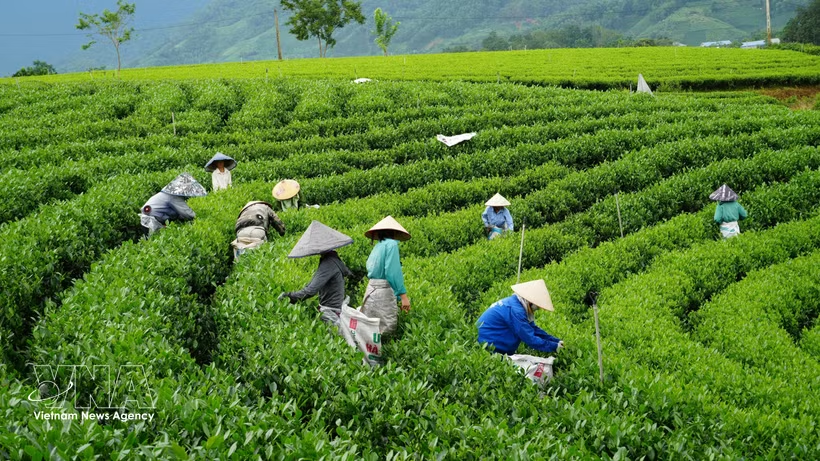
Farmers in La Bang commune, Thai Nguyen province, harvest tea leaves (Photo: VNA)

Hanoi (VNA) - Vietnam is promoting the integration of One Commune One Product (OCOP) goods into tourism services and destinations to increase their value, expand markets, and strengthen links between local producers and the tourism industry.

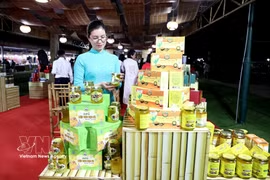
In addition to traditional retail channels, OCOP products are now featured in hotels, resorts, restaurants, tourist attractions, and airports, becoming an integral part of visitor experiences and reinforcing the connection between local producers and the tourism industry.

Linking tourism with OCOP and cultural preservation

OCOP products reflect local history, community life and traditional knowledge. Integrating them into tourism therefore creates opportunities for visitors to explore not only local goods but also the cultural stories and production processes behind them.

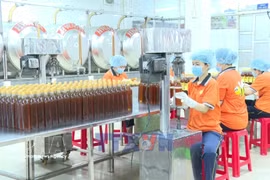
In Ninh Binh, five-star and three-star OCOP products, including scorched rice, herbal tea, Van Lam embroidery, and Kim Son sedge products, are featured in the decoration, cuisine, and services of high-end accommodation facilities. The Ecohost community-based tourism model also promotes local products through on-site services and gift offerings.

Accommodation facilities thus serve as spaces for showcasing local specialities, enabling visitors to experience products while exploring the former imperial capital. Ninh Binh currently has around 1,000 OCOP brands, providing a substantial resource for tourism development.

Hanoi, with 1,350 craft villages, is also combining traditional crafts with tourism services. Phu Dong Green Park in Gia Lam commune and the rural tourism site in Hong Van commune offer educational, agricultural, and recreational activities alongside OCOP product sales.

At Bat Trang pottery village, visitors can purchase ceramics, including five-star OCOP products, try pottery-making, and learn about traditional craftsmanship at the Centre for the Quintessence of Vietnamese Craft Villages.
vnanet-che.jpg
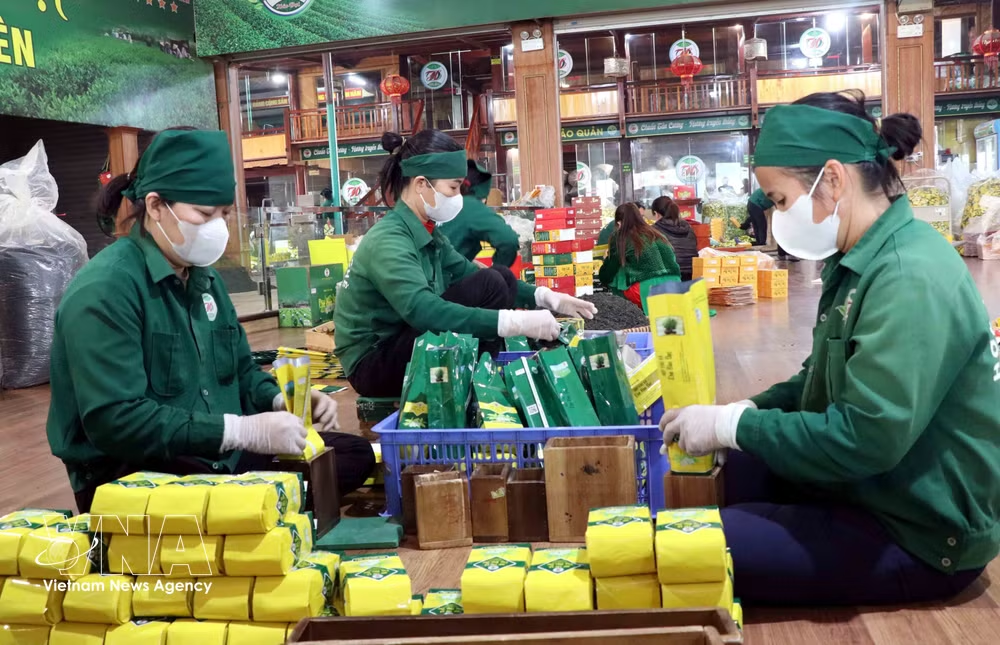
Thai Nguyen currently has 193 tea products rated three to five stars under the One Commune One Product (OCOP) programme (Photo: VNA)

In Thai Nguyen province, La Bang commune is developing tourism around its tea-growing areas. Visitors can pick tea with farmers, enjoy tea prepared by artisans on the hills, and purchase OCOP products at their source.

In the central city of Da Nang, 28 “Made in Da Nang” OCOP product display areas were established in 2026 at tourist attractions, high-end coastal resorts and Da Nang International Airport.

On October 1, a similar model was also introduced at Tho Xuan Airport in Thanh Hoa province. Hundreds of local OCOP products are available at popular destinations in Pu Luong, Thuong Xuan and Linh Son.

These initiatives support the Vietnam National Authority of Tourism's proposed project to develop tourism in association with OCOP production and consumption, while preserving rural cultural values and indigenous knowledge.

VNAT Deputy Director Ha Van Sieu said linking rural tourism with OCOP products and cultural preservation will deliver dual benefits by raising product value, supporting rural economic restructuring and preserving local traditions and knowledge.

From product promotion to market development

According to Le Quoc Viet, Vice Chairman of the Da Nang Tourism Association and Chairman of the Xu Quang Destination Club, international visitors currently spend only around 12-15% of their budgets in Vietnam on gifts and goods, below the Southeast Asian average of 22.5%.

If 5% of the 19.5 million international arrivals targeted for 2026 purchase local specialities worth 250,000 VND each, Da Nang can generate an additional 244 billion VND in annual tourism revenue without incurring international shipping or import-export procedures, he noted.
​

Viet pointed to several challenges, including limited supply capacity for small producers, costly commercial requirements, inadequate product packaging and sourcing from multiple suppliers. Limited data on tourists' shopping habits also hinders product development. He called for closer business links between tourism sites and producers, and standardised quality, packaging and distribution to better meet market demand.

Phuong Dinh Anh, Deputy Chief of the Office for Coordination of the New-Style Rural Development Programme under the Ministry of Agriculture and Environment, said Vietnam has more than 21,000 OCOP products. The office is promoting links between OCOP development and tourism, encouraging visitors to explore production sites, experience local crafts and purchase specialities.

This direction is also reflected in the Political Bureau’s Resolution No. 26-NQ/TW dated August 22, 2026, which calls for promoting shopping tourism featuring Vietnamese and OCOP products and strengthening links between tourism services and local producers. Such connections will increase domestic value, improve economic efficiency, and expand participation in global value chains and on-the-spot exports.

Integrating OCOP products into tourism experiences, from local cuisine and resort services to craft activities and souvenirs, will generate additional income while preserving local cultural identity./.

VNA

See more

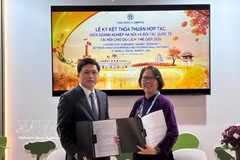
The Vietnam Culture and Tourism Association in Europe (VNCT) signs a memorandum of understanding on cooperation with the Hoan Kiem Tourism Association. (Photo: VNA)

Responsible tourism key to tapping European market

Tran Doan The Duy, General Director of Vietravel Tourism JSC (Vietravel), said Vietnam is seeing strong growth in international arrivals, with Europe among its fastest-growing source markets and the UK recording particularly positive results.

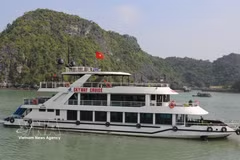
Cruise tourism in Cat Ba is a popular choice among visitors. Photo: VNA

Hai Phong aims to become attractive tourism destination

Hai Phong will develop high-quality, smart, green and creative tourism that reflects cultural identity and generates high added value. It is focusing on implementing this direction to unlock the potential of its marine and island resources, natural heritage and cultural assets.

International visitors enjoy taking photos at the Golden Bridge in Sun World Ba Na Hills. (Photo published by VNA)

Da Nang named among Lonely Planet's “Best in Travel 2027” list

Located in central Vietnam, Da Nang is “blessed with mountains, a long city beach and a cool vibe”. The Son Tra Peninsula offers peaceful natural surroundings and panoramic sea views, while the city’s beaches provide opportunities for swimming, relaxation and outdoor activities.

A foreign tourist experiences farmers’ daily watering activities in Tra Que vegetable village, Da Nang city. (Photo: VNA)

Green tourism boosts Da Nang’s competitiveness

Da Nang’s tourism sector continues to translate development objectives into concrete actions, promoting the city’s role as one of the three national tourism growth poles, together with Hanoi and Ho Chi Minh City, identified in the Politburo’s Resolution No. 26-NQ/TW and relevant tourism development plans.

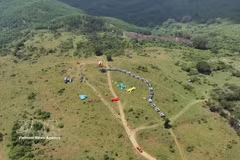
La Vuong Plateau seen from above. (Photo: VNA)

Gia Lai develops community-based tourism on La Vuong plateau

Perched over 700 metres above sea level in Hoai Nhon Bac ward of central Gia Lai province, La Vuong Plateau offers stunning views, a refreshing climate, and easy access, making it ideal for developing nature-based tourism that involves local communities and protects the natural environment.

Symphony of the Sea Season 3 will debut this November at Sunset Town with an expanded 12-jetski formation. (Photos: Sun Group)

Phu Quoc set for James Bond style high speed chase with 12 jetski formation

Scheduled to premiere this November, Symphony of the Sea Season 3 is already generating excitement through its rehearsal footage alone. With its expanded 12-jetski formation, Sunset Town offers visitors yet another reason to visit Phu Quoc: to experience thrilling sea chase sequences worthy of a James Bond blockbuster, only this time performed live, with roaring engines, precision choreography and fireworks unfolding right before their eyes.

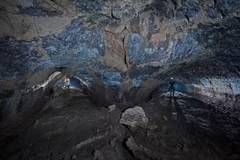
Inside C2 Cave (Photo published by VNA)

Two volcanic caves in Lam Dong recognised as national relic sites

Two scenic sites in the Krong No volcanic cave system, both located in Nam Da commune, Lam Dong province, have been recognised as national relic sites, Le Thi Truc Linh, Deputy Director of the provincial Department of Culture, Sports and Tourism, announced on October 30.

Quy Nhon needs a jolt from night-time economy (Photo: VNA)

From sea to nightlife: Quy Nhon burnishes tourism appeal

For the night economy to take off, Quy Nhon must clear institutional and policy bottlenecks and offer a more open environment for large companies to join. That is the strategic move that will let the city cement its status as a dynamic destination and break out on central Vietnam’s tourism map.

Vietnamese banh mi becomes a must-try for international visitors exploring Hanoi’s culinary scene. (Photo: VNA)

UK magazine spotlights Hanoi food tour starting at 4am

According to the article, beyond the food itself, the experience also offers an insight into local life. Small family-run eateries, plastic stools on pavements and residents having breakfast before heading to work provide an authentic glimpse into the daily routines of Hanoians.

Vietravel Airlines officially takes delivery of an Airbus A321 aircraft in Noi Bai International Airport on October 27 (Photo: VNA)

Vietravel Airlines receives new aircraft, expands int’l network ahead of year-end peak

Since joining the T&T Group ecosystem in late 2024, Vietravel Airlines has gradually accelerated its restructuring, expanded its fleet and broadened its operations. The delivery of aircraft VN-A295 marks another step in the airline’s 2026 fleet development plan, aimed at increasing passenger transport capacity, strengthening operational flexibility and preparing for growth on a larger scale.