Vietnam’s agriculture posts record trade surplus, builds global position

In 2024, the sector smashed records with a 17.9 billion USD trade surplus, soaring 46.8% from last year. That was a huge slice of Vietnam’s total 24.8 billion USD trade surplus, cementing its influence on Vietnam’s balance of trade.

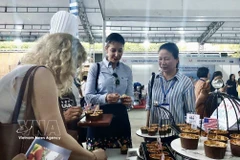
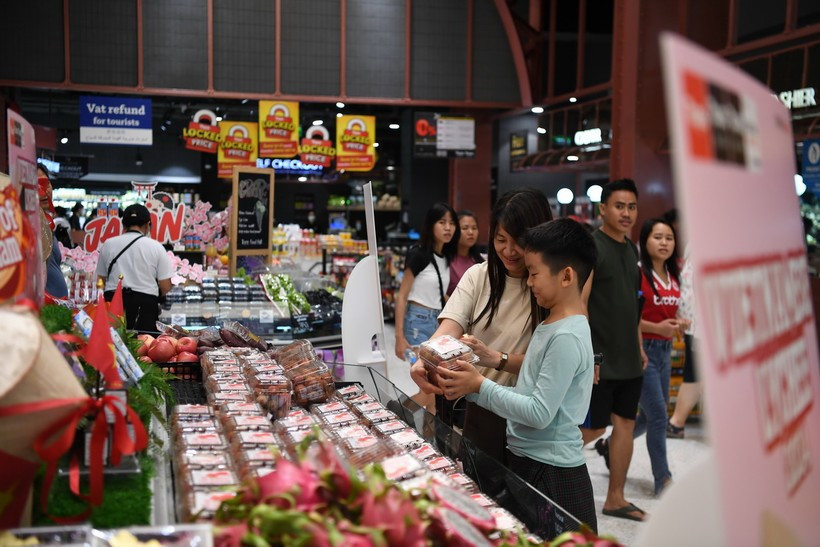
Vietnamese fruits attract Thai consumers. (Illustrative photo: VNA)

Hanoi (VNA) - Vietnam’s agriculture scene has gone from scraping by to raking in over 60 billion USD in exports, turning rice paddies and coffee fields into a cash cow that’s fueling the nation’s economic rise.

Tn 2024, the sector smashed records with a 17.9 billion USD trade surplus, soaring 46.8% from last year. That was a huge slice of Vietnam’s total 24.8 billion USD trade surplus, cementing its influence on Vietnam’s balance of trade.

Productivity gains in the fields

In the Mekong Delta, Vietnam’s farming heartland, rice production has seen remarkable gains thanks to advances in seed technology.

Director of the Mekong Delta Rice Research Institute Tran Ngoc Thach explained that most of today’s rice varieties are the result of crossbreeding, a process enhanced by biotechnology to produce strains resistant to pests, salinity, and the caprices of a changing climate. These varieties are not only hardy but also for export markets, with the institute developing high-yield Japonica rice and premium strains suited to the region’s unique conditions.

The impact is evident in global markets. In 2024, Vietnam’s paddy output reached 43.7 million tonnes, while rice exports hit an all-time high of 9.18 million tonnes.

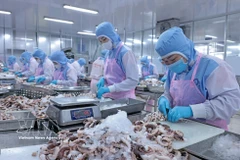
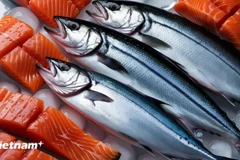
Beyond rice, Vietnamese farmers are jumping on year-round crop varieties, keeping fruits flowing to local and global markets. In aquaculture, controlled breeding has turned white-leg shrimp, tra fish, and tilapia into billion-dollar export brands, riding the wave of demand for sustainable seafood.

Coffee, one of Vietnam’s most lucrative exports, tells a similar story of transformation. Phan Viet Ha, deputy head of the Western Highlands Agriculture and Forestry Science Institute, recalled a time when the country relied on low-yield, pest-prone coffee varieties imported from Côte d'Ivoire, France, and South America. Over nearly half a century, the institute developed high-performing domestic strains that have vaulted Vietnam to the top of global coffee production. Robusta varieties now yield 4-7 tonnes per ha, with some hitting 10 tonnes. Over 90% of newly planted or replanted coffee fields use these homegrown strains, Ha said.

Global reach and ambition

In the Mekong Delta, localities are piloting low-emission, high-quality rice models, with strong buy-in from farmers and businesses, setting the stage for “green” rice to take over export markets.

Meanwhile, Vietnam’s coffee fields are getting eco-certified under standards like Rainforest Alliance and 4C, paving the way for low-carbon coffee products that meet new global consumption trends. Such are seen as key drivers of export growth at a time when sustainable production is a global priority.

Vietnam’s agricultural footprint is expanding worldwide. “Our agro-forestry-fisheries are now present in more than 200 countries and territories, with firm footholds in major markets such as the US, China, Japan, the European Union (EU) and the Middle East”, said Deputy Minister of Agriculture and Environment Phung Duc Tien.

The long-term strategy is to build value chains that seamlessly connect production, processing and consumption. The focus is on boosting competitiveness, expanding export markets, and enforcing stricter quality management, certification and traceability. The ultimate goal is to establish global brands for Vietnamese farm produce and planting the nation’s flag firmly on the world agriculture map./.

VNA

See more

Vietnamese Ambassador to Brazil Bui Van Nghi speaks at the seminar. (Photo: VNA)

Vietnam, Brazil seek ways to promote trade, investment cooperation

Vietnamese Ambassador to Brazil Bui Van Nghi informed that two-way trade reached 4.22 billion USD in the first six months of 2026, up 16.8% year-on-year. Brazil's exports to Vietnam exceeded 2 billion USD, rising 16.6%, while its imports from Vietnam totalled about 2.11 billion USD, an increase of 17%.

Wave Alpha, Honda Vietnam’s best-selling manual motorcycle model each month. (Photo: Bnews/VNA)

Honda Vietnam posts strong car sales growth, leads motorcycle market

The company sold 172,299 motorcycles in June, up 4.7% from the same month last year, highlighting steady consumer demand even as the market gradually shifts towards greener transport options. For the first six months of 2026, motorcycle sales reached 515,743 units, up 0.6% year-on-year.

Rice harvest in Xuan Giang commune, Ninh Binh province. (Photo: VNA)

Plan issued to develop agricultural logistics system

A key target is that by 2030, all concentrated agricultural, forestry and fisheries production areas will have access to essential services, including product traceability, quarantine, testing, quality certification, processing and market development. The move reflects growing international demand for stricter food safety, quality and traceability standards, which have become increasingly important for agricultural exports.

Delegates at the signing ceremony (Photo: VNA)

Vietnam, RoK boost micro-business cooperation

Vietnam's young population, dynamic market, and big growth potential are a perfect fit for the strengths that Korean micro-businesses bring in K-brands, technology, and service expertise, said KFME President Song Chi Young.

Cars at a public parking lot in Hai Phong city. (Photo: VNA)

Vietnam's auto sales rise 15%, hybrid, imported vehicles continue to outperform

With auto loan interest rates remaining competitive, stable vehicle supply, and an increasingly diverse product range, Vietnam's automotive market is expected to maintain its growth momentum through the remainder of 2026. SUVs, MPVs, and hybrid vehicles are likely to remain the main drivers of overall market sales.

The MoU signing ceremony between Becamex VSIP Binh Dinh and PV Gas CNG in Gia Lai province on June 26, 2026 (Photo: nhandan.vn)

Gia Lai positions itself as magnet for sustainable investment

Vice Chairman of the provincial People's Committee Nguyen Huu Que said ESG is no longer a communications message or a cost burden, but an essential requirement for accessing global capital. Gia Lai has chosen ESG as a pillar for building new competitive advantages and achieving sustainable development.

Chairman of the Tay Ninh provincial People's Committee Le Van Han delivers remarks at the inauguration ceremony. (Photo: VNA)

Suntory PepsiCo inaugurates 300-million-USD plant in southern Tay Ninh province

Built on nearly 20 hectares at Huu Thanh Industrial Park, the facility is the company's largest and most advanced plant in Vietnam and the biggest production site in Suntory PepsiCo's Asian manufacturing network. The factory has a designed annual production capacity of over 1.24 billion litres and is equipped with highly automated production, filling and warehousing systems.

Ho Chi Minh City inaugurates a UAV postal route linking Can Gio commune and Vung Tau ward on February 12, 2026. (Photo: VNA)

Ho Chi Minh City promotes UAV applications to develop low-altitude economy

With its enlarged development space, Ho Chi Minh City now combines strengths in urban development, industry and services with high-tech agriculture, the marine economy, logistics and diverse ecological areas. These conditions provide an ideal testing ground for UAV applications in urban management, land administration, environmental monitoring, disaster prevention and response, agriculture, logistics and public services.